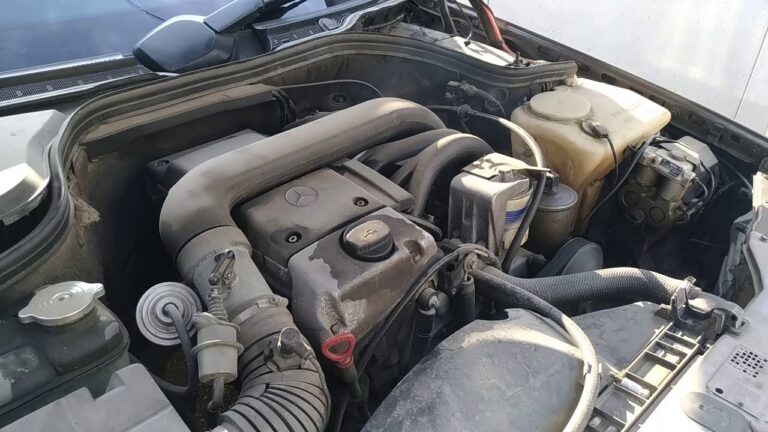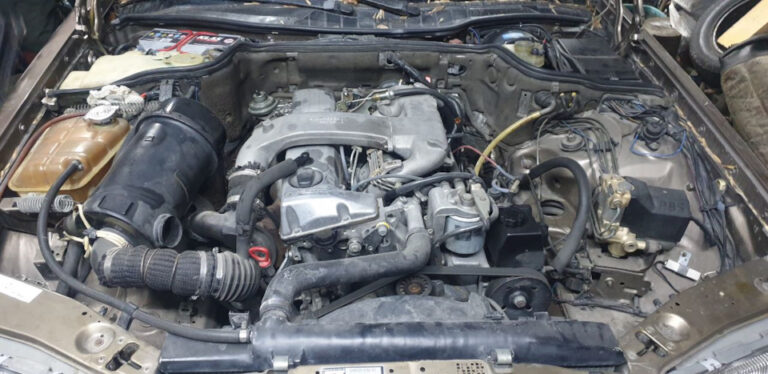
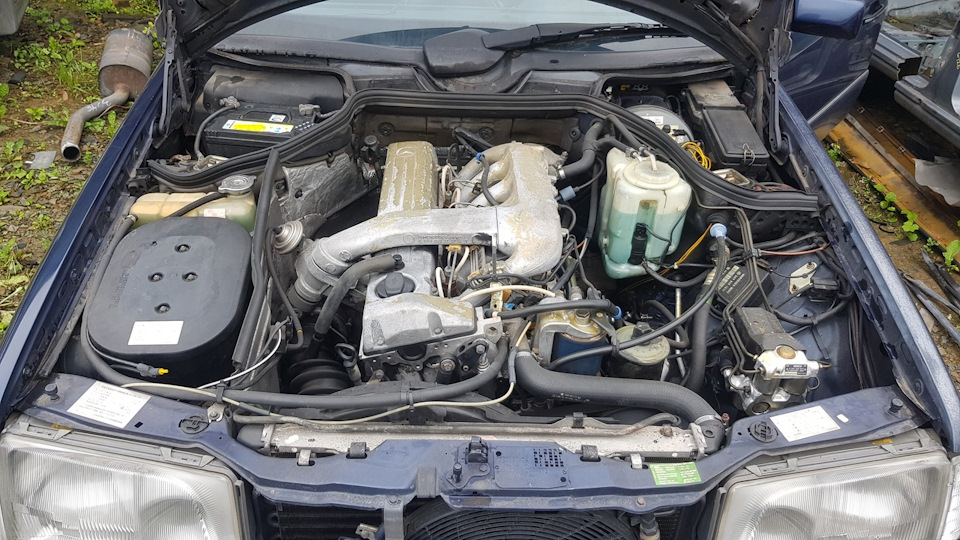
Mercedes OM603 Diesel Engine: Specs, Reliability & Failure Analysis
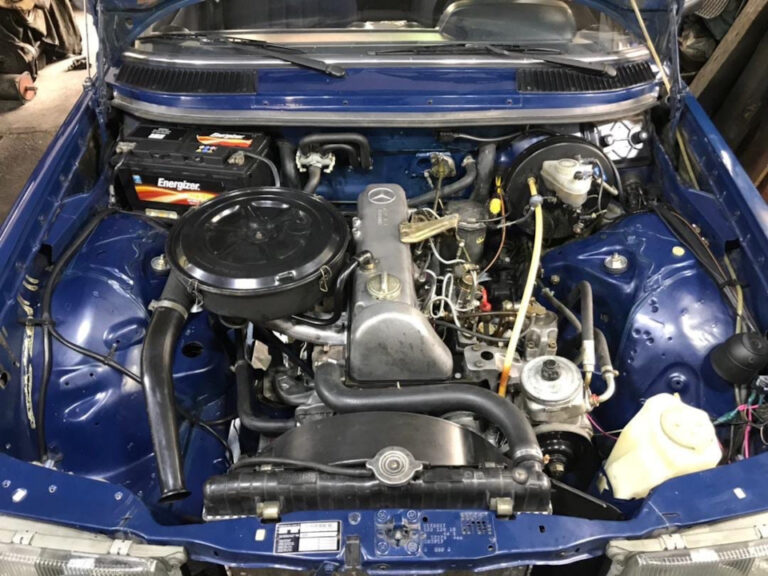
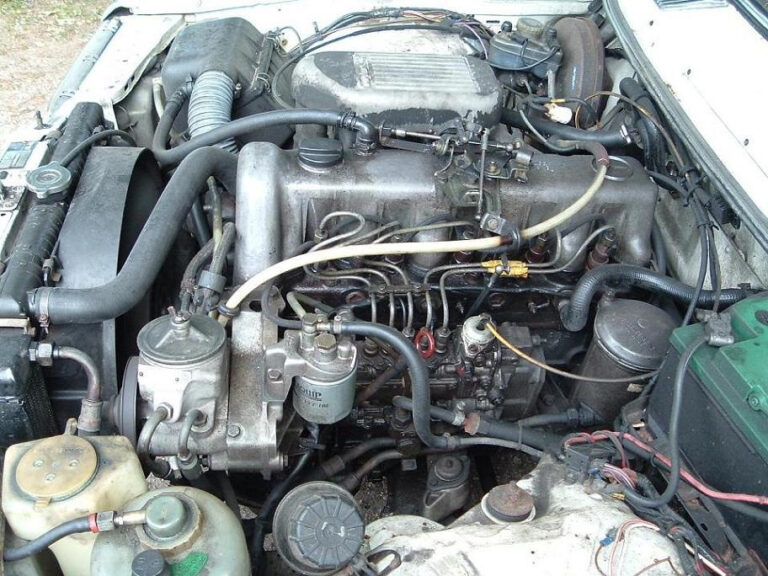
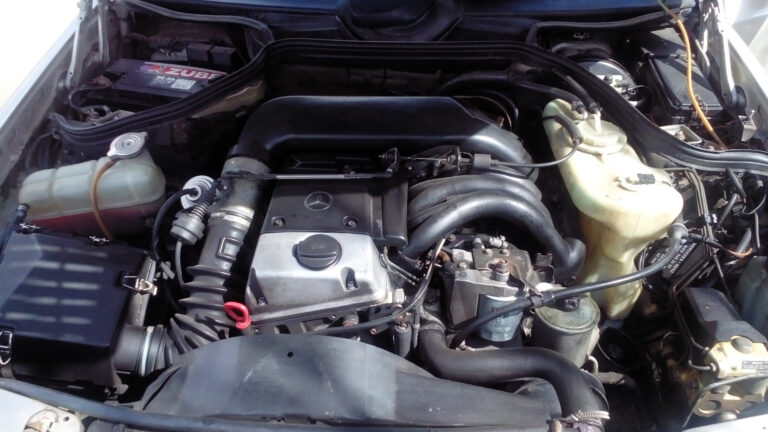
The Mercedes-Benz OM603 is a family of inline-six diesel engines used in the W124 E-Class, W126 and W140 S-Class, and selected G-Class applications. It combines indirect diesel injection, a single overhead camshaft, a cast-iron cylinder block, and an aluminum cylinder head. The principal passenger-car versions have either 3.0 or 3.5 liters of displacement, with naturally aspirated and turbocharged configurations.
The distinction between these versions is essential when assessing OM603 reliability. The 3.0-liter turbocharged engines have a documented history of cylinder-head design revisions, while the later 3.5-liter OM603.970 and OM603.971 introduced substantially different internal components and have a separate body of oil-consumption and connecting-rod failure reports. Mercedes-Benz also issued specific service information for timing-chain elongation, cylinder-block rebuilding, cylinder-head-gasket sealing, and emissions equipment.
An engine code beginning with 603 is therefore insufficient to establish the correct specifications or repair requirements. The complete suffix, vehicle model, market, and production details determine which technical information applies.
Mercedes-Benz OM603
OM603
2,996 / 3,449 cc
Inline-six diesel
Naturally aspirated / turbocharged
Indirect injection
W124, W126, W140
OM603 Engine Specifications and Variants
Mercedes-Benz developed several mechanically distinct engines under the OM603 designation. The 3.0-liter configuration uses an 87.0 mm cylinder bore and 84.0 mm stroke, producing 2,996 cc. The 3.5-liter version increases these dimensions to 89.0 mm and 92.4 mm, producing 3,449 cc.
| Specification | OM603 3.0 | OM603.970 3.5 |
|---|---|---|
| Manufacturer | Mercedes-Benz | Mercedes-Benz |
| Configuration | Inline-six | Inline-six |
| Displacement | 2,996 cc | 3,449 cc |
| Bore | 87.0 mm | 89.0 mm |
| Stroke | 84.0 mm | 92.4 mm |
| Compression ratio | 22.0:1 | 22.0:1 |
| Block material | Cast iron | Cast iron |
| Cylinder head | Aluminum alloy | Aluminum alloy |
| Valvetrain | SOHC, 12 valves | SOHC, 12 valves |
| Timing drive | Duplex roller chain | Duplex roller chain |
| Fuel system | Mechanical inline injection pump | Mechanical inline injection with EDS auxiliary control |
| Combustion system | Indirect, prechamber injection | Indirect, prechamber injection |
| Crankshaft main bearings | Seven | Seven |
| Firing order | 1-5-3-6-2-4 | 1-5-3-6-2-4 |
The 3.5-liter figures above are established for OM603.970 in Mercedes-Benz’s January 1990 Introduction into Service. That document identifies a maximum engine speed of 4,250 rpm for the W126 application. This figure should not be applied to every OM603 version.
3.0-Liter Naturally Aspirated Versions
The OM603.912 is a principal naturally aspirated passenger-car variant. Earlier European W124 300 D and 300 TD applications were rated at 80 kW (109 metric horsepower) at 4,600 rpm, with 185 Nm at 2,800 rpm.
Mercedes-Benz’s historical specifications identify an increase to 83 kW (113 PS) and 191 Nm from February 1989 for the relevant updated applications. A further output distinction appears in the facelifted S124 300 TD with optional oxidation-catalyst equipment.
| European OM603.912 application | Power | Torque |
|---|---|---|
| Earlier 300 D / 300 TD | 80 kW / 109 PS | 185 Nm |
| Updated specification from February 1989 | 83 kW / 113 PS | 191 Nm |
| Facelifted 300 TD with optional oxidation catalyst | 81 kW / 110 PS | 191 Nm |
The facelifted 300 TD specification identifies the optional oxidation catalyst from October 1990. This accounts for the 81 kW rating found in some OM603.912 application records. It should not be treated as evidence of a universal engine-family power revision.
The absence of a turbocharger distinguishes these engines from the OM603.96x configurations, although the prechamber combustion system, mechanical fuel-injection architecture, and basic valvetrain arrangement remain closely related.
3.0-Liter Turbocharged Versions
The OM603.960 powered W124 300 D Turbo and 300 TD Turbo models. Mercedes-Benz’s historical specifications identify the following European W124 output configurations:
| Specification | Earlier 124.133 | From September 1988 |
|---|---|---|
| Power | 105 kW / 143 PS | 108 kW / 147 PS |
| Power speed | 4,600 rpm | 4,600 rpm |
| Torque | 267 Nm | 273 Nm |
| Torque speed | 2,400 rpm | 2,400 rpm |
The North American W126 300 SDL used the related OM603.961. Its calibration, emissions equipment, and factory output should not be inferred from the European W124 figures.
3.5-Liter Turbocharged Versions
The OM603.970 appeared in the W126 350 SDL and 350 SD. Mercedes-Benz specified 100 kW (133 SAE horsepower) at 4,000 rpm and 310 Nm at 2,000 rpm for these North American applications.
The subsequent OM603.971 powered the W140 diesel S-Class. The OM603.972 was used in G-Class applications. Their market-specific specifications and production changes must be checked independently rather than assigned the W126 rating automatically.
The American 133 hp value and the 136 PS figure appearing in certain European 3.5-liter application listings use different power-measurement conventions. They should not be interpreted as proof of separate internal engine designs without additional application evidence.
Which Mercedes Models Used the OM603?
| Vehicle | Chassis code | Engine | Application context |
|---|---|---|---|
| 300 D | 124.130 | 603.912 | European W124; pre-facelift specification documented from December 1984 to December 1989 |
| 300 TD | 124.190 | 603.912 | European S124; pre-facelift and September 1989–August 1993 facelift configurations documented |
| 300 D Turbo | 124.133 | 603.960 | European and North American W124; historical European 1986–1989 specifications available |
| 300 TD Turbo | 124.193 | 603.960 | European and North American S124 turbo diesel |
| 300 SDL Turbo | 126.125 | 603.961 | North American W126; 1986–1987 applications included in emissions service documentation |
| 350 SDL Turbo | 126.135 | 603.970 | North American W126, model year 1990 introduction |
| 350 SD Turbo | 126.134 | 603.970 | North American W126, early model year 1991 |
| 300 SD / S 350 Turbodiesel | 140.134 | 603.971 | North American W140 |
The dates in this table identify documented model configurations or service coverage, not necessarily the complete engine-production period. In particular, a model-year range in an emissions campaign does not establish every year in which the engine was manufactured.
Additional OM603 applications include specific W124 4MATIC and G-Class configurations. These use further suffixes, including 603.913, 603.931, 603.963, and 603.972. The relevant vehicle and engine identification records must be consulted before assigning exact production years or component specifications to these installations.
Mercedes-Benz also installed other diesel families in vehicles carrying similar sales designations. For example, the W124 300 D 2.5 Turbo used an OM602 rather than an OM603, while later E 300 Diesel applications used OM606 engines. A sales badge alone is not sufficient engine identification.
For replacement engines, the stamped engine designation, vehicle identification, and evidence of any previous engine swap should be checked together. A vehicle fitted with a later replacement engine may no longer match its original parts-catalogue configuration.
Mechanical Design: What Changed Between 3.0 and 3.5 Liters?
Cylinder Block, Crankshaft and Connecting Rods
The OM603 uses a cast-iron inline-six cylinder block with seven crankshaft main bearings. Its lubrication system supplies the crankshaft bearings, valvetrain, and other internal components under pressure.
Mercedes-Benz introduced cylinder blocks without replaceable production cylinder sleeves on selected OM602 and OM603 engines beginning in 1987. The OM603.970 entered production with a linerless block.
The 3.5-liter engine was not simply a larger-bore OM603.960. Its longer stroke required changes to the crankshaft and connecting-rod arrangement, while the cylinder bore, piston geometry, and associated components were also revised.
Mercedes-Benz’s 1990 service introduction specifies that the OM603.970 connecting rod was shortened by approximately 4 mm, resulting in a center-to-center length of 145 mm. The increased stroke and revised rod length distinguish its bottom-end geometry from the 3.0-liter turbocharged engine.
Mercedes-Benz also specified different materials for the upper and lower connecting-rod bearing shells because of the applicable mechanical loads. The upper bearing-shell locating groove was made narrower to help prevent incorrect assembly.
These construction details matter during rebuilding. Components from a 3.0-liter turbocharged engine should not be regarded as interchangeable with OM603.970 solely because they belong to the same family. Bearing-shell position, piston specification, and internal clearances must correspond to the actual engine.
Pistons, Rings and Oil Cooling
The turbocharged engines use oil spray nozzles for piston cooling. In the OM603.970, Mercedes-Benz modified the piston-cooling arrangement and specified a different oil-nozzle direction compared with several earlier engines.
The manufacturer explicitly warns that OM603.970 oil spray nozzles must not be exchanged with those from OM603.960, OM602.911, or OM602.961 installations because of the changed spray direction.
The original OM603.970 piston differs from the earlier 3.0-liter design. Mercedes-Benz describes an aluminum-oxide coating on the piston crown, graphite treatment of selected piston surfaces, and deletion of the earlier annular cooling gallery. Cooling of the underside of the piston crown is instead provided by the directed oil spray.
The factory documentation also distinguishes piston-ring arrangements and piston-classification markings. Correct identification is necessary when ordering pistons or rebuilding individual cylinders.
A later revision is detailed in Mercedes-Benz workshop document 03-317, Modifications to Pistons. It identifies the original OM603.970/.971 piston without an annular cooling gallery through March 1995 and a revised piston with a semi-cooling gallery and modified rings from September 1995.
OM603.970/.971 Semi-Cooling-Gallery Pistons
The factory document does not fully resolve the intervening production period or establish a universal engine-number breakpoint. Exact fitment therefore still requires checking the installed engine and relevant parts documentation.
The complete-set requirement is important during rebuilding. The revised piston’s additional mass means that replacing an individual earlier piston with the later design would not follow the manufacturer’s instructions.
This production revision must also be distinguished from the special optimized service pistons described in Service Tip 03T95121. The available documentation does not establish that those parts were identical or served precisely the same purpose.
Cylinder Head, Valvetrain and Timing
The aluminum cylinder head contains one overhead camshaft operating two valves per cylinder. Hydraulic lash compensators eliminate routine mechanical valve-clearance adjustment.
A double-row roller chain drives the camshaft. The assembly includes guides and a tensioner, and correct mechanical timing is essential to coordinated valve and fuel-injection operation.
Mercedes-Benz modified several cylinder-head features during production. Some changes reinforced areas of the water jacket and exhaust passages, while others altered tappet-guide support. These revisions are especially relevant when inspecting an early turbocharged head or evaluating a replacement casting.
Fuel Injection, Prechambers and Cold Starting
The OM603 is a prechamber diesel. Fuel is delivered by mechanical injection equipment into small combustion chambers within the cylinder head rather than through a modern common-rail direct-injection system.
For the OM603.970, Mercedes-Benz specified a revised prechamber configuration with a volume of 11.37 cm³, identified by the designation 601/30. The associated service introduction identifies altered prechamber threads requiring the correct adapter for compression-pressure measurement.
This is important when comparing compression-test results or selecting prechambers and associated hardware. Earlier OM603 component identification and service-tool assumptions should not be carried across without checking the exact version.
The OM603.970 also received updated glow-plug equipment. The 1990 service introduction specifies 23 mm heating elements rather than the earlier 27 mm configuration, together with revised preglow and afterglow control.
The documented system permits up to 30 seconds of preglow and up to 60 seconds of afterglow, depending on coolant temperature. The afterglow function continues heating after the engine has started, rather than ending glow-plug operation as soon as the starter disengages.
Mercedes-Benz identifies specific glow-indicator behaviors as possible evidence of glow-plug or preglow-control faults. In the OM603.970 installation, a short-circuit-protected preglow system replaced the earlier melting-fuse arrangement. Following correction of a short circuit, the control system can be reset through the ignition switch as described in the factory procedure.
Consequently, difficult cold starting on an OM603.970 does not automatically implicate the injection pump or engine compression. The preglow system has its own diagnostic procedures, and a glow-indicator complaint must be separated from mechanical fuel-delivery or compression problems.
Turbocharger and Electronic Diesel Control
The turbocharged OM603 versions use a single exhaust-driven turbocharger with wastegate regulation. The OM603.970 service introduction identifies a Garrett T3 turbocharger for the relevant W126 installation.
The OM603.960 historical specification identifies a mechanically controlled Bosch six-plunger inline injection pump. On certain later installations, an Electronic Diesel System (EDS) controls auxiliary operating functions such as idle-speed regulation and exhaust-gas recirculation.
The presence of EDS does not mean that injection pressure is generated by a common rail or that the engine uses electronically actuated modern diesel injectors. Mechanical pump condition and electronically monitored auxiliary functions require separate diagnostic approaches.
Lubrication, Crankcase Ventilation and Cooling
The OM603.970 uses a pressure-lubrication system with a gear-type oil pump, combined full-flow and bypass oil filtration, and an air-to-oil cooler. A revised oil pan includes internal oil baffles beneath the crankshaft.
Mercedes-Benz also changed the crankcase ventilation arrangement. The 1990 documentation describes an oil separator and diaphragm-controlled ventilation system with a stronger spring to accommodate the pressure differential between the crankcase and intake manifold.
This confirms that crankcase ventilation forms part of the engine’s controlled oil-and-gas handling system. It does not establish a recurring OM603.970 diaphragm failure or justify treating crankcase ventilation as the explanation for every oil-consumption complaint.
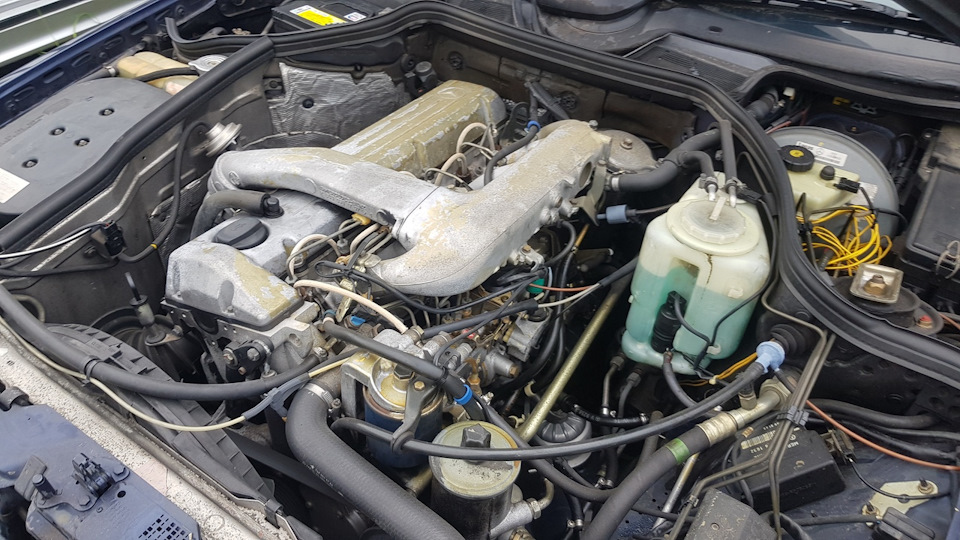
Cooling is liquid-based, with a mechanically driven coolant pump. The OM603.970 uses a revised coolant-pump pulley and other cooling-system changes compared with earlier applications. Cylinder-head-gasket design and coolant-channel configuration also differ between certain versions.
Because cylinder-head cracking and head-gasket leakage can produce overlapping symptoms, the cooling system has particular diagnostic importance on older OM603 engines.
Important OM603 Production Revisions
Mercedes-Benz made several design changes during the OM603 production period. Some addressed noise, sealing, cooling, or structural concerns, while others reflected differences between engine variants. A revision should not automatically be interpreted as evidence that every earlier component was defective.
Turbocharged Cylinder-Head Castings
For OM603.960, the technical change documentation identifies an engine-number breakpoint of 022706 in the automatic-transmission column. This should not be treated as a universal breakpoint for every OM603 variant or drivetrain.
Earlier Mercedes-Benz instructions also describe reinforcement of cooling-jacket features intended to protect against cylinder-head cracking. Changes introduced in different periods must be identified from the appropriate engine number and casting rather than treating every OM603 head as an identical design.
Owner discussions commonly refer to cylinder-head castings by the final two digits of the pattern 603 016 xx 01, including numbers 14, 17, 20, and 22. These designations can assist identification, but a casting number alone does not establish the current condition of the head or compatibility with every prechamber arrangement.
| System | Documented change | Practical significance |
|---|---|---|
| Hydraulic tappets | Ventilation provision introduced in September 1987 | Intended to reduce tappet noise associated with short-distance operation |
| Turbocharged cylinder head | Water-jacket and structural reinforcements | Relevant to crack resistance and replacement-head identification |
| OM603.96 piston | Combustion-recess revision in August 1988 | Use the piston configuration applicable to the engine revision |
| OM603.970 head gasket | Revised sealing features and combustion opening | Gasket selection is engine-specific; the opening increased to accommodate the larger bore |
| OM603.970 preglow system | Shorter glow-plug elements and revised preglow/afterglow operation | Relevant to cold-start diagnosis and replacement component selection |
| OM603.97x pistons | 1995 semi-cooling-gallery and ring revision | Later pistons require complete-set installation |
OM603 Reliability and Failure Analysis
The principal concerns supported by Mercedes-Benz service documents are not distributed uniformly across every OM603 engine. The most useful distinction is between verified mechanical conditions, component revisions, and observations reported by owners or rebuilders.
Cylinder Head and Sealing
- Revisions intended to protect the water jacket of turbocharged cylinder heads against cracking.
- Revised cylinder-head-gasket sealing at the oil-return passage.
Timing and Oil Consumption
- Timing-chain elongation addressed by Service Information 05/93 for specified W140 OM603 vehicles.
- Optimized piston-and-ring service measure for selected OM603.971 engines with oil-consumption complaints.
Emissions Equipment
- Trap-oxidizer replacement campaign for selected early North American OM603 turbo diesels, including turbocharger inspection.
Cracked Cylinder Heads on Early Turbocharged OM603 Engines
Cracking of the cylinder head is one of the most extensively discussed problems associated with early turbocharged OM603 engines. The strongest manufacturer evidence consists of production modifications to the head’s cooling-jacket structure and reinforcement of areas around the exhaust passages and valve-tappet guides.
Mercedes-Benz’s service manual describes changes intended to protect the cylinder-head water jacket against cracks. These changes demonstrate a recognized engineering concern without establishing a statistical failure rate for each casting.
Owner-reported symptoms include unexplained coolant loss, persistent pressure in the cooling system after operation, overheating complaints, and visible cracks discovered after cylinder-head removal.
Coolant loss can also result from an external leak or gasket failure, while residual cooling-system pressure alone does not establish that the cylinder head is cracked. Investigation should distinguish external coolant escape, cylinder-head-gasket sealing failure, and physical damage to the head.
Cooling-system pressure testing and inspection of the removed head may be necessary when initial checks do not identify the source.
Repair implications: A replacement head must be checked for the correct turbocharged application, prechamber compatibility, and associated component requirements. Installing a later casting is not sufficient evidence that a previously overheating engine has no remaining cooling-system or block damage.
Excessive Oil Consumption in OM603.970 and OM603.971
The 3.5-liter OM603 engines require separate oil-consumption analysis because of their different piston, ring, and cylinder arrangements.
Mercedes-Benz issued Service Tip 03T95121, dated December 1995 and revised February 1996, addressing the limited availability of optimized pistons with rings as a remedy for oil-consumption complaints.
Optimized Pistons for OM603.971
The service instruction requires related engine components and control systems to be functioning correctly before the special pistons are ordered or installed. Cylinder bores must be examined for abnormal wear, and the existing honing pattern must be assessed.
This restriction matters because a replacement piston-and-ring set cannot restore correct geometry to an excessively worn or distorted cylinder. It also prevents an oil-consumption complaint from being treated as automatic proof of defective original pistons.
For diagnosis, external oil leakage must be distinguished from actual oil burning. Internal oil consumption can involve the piston-and-ring assembly, cylinder condition, or other paths. Repair selection should follow the identified cause.
Timing-chain elongation can also appear among the causes investigated for certain W140 complaints: Service Information 05/93 includes increased oil consumption among its reported symptoms. The two OEM service documents therefore address potentially overlapping complaints but prescribe different inspections and repairs.
Bent Connecting Rods and Cylinder Damage in the 3.5-Liter Engine
Field Report The 3.5-liter OM603.97x has generated owner and repair discussions involving bent connecting rods, cylinder distortion, abnormal oil consumption, blue exhaust smoke, and irregular engine operation.
Some teardown accounts describe visibly deformed rods or out-of-round cylinders. Other cases describe substantial cylinder wear without confirmation that the connecting rods were bent. These observations are significant, but they do not establish a single initiating event.
Hydraulic locking caused by fluid entering a cylinder is one proposed explanation discussed in specialist communities. Other theories concern component loading and the different bottom-end geometry of the 3.5-liter engine.
The increase in stroke and reduction in connecting-rod length are verified design changes. Their existence does not independently prove that those changes caused the reported rod failures.
It is therefore incorrect to diagnose a bent rod solely from smoke or high oil consumption. These are symptoms of abnormal operation, not proof of a particular internal component failure.
One owner investigation describes significant cylinder damage without finding clearly bent connecting rods. Such cases demonstrate why oil consumption, cylinder wear, and rod deformation should be treated as separate observations until mechanical inspection establishes their relationship.
Repair implications: When internal damage is suspected, cylinder geometry, piston condition, and connecting-rod alignment become relevant. The extent of the necessary repair depends on physical measurements. A piston-and-ring replacement cannot correct an incorrectly shaped cylinder or deformed connecting rod.
Timing-Chain Elongation on W140 OM603 Engines
Mercedes-Benz Service Information 05/93, revised in November 1995, addresses engine complaints associated with a stretched timing chain. The OM603 portion applies to specified W140 vehicles manufactured between July 1992 and April 1994, with chassis end numbers A 092142 through A 202313.
The symptoms listed by Mercedes-Benz include unusual timing-chain-area noise, rough running, difficult starting, loss of power, and increased oil consumption.
The bulletin requires checking the relationship between the camshaft timing mark and crankshaft position. The camshaft mark is aligned according to the workshop procedure, and the resulting crankshaft position indicates the amount of timing deviation.
| Measured crankshaft-mark deviation | Mercedes-Benz service direction |
|---|---|
| 3–10 degrees | Replace the elongated chain and inspect the sprockets for wear or damage. |
| More than 10 degrees | Inspect piston crowns with a borescope for evidence of valve contact before continuing with repair. |
When sprocket teeth are worn or broken, the bulletin requires replacement of the affected camshaft and injection-pump timing sprockets along with the chain. If deviation exceeds 10 degrees and valve-to-piston contact is found, the resulting internal damage requires additional repair.
The bulletin identifies timing-chain part number 003 997 48 94 for the specified OM602/OM603 service context. Part fitment for another OM603 installation must still be checked.
Mercedes-Benz specifically states that visible chain-track marks or grooves on the guide rail do not, by themselves, justify replacement of the chain or rail.
The practical distinction is between a noise complaint and confirmed mechanical timing deviation. A rattling sound near the front of the engine is a reason to inspect the relevant systems, not proof that the timing chain has stretched.
Oil Leakage at the Cylinder-Head Gasket
Mercedes-Benz bulletin 01-85101, revised in January 1988, addresses oil leakage at the right rear area between the cylinder head and cylinder-head gasket on engines including OM603.
For OM603, the specified sealing improvement uses a Viton seal around the oil-return opening. The document identifies an April 1987 production phase-in.
This is an externally observable leak mechanism and should not automatically be grouped with piston-ring oil consumption. An engine can lose oil externally without significant oil entering the combustion chambers.
Before investigating an internal oil-burning complaint, identifying whether the oil level is falling because of external leakage can prevent unnecessary internal-engine repairs.
Vacuum-Pump Mechanical Failures
Field Report Detailed owner teardown accounts describe mechanical failure of the OM603 vacuum pump, including damage to pump-driving components and the release of bearing or other metallic debris.
Reported symptoms include abnormal mechanical noise, loss of vacuum assistance, and failure of vacuum-operated functions such as engine shutoff.
One independent account describes a failed pump followed by discovery of metallic fragments associated with subsequent lubrication-system damage. This establishes that serious secondary damage occurred in that reported case, not that every pump failure follows the same sequence.
When a vacuum pump has suffered internal mechanical damage, the repair assessment should extend beyond replacing the pump itself. Inspection for debris and damage to adjacent engine components may be necessary to understand the complete failure. Where debris has affected the lubrication system, oil-pressure problems and secondary mechanical damage must be considered separately from the original pump failure.
Mercedes-Benz introduced modifications to vacuum-pump components during the engine family’s development, but the existence of revised components alone does not quantify field failure frequency.
Trap Oxidizer and Turbocharger Damage
Early North American turbocharged OM603 applications used diesel trap-oxidizer equipment. Mercedes-Benz subsequently conducted Service Campaign 96-1121, replacing affected trap oxidizers with an oxidation-catalyst arrangement.
The campaign covered selected 1986–1987 applications, including:
- 1986 300 SDL Turbo, chassis 126.125, in the specified California configuration.
- 1987 300 D Turbo and 300 TD Turbo, chassis 124.133 and 124.193.
- 1987 300 SDL Turbo, chassis 126.125.
Associated Work Instructions 359A require turbocharger inspection on affected vehicles. Mercedes-Benz explicitly provided for turbocharger replacement under the campaign warranty arrangements when damage resulted from the trap oxidizer.
This identifies a specific upstream failure source: the original emissions component could cause turbocharger damage. Replacing a damaged turbocharger without addressing the relevant trap oxidizer would therefore fail to deal with the manufacturer-identified source of the problem.
The original trap oxidizer should not be confused with a later common-rail diesel particulate-filter system. These are different emissions architectures, and the campaign cannot be applied to all OM603 turbochargers.
OM603 Diagnosis: Distinguishing Symptoms from Root Causes
Several OM603 complaints can arise from more than one system. This is particularly important when the alternative repairs range from an external component replacement to cylinder-head removal or complete engine rebuilding.
| Symptom | Systems to distinguish | Useful verification |
|---|---|---|
| Unexplained coolant loss | External cooling leaks, head gasket, cylinder head | Cooling-system inspection and pressure testing; head inspection if necessary |
| Blue exhaust smoke | Internal oil consumption, turbocharger oil leakage, other oil-entry paths | Oil-loss history, external-leak inspection, cylinder condition, and turbocharger assessment |
| Irregular idle | Fuel delivery, compression, EDS-related control | Mechanical engine condition and applicable EDS diagnostic checks |
| Difficulty starting cold | Preglow system, fuel delivery, compression | Glow-plug current draw, preglow control, and mechanical checks where indicated |
| Noise near timing case | Timing drive, vacuum pump, adjacent mechanical drive components | Noise localization and verification of mechanical timing where indicated |
| Low indicated oil pressure | Actual lubrication problem or indication fault | Independent oil-pressure verification before determining the failed component |
| High oil consumption on OM603.97x | Rings, cylinders, pistons, external leaks, and other oil paths | Condition-based inspection and measurements before choosing a piston repair |
For an engine with both smoke and rough running, the timing of symptom onset can be informative. A progressive oil-consumption complaint should not automatically receive the same diagnosis as an abrupt change accompanied by mechanical noise.
Similarly, a completed turbocharger replacement that fails to resolve heavy smoke is evidence that the initial diagnosis requires re-evaluation. It does not establish which alternative component is responsible.
OM603.970 EDS Diagnostic Codes
The OM603.970 uses a manufacturer-specific Electronic Diesel System diagnostic arrangement. The service documentation identifies impulse-counter readings rather than the generic OBD-II P-codes used on newer vehicles.
The following information applies to the OM603.970 EDS strategy in the 1990 service introduction. It should not be transferred automatically to OM603.912 or OM603.960 installations with different equipment.
| Impulse code | OEM diagnostic meaning / area |
|---|---|
| 1 | No detected fault in the monitored electronics |
| 2 | Injection-pump rack-position sensor L7 |
| 3 | Air-flow sensor B2/1 |
| 4 | Atmospheric-pressure sensor associated with N39 |
| 5 | EGR vacuum transducer Y31/1 or its circuit |
| 6 | Internal voltage supply of EDS control unit N39 |
| 7 | Engine-speed sensor L3 |
| 8 | Coolant-temperature sensor B11/4 |
| 9 | Intake-air-temperature sensor B2/1a |
| 10 | Voltage-supply fault |
| 11 | Idle-speed actuator or EGR transducer circuit, subject to diagnostic conditions |
| 12 | Not assigned |
| 13 | EDS control unit N39 |
Mercedes-Benz specifies particular test conditions for some impulse readings. Code 5, for example, is associated with a defined engine-speed operating condition, while code 11 has a more limited fault-detection condition than its short description alone might suggest.
An EDS reading identifies a diagnostic area; it does not automatically prove that the named component itself has failed. Mechanical faults, wiring, control components, and operating conditions must be distinguished according to the applicable test procedure.
OM603 Maintenance: Oil, Coolant and Service Intervals
Maintenance requirements depend on vehicle, model year, and market. Mercedes-Benz of North America’s 1981–1993 Maintenance Manual provides the following routine oil-service intervals for the relevant North American applications.
| Application group | Scheduled interval |
|---|---|
| Diesel models other than W140 140.134 | 5,000 miles / approximately 8,000 km |
| W140 140.134 | 7,500 miles / approximately 12,000 km |
These are the maintenance-system intervals in the specified North American manual, not universal service intervals for every OM603 worldwide.
The same publication describes additional oil-service requirements under qualifying severe operating conditions. For certain earlier models, the prescribed oil-and-filter service interval is reduced, while later schedules describe an additional intermediate oil change under specified conditions. The correct requirement must be taken from the applicable vehicle maintenance booklet rather than applying a single severe-duty interval to every OM603.
Engine Oil Capacity
Two Mercedes-Benz factory publications give different oil-change quantities for W126 vehicles equipped with OM603.970:
| Mercedes-Benz document | Oil and filter |
|---|---|
| 1990 Introduction into Service, 126.134/135 | Approximately 8.0 liters |
| 1993 Maintenance Manual, OM603.97 in W126 | 7.5 liters |
| 1993 Maintenance Manual, OM603.96 in W124/W126 | 7.5 liters |
The difference between the 8.0-liter and 7.5-liter specifications is present in the source documents. It should not be represented as a manufacturer-defined capacity range, and the reason for the discrepancy is not conclusively established.
For servicing a particular car, confirm the correct documentation, sump, and dipstick configuration. The 1990 manual identifies a modified OM603.970 dipstick with the handle marking 603/6 and warns against interchanging it with the OM603.960 dipstick.
Other Service Information
| Service item | Supported information |
|---|---|
| Cooling-system capacity | Approximately 10.0 liters including heater for W126 126.134/135 OM603.970 |
| Coolant replacement | North American 1981–1993 maintenance documentation specifies replacement no later than three years |
| Oil filtration | Combination full-flow and bypass filter on the documented OM603.970 installation |
| Oil level | Use the specified dipstick procedure and correct engine-specific hardware |
| Valve clearance | Hydraulic lash compensation; no routine manual adjustment interval established |
| Timing-chain replacement | No universal fixed-mileage replacement interval established |
| Fuel and air filters | Use the vehicle-specific maintenance schedule |
| Glow plugs | Use the correct engine- and system-specific specification; no universal preventive replacement interval established |
Approved oil specifications, viscosity selections, and coolant formulations should be checked against the Mercedes-Benz operating-fluid documentation applicable to the exact vehicle. A modern universal oil grade cannot be assigned solely from the OM603 family designation.
Rebuilding an OM603: Cylinder Sleeves and Internal Parts
Mercedes-Benz Service Information 01/32
An important issue in OM603 rebuilding is the difference between early factory restrictions and later approved repair procedures.
Earlier Mercedes-Benz service literature stated that originally linerless blocks, including OM603.970, were not to receive replacement cylinder sleeves. However, Service Information 01/32, dated August 1994, introduced a rebuilding procedure permitting installation of cylinder sleeves in engines 602.96 and 603.96/97.
Cylinder-Sleeve Installation
The bulletin also provides a corresponding procedure for the 87 mm bore configuration, using a 90 mm block-bore dimension before sleeve installation.
This change means that a statement such as “OM603.970 cannot be sleeved” is historically incomplete. The original block was linerless, but a later manufacturer-approved rebuilding method allowed subsequent sleeving.
The bulletin specifies machining the installed sleeve back to the standard cylinder dimension. It does not establish a series of arbitrary sleeve oversizes, and the operation must follow the manufacturer-defined machining requirements.
Rebuilding still requires examination of the block and adherence to the specified dimensions. The existence of the procedure does not imply that a heavily damaged block can always be recovered economically or safely.
Evaluating a 3.5-Liter Bottom End
When rebuilding an OM603.970 or OM603.971 because of oil consumption or mechanical damage, piston replacement should not be the first or only assumption.
The observations reported on damaged 3.5-liter engines make cylinder shape and connecting-rod condition particularly relevant. If distortion, scoring, or internal damage is present, the repair must address the measured condition rather than relying on a nominal piston-and-ring kit.
Mercedes-Benz distinguishes several piston and ring revisions, and the 1990 service documentation identifies differences in bearing shells and piston-cooling nozzles. The later semi-cooling-gallery pistons specified in document 03-317 must also be fitted as a complete set.
For a replacement cylinder head, the casting identification, prechamber arrangement, gasket, and related hardware need to be matched to the specific engine configuration. A higher cylinder-head casting number is not, by itself, sufficient parts-fitment confirmation.
OM603 Service Bulletins and Emissions Campaigns
| Reference | Issue | Applicable scope | Service response |
|---|---|---|---|
| 01-85101 | External oil leak at cylinder-head gasket | Includes OM603; production sealing revision from April 1987 | Revised Viton sealing arrangement |
| 01/32 | Engine block rebuilding | 602.96 and 603.96/97 | Approved repair-sleeve machining procedure |
| 05/93 | Timing-chain elongation | Specified W140 OM603 chassis built July 1992–April 1994 | Check mechanical timing, replace chain, and inspect for damage as indicated |
| 03T95121 | Oil consumption | Specified OM603.971 engine-number range | Optimized piston-and-ring service measure after appropriate inspection |
| 96-1121 | Trap-oxidizer replacement | Selected 1986–1987 North American diesels | Replace with oxidation catalyst and inspect turbocharger |
Campaign 96-1121 is a Mercedes-Benz service campaign, not a safety recall merely because it required replacement of factory emissions hardware. Similarly, a technical service bulletin documents a condition and repair procedure without establishing how frequently that condition occurred.
The trap-oxidizer campaign documentation also describes an earlier warranty extension covering the original trap oxidizer on specified 1986–1987 vehicles. The later replacement oxidation catalyst had separate warranty conditions, including a stated 12-month, unlimited-mileage period in the historical customer communication.
These programs concern the specified emissions equipment and historical campaign eligibility. They are not extensions of warranty coverage for the entire OM603 engine or confirmation of present-day entitlement.
No engine-specific NHTSA safety recall addressing OM603 connecting-rod deformation or timing-chain elongation was established in the checked material. That does not establish the absence of unrelated vehicle recalls or other historical campaigns. Recall status for an individual vehicle should be checked against its VIN and applicable market records.
What to Check Before Buying an OM603-Powered Mercedes
A used vehicle’s exact OM603 variant and repair history are more informative than a general claim that the engine family is durable or problematic.
- Confirm the engine designation. Verify the complete 603.xxx code and compare it with the vehicle’s original application. Check whether the installed engine is original or a replacement.
- Identify the cylinder-head casting. This is especially relevant to early OM603 turbocharged engines. Check for prior head replacement and any documented overheating or cooling-system repair.
- Investigate unexplained coolant loss. Review coolant-level stability, external leaks, pressure-test results, and the history of head-gasket or cylinder-head repairs.
- Assess oil-consumption history. For OM603.970/.971, request evidence of measured oil consumption and any piston, ring, cylinder, or connecting-rod work.
- Investigate difficult cold starting. On applications with the revised preglow system, inspect glow-plug and preglow-control history rather than attributing a cold-start problem immediately to compression or the injection pump.
- Listen for abnormal mechanical noise. Investigate timing-drive noise and vacuum-pump-related symptoms rather than assuming all front-engine noises have the same cause.
- Check timing repairs where applicable. For affected W140 cars, determine whether the vehicle falls within the Service Information 05/93 chassis range and whether the relevant inspections were performed.
- Verify emissions-system history. On applicable early North American turbo diesels, check the status of the trap-oxidizer campaign and any associated turbocharger repair.
- Review service records. Correct oil servicing, coolant maintenance, and repair documentation are particularly valuable for engines that have undergone cylinder-head or bottom-end work.
- Assess evidence of a previous rebuild. Identify the actual components installed, whether sleeves were fitted, and whether later piston or head revisions are compatible with the specific engine.
On a 3.5-liter car with persistent blue smoke, rough running, or substantial oil consumption, a seller’s statement that the turbocharger or valve seals are responsible should be treated as a diagnosis requiring verification. Conversely, those symptoms are not sufficient evidence of a bent connecting rod.
OM603 Reliability in Practice
The OM603 has a conventional mechanical diesel foundation: an inline-six bottom end, prechamber fuel injection, a chain-driven single-cam valvetrain, and a cast-iron block. Its technical history, however, makes engine-code identification unusually important.
For early 3.0-liter turbocharged engines, cylinder-head construction and cooling-system condition are central concerns. Mercedes-Benz made specific head-casting and gasket revisions, and owner reports provide additional examples of cracks and related symptoms.
The OM603.970 and OM603.971 require particular attention to the piston-and-cylinder assembly, oil-consumption history, and evidence of connecting-rod damage. Mercedes-Benz’s optimized-piston service measure confirms that oil consumption warranted a defined repair response in certain OM603.971 engines, while field reports of bent rods do not establish a universal root cause.
Timing-chain elongation is supported by an application-specific Mercedes-Benz bulletin, and early emissions-equipped turbo diesels have their own trap-oxidizer campaign history. These conditions must not be applied indiscriminately to the whole family.
No defensible population-wide failure rate or universal engine-life figure is established by the available evidence. The practical condition of a particular OM603 depends on its installed version, production revisions, accumulated mechanical damage, service history, and the quality of previous repairs. Diagnosis should proceed from identifiable symptoms and confirmed component condition rather than from an engine-family reputation.
Sources & Technical References
- Mercedes-Benz 300 D (W124, 124.130) — Historical Technical Specification, reproduced in the Mercedes-Benz club archive. OM603.912 identification, original 80 kW rating, and February 1989 output revision.
- Mercedes-Benz 300 TD (S124, 124.190) — Facelift Technical Specification, historical manufacturer data reproduced in the Mercedes-Benz club archive. OM603.912 output differences with optional oxidation-catalyst equipment.
- Mercedes-Benz Public Archive — 300 D Turbo (W124). Manufacturer specifications for OM603.960, vehicle identification, and European output revisions.
- Mercedes-Benz — Model Indicator Index, reproduced through NHTSA. Factory model and engine identification references.
- Mercedes-Benz of North America — Model Year 1990/91 Introduction into Service, January 1990. OM603.970 mechanical changes, technical specifications, preglow operation, EDS diagnosis, lubrication, turbocharger, and service capacities.
- Mercedes-Benz — Engines 602/603 Service Manual. Cylinder-block construction, cylinder-head revisions, valvetrain, piston changes, and original rebuilding procedures; reproduced OEM documentation.
- Mercedes-Benz — Modifications to Pistons, 03-317. OM603.96/97 piston design changes, cooling arrangements, ring modifications, and complete-set requirement for revised OM603.970/.971 pistons.
- Mercedes-Benz — Service Information 05/93, November 1995. Timing-chain elongation, affected chassis, and inspection requirements.
- Mercedes-Benz — Service Tip 03T95121, Limited Availability of Optimized Pistons, December 1995, revised February 1996. OM603.971 oil-consumption service measure and engine-number restrictions; OEM documentation reproduced in a service archive.
- Mercedes-Benz — Service Information 01/32, Rebuilding Engine Block With Cylinder Sleeves, August 1994. Approved repair-sleeve installation in 603.96/97 engines.
- Mercedes-Benz — Service Bulletin 01-85101, Oil Leak Between Cylinder Head and Gasket, revised January 1988. Reproduced for the OM603.961 300 SDL; specifies the Viton oil-return seal for OM603.
- Mercedes-Benz of North America — Maintenance Manual, Model Years 1981–1993, S-2388-CS1, Supplement 5, March 1993. Oil-service intervals and application-specific service capacities.
- Mercedes-Benz — Service Campaign Bulletin 96-1121, February 1997. Trap-oxidizer replacement, model applicability, historical warranty conditions, and campaign classification.
- Mercedes-Benz — Work Instructions 359A. Emissions-hardware replacement and turbocharger inspection under Campaign 96-1121.
Field Sources
- PeachParts Mercedes-Benz Forum — Rod Bender True Stories. Owner and technician discussion of OM603.97x oil consumption, internal damage, symptoms, and repair experiences.
- OM603.97x 3.5L White Paper. Independent owner-produced technical investigation of 3.5-liter engine failures and proposed mechanisms; not an official Mercedes-Benz engineering finding.
- PeachParts Mercedes-Benz Forum — OM603 Cylinder-Head Pressure-Test Discussion. Field observations involving cylinder-head integrity and coolant-system complaints.
- PeachParts Mercedes-Benz Forum — OM603 Vacuum-Pump Failure and Teardown. Reported physical damage to vacuum-pump-related engine components.