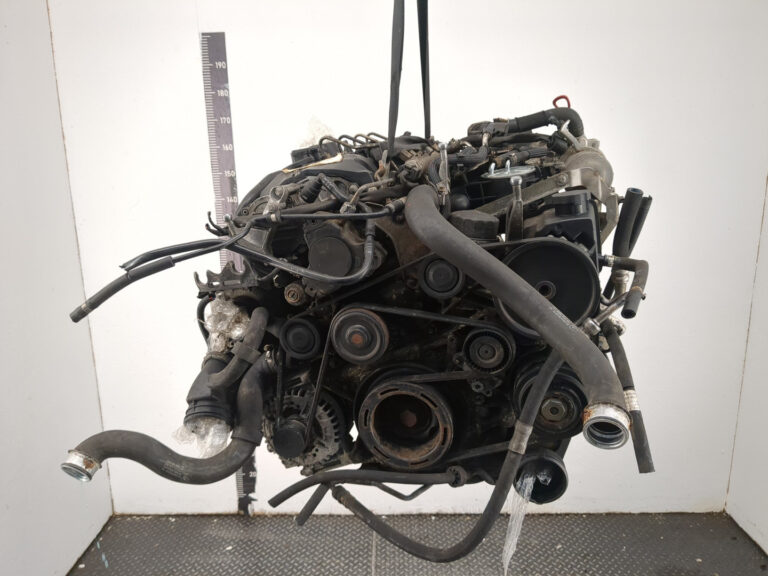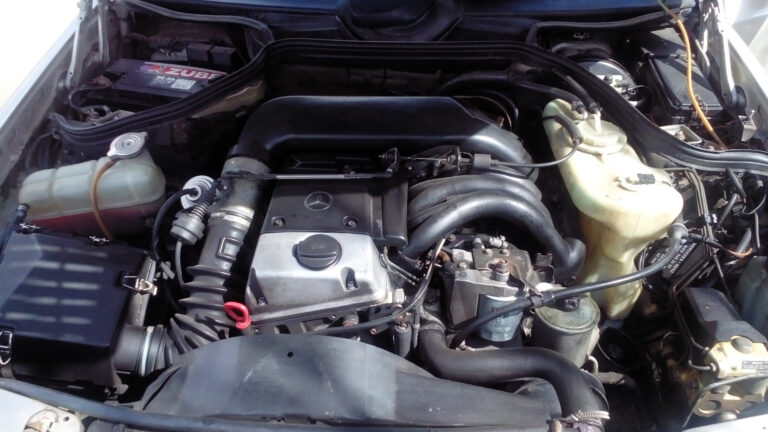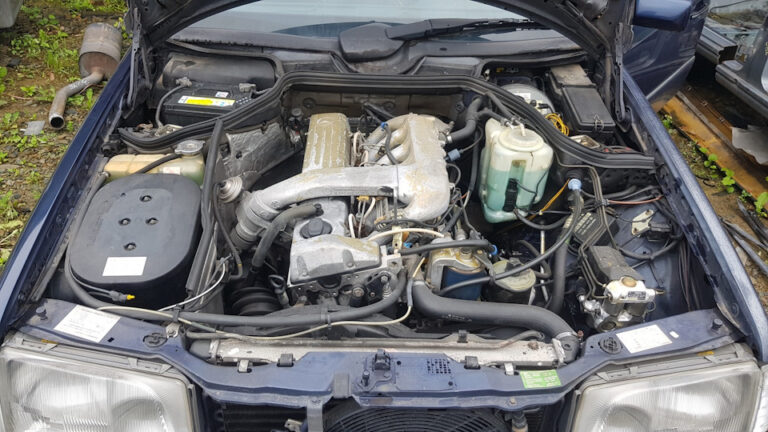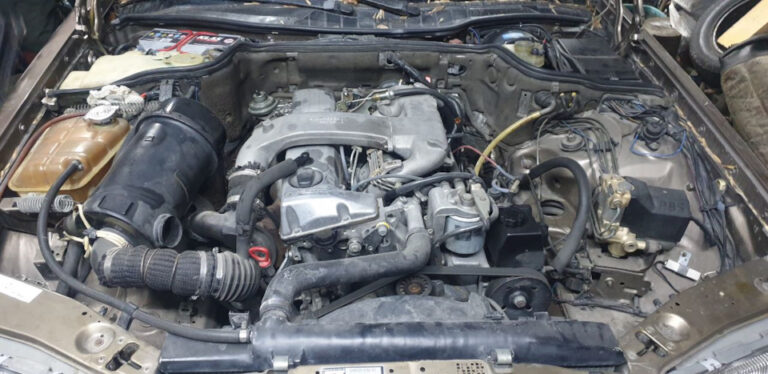
Mercedes OM606 Diesel Engine: Variants, Specs & Failure Analysis
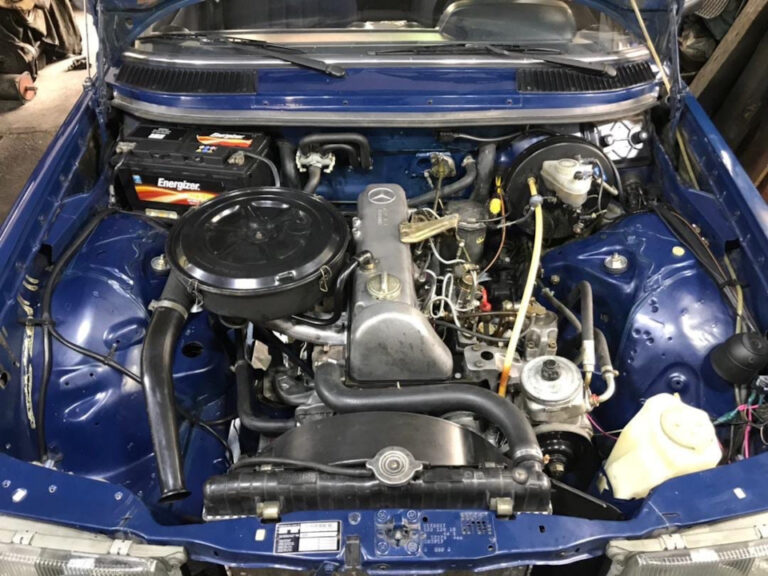
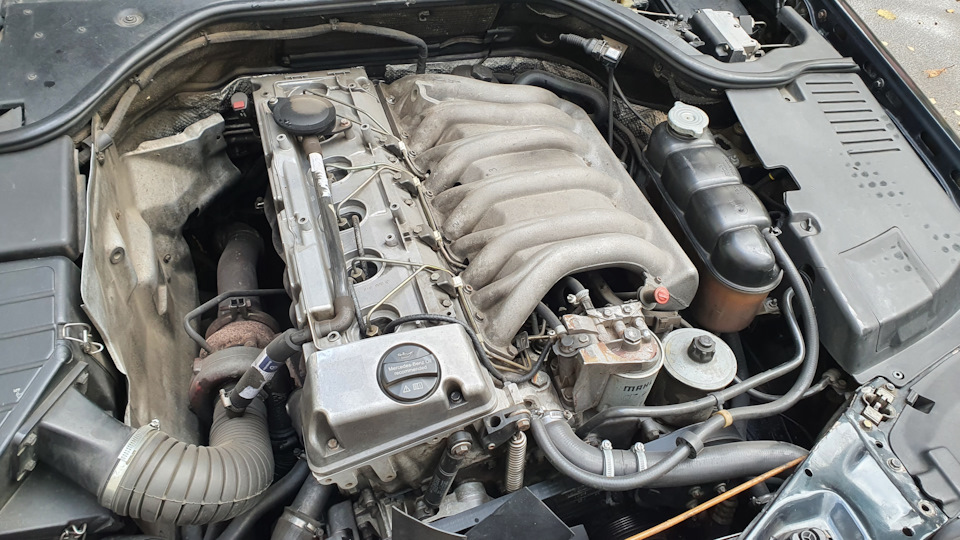
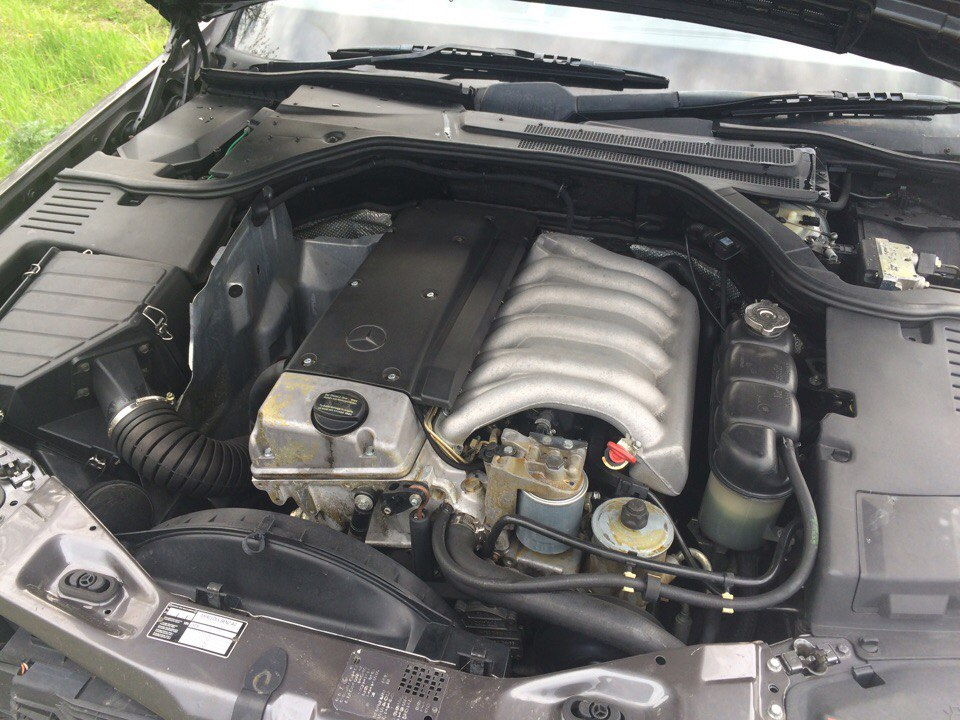
The Mercedes-Benz OM606 is a 2,996 cc inline-six diesel engine with a 24-valve cylinder head, indirect prechamber injection and both naturally aspirated and turbocharged versions. It was fitted to E-Class, S-Class and G-Class models during the 1990s. Although the variants share the OM606 designation, their fuel-pump control, intake arrangements, vehicle installations and diagnostic systems are not interchangeable.
That distinction matters when researching OM606 reliability. Mercedes issued a timing-chain service instruction covering certain W124 engines and a separate technical bulletin addressing front crankshaft seal compatibility on the W210 OM606.962. Owners also describe fuel-line air ingress, injection-pump-area leaks and difficult glow-plug removal. Each concern has a different level of supporting evidence, and none of those findings establishes a failure rate for the entire OM606 family.
Mercedes-Benz OM606
OM606 Specifications and Engine Codes
Mercedes technical information for the W124 OM606.910 and the US W210 OM606.962 establishes the same 87.0 mm bore, 84.0 mm stroke and 2,996 cc displacement. The W124 documentation also describes a six-cylinder engine inclined 15 degrees to the right and driven by a duplex camshaft timing chain. Construction references describe a cast-iron block, aluminium cylinder head and seven crankshaft main bearings.
| Specification | Documented value |
|---|---|
| Engine layout | Inline six-cylinder, four-stroke diesel |
| Displacement | 2,996 cc |
| Bore × stroke | 87.0 × 84.0 mm |
| Cylinder block / head | Cast iron / aluminium, supported by engine-rebuilding technical references |
| Valve arrangement | DOHC, four valves per cylinder, 24 valves total |
| Camshaft drive | Duplex timing chain, confirmed in OM606.910 technical data |
| Fuel injection | Inline-pump, indirect prechamber diesel injection; pump control depends on variant |
| Compression ratio | 22.0:1 confirmed for the documented W124 OM606.910 and US W210 OM606.962 applications |
| Firing order | 1-5-3-6-2-4 in the US OM606.962 operator’s manual |
| Maximum engine speed | 5,200 rpm in the US OM606.962 operator’s manual |
The 22.0:1 compression figure should not be assumed for every engine suffix. Some secondary references give conflicting figures for naturally aspirated OM606 engines, and an original variant-specific confirmation for OM606.912, .961 and .964 has not been established to the same standard. Likewise, the W210 oil fill, engine-speed limit and diagnostic codes are not universal OM606 specifications.
Power, torque and main applications
| Engine code | Factory vehicle / chassis | Output | Torque | Documented application period |
|---|---|---|---|---|
| OM606.910 | W124 E 300 Diesel (124.131); S124 E 300 Diesel / E 300 TD (124.191) | 100 kW / 136 PS at 5,000 rpm | 210 Nm at 2,200–4,600 rpm | W124 record: regular sedan introduction 07/1993, ending 08/1995; S124 parts-fitment coverage approximately 06/1993–06/1996 |
| OM606.912 | W210 E 300 Diesel (210.020) | 100 kW / 136 PS at 5,000 rpm in specialist model reference | 210 Nm; rpm specification not independently established here | Approximately 1995–1997, subject to market and production records |
| OM606.961 | W140 S 300 Turbodiesel (140.135) | 130 kW / 177 PS at 4,400 rpm | 330 Nm at 1,600 rpm in Swiss approval entry | Specialist coverage approximately 1996–1998; Swiss type approval dated 16 July 1996 |
| OM606.962 | W210/S210 E 300 Turbodiesel (210.025 / 210.225) | 130 kW / 177 PS in European specification | 330 Nm; US manual specifies 2,600 rpm | European applications around 1997–1999; US 1998–1999 model years documented |
| OM606.964 | W463 G 300 Turbodiesel (463.308 / 463.330 / 463.331) | 130 kW / 177 PS at 4,400 rpm | 330 Nm at 1,600 rpm in Swiss approval entries | W463 cabriolet (463.308), short wagon (463.330) and long wagon (463.331); Swiss records include a May 2000 approval |
The application periods above reflect different kinds of evidence: Mercedes vehicle data, professional fitment catalogues and Swiss type-approval entries. An approval date is not necessarily a factory introduction date, and a parts-catalogue listing should not be treated as proof that every adjacent model year used the engine. For exact identification, check the full engine suffix alongside the chassis and the vehicle’s original build information.
Two names deserve care. The S124 E 300 TD with OM606.910 is naturally aspirated; in the older Mercedes estate designation, “TD” does not automatically mean turbocharged. Conversely, the W210/S210 E 300 Turbodiesel uses the forced-induction OM606.962. A historical transcription also refers to 606.960 for the W140, whereas independent W140 140.135 approval and component sources identify 606.961. Without an original engine-code register resolving that discrepancy, .960 should not be presented as a fully established separate production variant.
Understanding the US horsepower discrepancy
The 1999-model US E 300 Turbodiesel operator’s manual contains an internally contradictory power line printed as “174 kW / 130 hp.” The units appear to be reversed. The European 130 kW rating corresponds to approximately 177 metric horsepower (PS), or 174 mechanical/SAE horsepower. These conversions explain why apparently different power figures circulate; they do not support a 174 kW production OM606.962. The same US manual gives 330 Nm at 2,600 rpm.
Mechanical Design: What Differs Between the Versions
Bottom end, head and timing drive
The OM606 combines an iron crankcase with an aluminium 24-valve cylinder head. Two overhead camshafts operate the four-valve-per-cylinder arrangement. Rebuilding references identify seven crankshaft main bearings, while Mercedes documentation for OM606.910 identifies a duplex roller chain driving the camshafts.
The presence of a common basic architecture does not mean that turbo and non-turbo pistons, connecting rods, oil-system parts or engine-management components are interchangeable. Original component revision numbers, casting differences and internal clearances were not established for every suffix. An engine assembly intended for another OM606 application therefore requires an engine-number and parts-catalogue check rather than reliance on the shared three-digit family name.
The 1999 E300 Turbo Diesel repair information compiled by Mitchell Repair Information Company identifies hydraulic valve lifters on the US OM606.962 and states that periodic mechanical valve-clearance adjustment is unnecessary. This does not establish hydraulic-lifter parts interchangeability with other OM606 versions.
Mercedes workshop procedure AR01.30-P-7162B covers evaluation of cylinder-head contact surfaces and material condition on engines 604, 605 and 606 after relevant damage, including overheating. Serious thermal damage therefore requires inspection of the head before reuse; the procedure does not establish a recurring OM606 head-casting or gasket defect.
Natural aspiration, resonance intake and turbocharging
The OM606.910 has a naturally aspirated resonance intake, including vacuum-operated switching elements identified in Mercedes service literature as Y22/6 and Y22/7. The OM606.912 remains naturally aspirated but uses a different, electronically controlled injection system. The OM606.961, .962 and .964 are turbocharged and intercooled applications, with installation-specific charge-air plumbing.
On OM606.962, Mercedes IFI diagnostics identify a hot-film air-mass sensor B2/5, intake-temperature sensor B17, pressure sensor B28 and control transducer Y31/5 associated with boost-pressure or pressure-control-flap functions. These specific W210 identifiers should not be copied to a W124 OM606.910 or assumed to match every W140 and G-Class installation. Factory boost settings and exact turbocharger specifications for all suffixes were not established in the available technical documentation.
Swiss type-approval records identify catalytic exhaust aftertreatment in the specified W140 and W463 configurations, while the W210 OM606.962 diagnostic material identifies EGR control. Those records do not establish identical emissions equipment for all markets or justify claiming that every OM606 left the factory with a DPF or SCR system.
Mechanical versus electronically controlled injection
This is one of the most important distinctions for maintenance and fault diagnosis. The W124 OM606.910 has a mechanically governed, six-plunger Bosch inline injection pump. The W210 OM606.912 uses electronically controlled inline injection, despite being naturally aspirated. The W210 OM606.962 uses electronic in-line fuel injection (IFI) monitored by the N3/7 controller.
For OM606.962 the Mercedes diagnostic documentation names fuel-quantity actuator Y23/1, fuel-rack position sensor Y23/1l1, fuel-temperature sensor Y1/1b1, electrohydraulic shutoff actuator Y1/1 and accelerator-position input R25/2. A starting or fuel-delivery complaint on this engine therefore cannot be diagnosed as though it had only a mechanically governed pump.
There is also a production-related control distinction within OM606.912. The Mercedes Test and Adjustment Data — Engine 606.912 document (Diagnostic Manual, revision 09/2000) specifies MSA 15.1 from September 1995 through May 1996 and MSA 25.1 from June 1996. The document distinguishes the two strategies through their diagnostic interfaces and test procedures, although the specified idle-speed range is 610–710 rpm for both. This is a documented control-system change, not evidence that the earlier system had a proven defect. Identify the correct strategy before applying test values or selecting replacement electronics.
Timing-Chain Elongation: The W124 Service Bulletin
Among the OM606 concerns supported by manufacturer service information, timing-chain elongation has an unusually specific scope. Mercedes service information S.I. 05/93, revised in November 1995, added engine 606 to a bulletin about engine-related complaints arising from a stretched timing chain. The bulletin includes selected W124 cars with engine 602 or 606 and also refers to a different engine and chassis. It does not establish that all OM606 engines need a chain at a certain mileage.
The bulletin’s complaints include engine-area noise, rough running, hard starting and reduced power. Its diagnostic focus is the relationship between camshaft and crankshaft timing. Those symptoms alone do not prove chain elongation: the service instruction calls for the prescribed timing check.
Applicable chassis ranges
The W124 section contains the following chassis-number limits together with original production restrictions referring to July 1992 through April 1994. Both the fitted engine and the relevant build details must be checked; a serial number in the table is not by itself proof that the vehicle contains an affected OM606.
| Chassis-series prefix | From | To |
|---|---|---|
| B | B 810470 | B 999999 |
| C | C 000001 | C 142875 |
| J | J 001335 | J 049633 |
| F | F 231885 | F 293159 |
What Mercedes instructs technicians to check
The procedure references OM606 timing verification under AR 05.20-6010 HA. After establishing the specified camshaft position, crankshaft position is checked for basic timing deviation. The bulletin differentiates two outcomes:
- 3–10 degrees crankshaft deviation: replace the elongated timing chain and inspect relevant sprocket teeth. Sprockets with worn or damaged teeth require attention under the prescribed repair procedure.
- More than 10 degrees deviation: check piston crowns with a borescope for signs of valve contact. If valve-to-piston contact has occurred, secondary damage must be assessed before the timing repair. If no contact is found, the bulletin directs the chain/sprocket repair path rather than assuming cylinder-head work is necessary.
Mercedes also states that tracking or grooves visible on guide surfaces alone do not necessarily justify replacing the chain or guide. This helps distinguish a measurable timing condition from an incidental visual mark. The bulletin refers to engine-specific repair operations, including AR05.10-7601 HA, for subsequent work.
For a W124 with unexplained timing-related symptoms, the important questions are whether the correct chassis/engine combination falls within the bulletin and whether the specified measurement was performed. For a W210, W140 or W463, the mere existence of S.I. 05/93 is insufficient to diagnose chain failure.
Hard Starting, Fuel Leaks and Injection-Pump Diagnosis
Fuel-system sealing is one of the more useful subjects in OM606 owner reports, even though it is not supported by a known population failure rate. Owners in independent Mercedes communities describe fuel seepage or air entry at line connections, seals and injection-pump fittings. They report symptoms such as prolonged cranking and starting difficulties, sometimes with visible evidence of air or diesel around connections.
Air entering the fuel system
A particularly well-identified Norwegian forum case concerns a 1997 S210 E 300 TDT with OM606.962. The owner described starting difficulties, replacement of fuel-line O-rings and later leakage around fuel components. Independent PeachParts discussions describe other line and connector leaks. These are individual repair histories rather than controlled evidence that all OM606 engines have a particular fuel-line defect.
When visible leakage or air entry is reported, that observation is more specific than the generic conclusion “bad injection pump.” The repair scope depends on where the leak is actually located, whether the correct line/seal arrangement is installed and whether the complaint remains after repair. No universal OM606 seal-replacement interval was established.
The Norwegian owner also described a banjo-ended fuel-line conversion associated with OM606.910 that did not fit the OM606.962 turbo injection-pump arrangement. This is a field-reported mismatch, not official parts compatibility data, but it highlights why a replacement line or proposed conversion should be checked against the exact engine and pump configuration.
Delivery-valve and pump-area seepage
Other owner reports describe external diesel leakage at injection-pump delivery-valve sealing locations, with O-rings and copper washers discussed as repair items. The reports establish that this is an observed repair concern, but they do not prove a fixed failure mileage or an internal pump defect. Seepage at the delivery-valve area, a line connector and an electronically controlled pump problem must remain separate diagnostic possibilities.
Electronic fuel-control faults on OM606.962
Where an IFI-equipped W210 has hard starting or drivability complaints without a clearly established external leak, the Mercedes diagnostic architecture provides additional branches: the fuel-quantity actuator, rack-position sensing, fuel-temperature input and electric shutoff system. On that system, P1220 relates to fuel-quantity control, P1223 to rack-position sensing and P1622 to the shutoff-actuator circuit. These codes identify distinct test areas, not proof of internal injection-pump wear. An external fuel-line leak and an electronic control fault require different verification before parts are ordered.
| Observed problem | System to distinguish | Evidence-based next check |
|---|---|---|
| Extended cranking with visible air or diesel seepage | External lines, connectors and seals | Identify leak location and exact engine/pump hardware before replacing parts; owner-reported pattern |
| Fuel seepage concentrated at pump delivery-valve area | External delivery-valve sealing | Confirm physical leak location; do not equate it with internal pump failure |
| Hard starting or reduced power without visible leakage | IFI actuators, sensors or shutoff circuit | Use the variant-specific Mercedes diagnostic procedure and DTCs |
| Proposed fuel-line modification from another OM606 | Component compatibility | Confirm engine suffix and injection-pump/parts fitment before installation |
Glow-Plug Faults and the Separate Risk of Broken Plugs
Mercedes OM606.962 diagnostic information identifies preglow control module N14/2 and monitored glow-plug circuits. The fault-code system can report a preglow electrical problem, but a fault code is not evidence that a plug is mechanically seized in the cylinder head.
OM606 owners separately describe plugs resisting removal, lengthy extraction attempts and broken plugs. An identified W124 OM606.910 repair report discusses extraction resistance, while another independent OM606 account describes a plug fracturing during replacement. These are practical maintenance reports, not manufacturer data on what percentage of engines experience the problem.
BERU’s component-manufacturer technical guidance confirms the broader mechanism: removing an aged or seized glow plug can involve substantial resistance and risks breakage when the permissible removal conditions are exceeded. A broken plug may turn a routine replacement into an extraction or thread-repair operation. However, the applicable torque and removal procedure depend on the particular installed component; a forum anecdote cannot replace manufacturer instructions.
The diagnostic distinction is important. On an OM606.962, P1481 identifies a glow-plug circuit test area, whereas P1482 concerns the preglow-module test area. Whether an individual plug can be removed safely is a separate mechanical service question. A technician or buyer reviewing the vehicle’s history should consider both the electrical fault and the record of prior plug replacement.
Turbocharged OM606: Reduced Power Is Not Automatically Turbo Failure
The turbocharged OM606.961, OM606.962 and OM606.964 have charge-air systems specific to their installations. For W210 OM606.962, Mercedes lists boost-related sensing and vacuum-control functions as part of the IFI diagnostic strategy. Its manual also discusses reduced-performance operating modes following relevant signal or control faults.
In owner discussions, 1998 E 300 Turbodiesel cars are reported with weak acceleration or limited boost and attempts to trace EGR, vacuum or boost-control problems. The exact failed component is not consistently proved across these accounts. These reports are useful because they demonstrate a diagnostic pitfall: loss of turbocharged performance is not equivalent to physical damage to the turbocharger shaft, bearings or compressor.
For the W210 IFI system, P1470 is associated with the boost/pressure-control transducer area, and P1403 and P1404 relate to EGR control. Mercedes describes tests for the electrical and vacuum-control systems. A stored code identifies where diagnosis should proceed; it does not conclusively identify the failed part.
General rebuild-shop commentary mentions turbocharger wear and leaks on OM606 engines, but no engine-code-specific dataset establishes a repeating turbo manufacturing defect or predictable replacement mileage. The same limitation applies to claims about oil-pump failure, bearings, piston damage and chronic crankcase-ventilation problems. They should not be promoted to a list of established OM606 weaknesses simply because such repairs are mechanically possible.
OM606.962 Front Crankshaft Seal: A Documented Revision
Mercedes technical information P-SI-03/51, issued in July 1998, describes a concrete service-parts compatibility issue on the W210 OM606.962. Production changed from an earlier conventional radial-lip crankshaft seal to a PTFE/Teflon-lip design. The bulletin identifies the revised seal by part number and gives an engine-number breakpoint.
Front crankshaft seal and damper sealing surface
The later vibration-damper sealing surface was not hardened in the same way as the earlier version. Mercedes specifies that the earlier conventional seal must not be used against the later non-hardened surface: that combination causes leakage. The newer PTFE seal, by contrast, can also be used with the earlier hardened damper surface. The bulletin additionally discusses fitting tooling to avoid damaging the replacement seal.
The damper introduction date is not established as precisely as the first seal change. The bulletin names damper identifiers 606 030 03 03 for the 606.91 group and 606 030 04 03 for the 606.96 group in its compatibility discussion; these numbers are not proof that a particular damper is defective.
This matters when an engine has previously undergone front-seal or vibration-damper service. A front oil leak after such work calls for inspection of the exact installed seal, damper sealing surface and repair history. It does not establish that every OM606.962 is predisposed to chronic front-seal leakage.
OM606.962 Diagnostic Trouble Codes
The following codes come from the Mercedes-Benz diesel diagnostic manual for the W210 OM606.962 IFI system, from March 1997 production / 1998 model-year diagnostic scope. Mercedes distinguishes its internal system DTCs from mapped OBD DTCs. They should be read as diagnostic areas, not as a shopping list of failed parts.
| Mercedes system DTC | OBD DTC | Diagnostic area |
|---|---|---|
| P0100 | P0100 | Hot-film air-mass sensor B2/5 |
| P0105 | P0235 | Pressure sensor B28 |
| P0110 | P0110 | Intake-air temperature sensor B17 |
| P0115 | P0115 | Engine-coolant temperature sensor B11 |
| P0180 | P0180 | Fuel-temperature input Y1/1b1 |
| P0300 | P0300 | Compression-ignition miss / uneven combustion diagnostic area |
| P1220 | P0200 | Fuel-quantity actuator Y23/1 |
| P1222 | P0220 | Accelerator-position input R25/2 |
| P1223 | P0200 | Fuel-rack position sensor Y23/1l1 |
| P1335 | P0725 | Crankshaft-position sensor L5/6 |
| P1403 / P1404 | P0400 | EGR vacuum / control transducer Y31/1 area |
| P1470 | P0243 | Boost / pressure-control-flap vacuum transducer Y31/5 |
| P1480 | P0380 | Preglow control |
| P1481 | P1365 / P1367 / P1369 | Glow-plug cylinder-circuit area |
| P1482 | P0380 | Preglow module N14/2 |
| P1610 | P0560 | Fuse and relay module K40/4 |
| P1622 | P0215 | Electrohydraulic fuel shutoff actuator Y1/1 |
The Mercedes manual also cautions that P0600 can be stored in circumstances where there is no underlying malfunction. It documents controller version coding with the manufacturer’s Hand-Held Tester, including vehicle and drive-authorization requirements. Unrestricted ECU interchange between similar-looking OM606-powered cars is therefore not a validated troubleshooting method.
Do not apply this code table to OM606.910, .912, .961 or .964. In particular, the MSA 15.1/MSA 25.1 change on OM606.912 requires its own model- and build-date-appropriate Mercedes diagnostic material.
Oil, Coolant and Service Requirements
Mercedes service information is application-specific. The manufacturer figures below come from the US 1999-model E 300 Turbodiesel operator’s manual for W210 210.025 with OM606.962. A conflicting secondary engine-oil fill is explained after the table.
| Service parameter | Manufacturer information | Scope |
|---|---|---|
| Engine oil including filter | 7.5 US quarts / 7.1 litres | US W210 E 300 Turbodiesel 210.025 |
| Cooling-system capacity | Approximately 10 litres | Same US W210 application |
| Diesel specification | ASTM D975 Grade 1-D or 2-D | US operator’s manual |
| Engine-oil selection | Mercedes-approved service products, according to the applicable service documents | Exact viscosity/approval depends on the correct documentation |
| Flexible Service System | Reset starting point around 10,000 miles / 365 days; subsequent service is operating-condition dependent | US W210 with FSS, not a universal oil-change interval |
| Timing-chain service | No universal mileage-based OM606 change interval established | Use the applicable repair/inspection document |
There is a genuine published discrepancy in the OM606.962 oil-fill figures. The original US 1999-model Mercedes-Benz operator’s manual specifies 7.1 litres with filter for the E 300 Turbodiesel; a separate 8.0-litre entry in its capacities table belongs to the automatic transmission. However, the 1999 E300 Turbo Diesel engine article published by Mitchell Repair Information separately gives 8.0 litres with a new oil filter, and Rüdiger Etzold’s W210 diesel workshop reference also lists 8.0 litres for the European E 300 Turbo-D. Thus, the competing 8.0-litre engine figure cannot simply be dismissed as a transcription of the transmission row. The Mercedes operator’s manual remains the directly verified manufacturer instruction for its stated US application; these secondary figures do not establish a universal fill target. Confirm the correct vehicle- and service-procedure-specific value before filling, and follow the applicable Mercedes oil-level check. Oil quantities for other OM606 installations must be verified separately.
The Flexible Service System is similarly easy to misread. It determines service timing according to vehicle use, while the service booklet identifies the operations due. The initial display value is not a fixed oil-change rule for other OM606 applications. No universal severe-service interval, coolant replacement interval, air/fuel-filter interval or glow-plug replacement mileage has been established by the sources used here.
What to Check Before Buying an OM606-Powered Mercedes
The most useful inspection is specific to the car, engine suffix and previous repairs rather than a generic judgement about the OM606 name. For a car with evidence of previous repairs, correct parts pairing and the applicable Mercedes test procedure matter more than a generic OM606 problem list.
- Confirm the engine suffix and chassis. Distinguish W124 OM606.910, W210 OM606.912/.962 and W140/W463 turbo versions; do not infer the engine from a “300 TD” badge alone.
- Check cold-start behaviour and visible fuel seepage. Fuel-line connector/O-ring and injection-pump-area leaks are described in independent owner cases. A start complaint alone does not determine the repair.
- Review the timing-chain repair history on the applicable W124. If S.I. 05/93 fits the car, ask whether the specified cam/crank timing check was carried out and what was actually measured.
- Inspect for front crankshaft-area oil leakage after previous repairs. On OM606.962, determine whether the revised seal and vibration-damper surface were correctly paired.
- Ask about glow-plug replacement. Electrical preglow faults and plugs breaking during extraction require very different work.
- Diagnose reduced power by the correct electronic strategy. On OM606.962, read IFI codes and check the appropriate boost, vacuum and EGR control systems before assuming turbo failure.
- Check for evidence of previous overheating. Serious thermal damage can require Mercedes-specified cylinder-head surface and material inspections.
- Match service records to the vehicle. Confirm that the oil grade, fluid quantity and service guidance relate to the specific chassis, market and engine rather than a generic OM606 internet figure.
- Verify electronic-component compatibility after past replacements. An OM606.912 control strategy from early production should not be confused with the later one, nor an IFI controller swapped without regard to coding and authorization.
Repair Scope and What the Evidence Does Not Establish
The OM606’s available technical evidence supports several repair decisions but does not justify a universal rebuild or replacement recommendation. A timing deviation meeting the criteria of the restricted W124 bulletin can require chain replacement and inspection of sprockets, and a sufficiently large deviation triggers evaluation for possible valve-to-piston contact. Front crankshaft leakage after work on OM606.962 requires confirming seal/damper compatibility. Seepage from an external fuel-line seal does not by itself justify pump replacement, while a broken glow plug creates a separate extraction and possible thread-repair operation.
Professional rebuilding sources discuss bearings, turbocharger repairs, crankcase ventilation and other service work. The fact that these operations can be carried out does not tell us how often those components fail, which exact suffixes are affected or at what mileage. The reviewed evidence does not establish a recurring family-wide piston, ring, crankshaft, bearing, oil-pump, cooling-system or turbocharger design defect. It also provides no defensible numerical repair-cost range or engine-life threshold.
OM606 Reliability: What the Evidence Supports
The clearest manufacturer-described OM606 mechanical concern is chain elongation addressed for specific W124 vehicles in S.I. 05/93. The clearest production/service compatibility issue is the revised front crankshaft seal on OM606.962, especially when older seals and later damper surfaces have been mixed. Both are defined by application and technical conditions rather than an established family-wide failure rate.
Independent owners repeatedly discuss external fuel sealing, air ingress and glow-plug extraction difficulties, while W210 diagnostic information explains why hard starting and loss of boost can require checking electronic and vacuum-control circuits. These observations are valuable for practical troubleshooting but do not establish statistical prevalence. Evaluating a particular OM606 is best done by confirming its suffix, repair history, observed symptoms and the Mercedes procedures that actually cover its installation.
Sources & Technical References
- Mercedes-Benz club technical data — W124 E 300 Diesel / OM606.910: engine dimensions, power, compression, mechanical injection and timing arrangement; manufacturer-derived data hosted by a club.
- Mercedes-Benz — 1999-model E-Class Operator’s Manual, September 1998: US E 300 Turbodiesel specifications, oil/coolant quantities, fuel and FSS; OEM document hosted by a third party.
- Mercedes-Benz — Diagnostic Manual, Diesel Engines, IFI Engine 606.962, revision 09/2000: W210 electronic architecture, internal/OBD diagnostic codes and controller coding; OEM-document mirror.
- Mercedes-Benz — S.I. 05/93, Engine Complaints Due to Stretched Timing Chain, November 1995 revision: restricted W124 application and timing checks; the mirrored website also indexes the multi-engine bulletin under W140/OM603.
- Mercedes-Benz — P-SI-03/51, New Crankshaft Radial Lip Seal, July 1998: OM606.962 engine breakpoint, seal part numbers, fitting tools and damper compatibility.
- Swiss vehicle type-approval data mirror — S 300 Turbodiesel / 140.135: OM606.961 fitment and approved output; republication rather than the original ASTRA interface.
- Swiss vehicle type-approval data mirror — G 300 Turbodiesel / 463.331: OM606.964 application and approved output.
- Mitchell Repair Information Company — 1999 Mercedes-Benz E300 Turbo Diesel, 3.0L Six-Cylinder Engine, copyright 1998, excerpt republished by eManualOnline: identifies hydraulic valve lifters and specifies an 8.0-litre crankcase fill with a new filter. This is aftermarket professional repair information, not an original Mercedes WIS publication.
- Rüdiger Etzold / Delius Klasing — Mercedes E-Klasse Typ 210 Diesel, So wird’s gemacht, vol. 104, 6th edition: specialist W210 model table identifying OM606.912 as 100 kW at 5,000 rpm and OM606.962 as 130 kW; also lists an 8.0-litre engine-oil figure for the European E 300 Turbo-D. Its data are secondary and do not override the US Mercedes operator’s manual.
- Mercedes-Benz — IFI Fuel Supply Task/Design/Function, OM606.912: identified manufacturer service procedure reproduced by a workshop-document mirror.
- Mercedes-Benz — Test and Adjustment Data, Engine 606.912, Diagnostic Manual: Diesel Engines, 09/2000, section A4 IFI 14: full manufacturer-document mirror specifying the September 1995–May 1996 MSA 15.1 and June 1996-onward MSA 25.1 diagnostic strategies and test values.
- Mercedes-Benz — AR01.30-P-7162B, Checking Cylinder-Head Contact Surface: multi-engine workshop procedure including OM606, applicable to head assessment after damage; OEM-document mirror.
- BERU — All About Glow Plugs: component-manufacturer guidance on extraction resistance and mechanical breakage risks in diesel service; not OM606-specific prevalence data.
Field Sources
- Mercedes-Benz Entusiastklubb — OM606: Air in Diesel Lines (2016): identified 1997 S210 OM606.962 starting, fuel-leak and reported line-conversion compatibility case.
- PeachParts — OM606 Fuel Leaks (2017): independent owner accounts concerning external fuel connectors and pump-area sealing.
- PeachParts — OM606 Glow Plug Change, One Broke Off (2019): individual extraction-breakage and repair experience.