Mercedes OM604 Diesel Engine: Specs, Reliability & Failure Analysis
The Mercedes-Benz OM604 is a naturally aspirated, four-cylinder diesel engine with a 16-valve cylinder head, chain-driven overhead camshafts and electronically controlled Lucas EPIC fuel injection. It appeared in selected W202/S202 C-Class and W210 E-Class diesel models. Two displacements were offered: the 1,997 cc OM604 D20 and the 2,155 cc OM604 D22.
The distinction between an OM604 and a later Mercedes CDI diesel matters for both diagnosis and parts selection. The OM604 uses indirect injection into prechambers, supplied by a Lucas electronically controlled distributor-type injection pump. It has no common-rail fuel system or turbocharger in the passenger-car configurations covered here. The exact .910, .912, .915 or .917 suffix is important when checking applications, service literature and production changes.
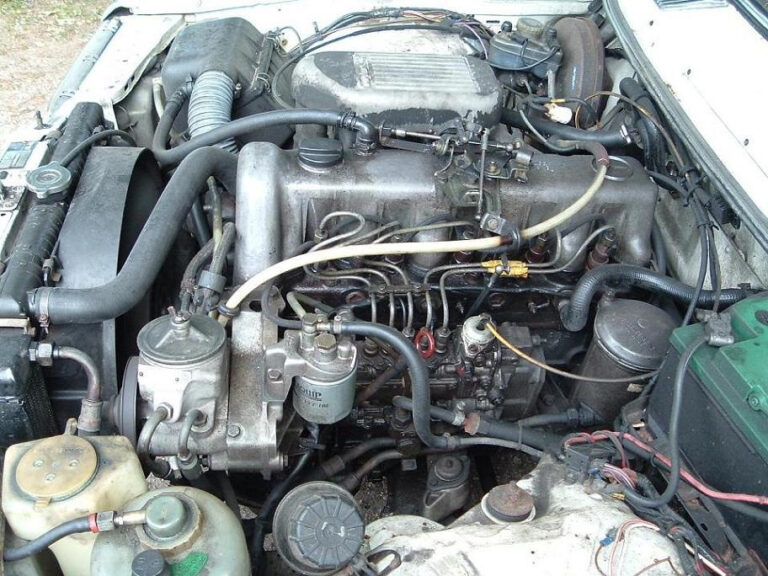
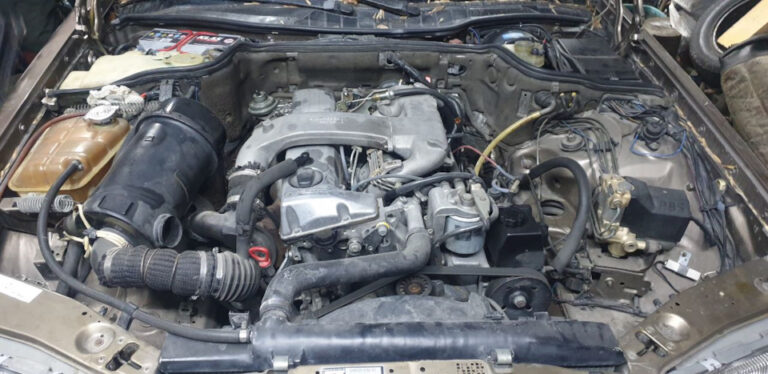
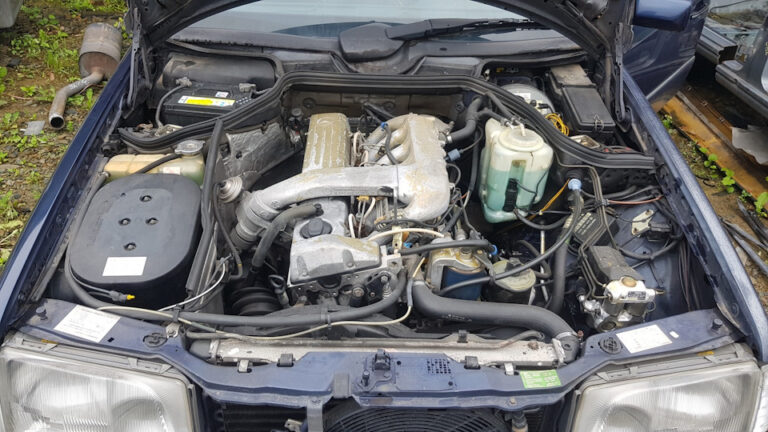
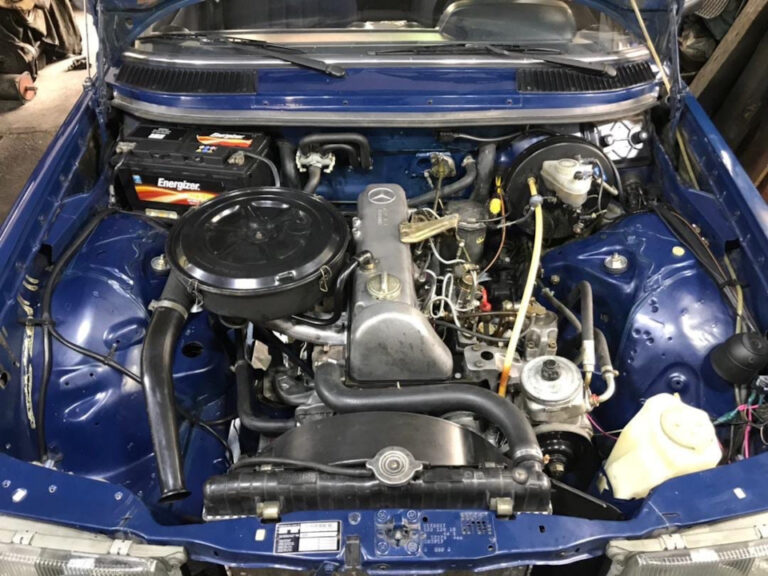
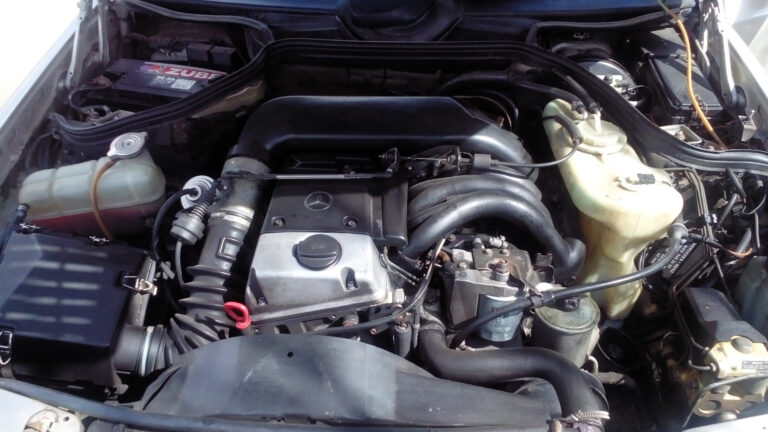
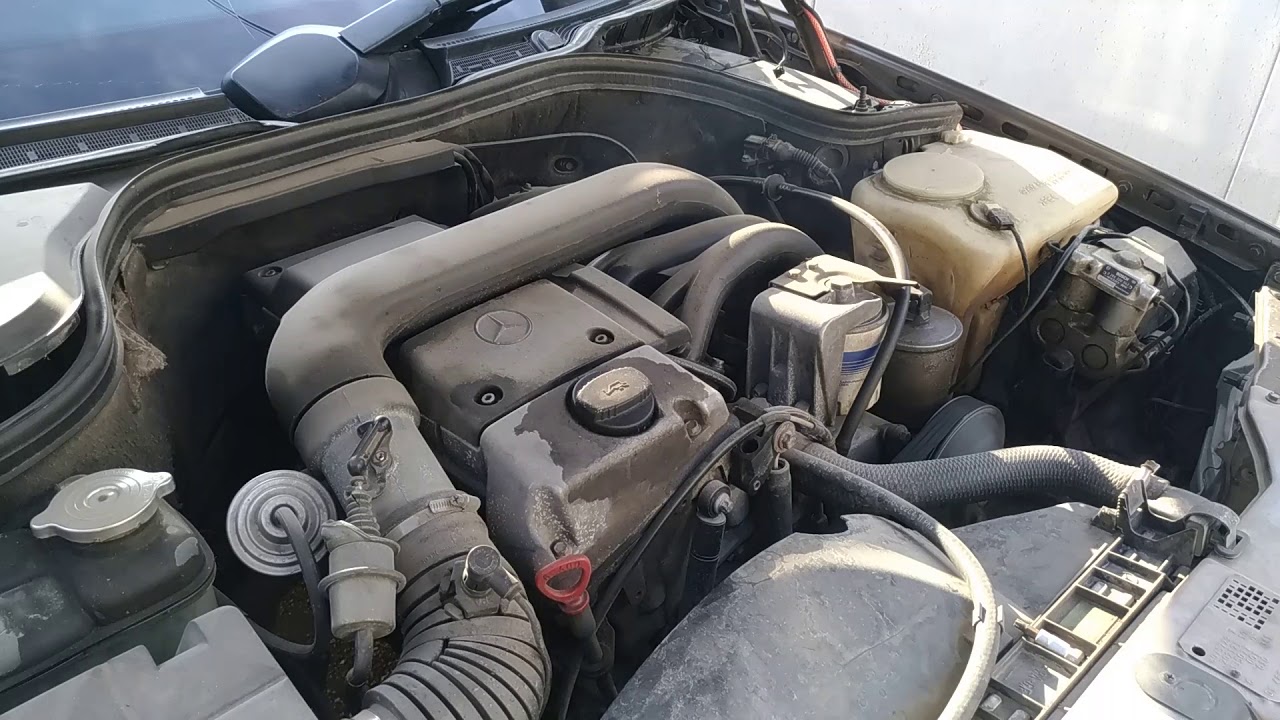
Mercedes-Benz OM604
OM604 Specifications: D20 vs D22
Mercedes-Benz identifies two bore-and-stroke combinations. The D20’s smaller displacement is not merely an electronically detuned D22; it has a different cylinder bore and piston stroke. The power and torque figures below are the manufacturer’s standard passenger-car ratings, not an engine-family output range.
| Specification | OM604 D20 | OM604 D22 |
|---|---|---|
| Engine codes | 604.915, 604.917 | 604.910, 604.912 |
| Displacement | 1,997 cc | 2,155 cc |
| Bore × stroke | 87.0 × 84.0 mm | 89.0 × 86.6 mm |
| Compression ratio | 22.0:1 | 22.0:1 |
| Configuration | Inline-four | Inline-four |
| Cylinder head | DOHC, 16 valves | DOHC, 16 valves |
| Camshaft drive | Double-row roller chain | Double-row roller chain |
| Injection | Indirect; Lucas EPIC distributor pump | Indirect; Lucas EPIC distributor pump |
| Aspiration | Naturally aspirated | Naturally aspirated |
| Standard rated output | 65 kW (88 PS) at 5,000 rpm | 70 kW (95 PS) at 5,000 rpm |
| Standard rated torque | 135 Nm at 2,000–4,650 rpm | 150 Nm at 3,100–4,500 rpm |
Mercedes-Benz also records a 55 kW (75 PS) D22 taxi configuration for later C 220 Diesel and E 220 Diesel applications. The manufacturer describes this specific configuration as suitable for vegetable-oil methyl ester fuel. Neither its fuel approval nor its unverified torque figure should be transferred to a standard 70 kW engine. The power rating must be confirmed for the individual car.
Engine Codes and Factory Applications
Mercedes-Benz used different suffixes for the C-Class and E-Class installations. Engine-specific workshop documentation identifies the applications more precisely than two conflicting entries in the historical vehicle archive.
| Model | Chassis / type | OM604 code | Documented vehicle period | Rated output / version |
|---|---|---|---|---|
| C 220 Diesel saloon | W202 / 202.121 | 604.910 | Aug 1993–May 1999, across separate production records | 70 kW standard version; from Jun 1998, 55 kW taxi specification only |
| C 220 Diesel estate | S202 / 202.182 | 604.910 | Jun 1997–May 1999 | 70 kW standard version; from Jun 1998, 55 kW taxi specification only |
| C 200 Diesel saloon | W202 / 202.122 | 604.915 | Apr 1996–Jul 1998, across separate production records | 65 kW |
| C 200 Diesel estate | S202 / 202.180 | 604.915 | Jun 1997–Jun 1998 | 65 kW |
| E 220 Diesel saloon | W210 / 210.004 | 604.912 | May 1995–Jun 1999 | 70 kW standard version; from Jun 1998, 55 kW taxi specification only |
| E 200 Diesel saloon | W210 / 210.003 | 604.917 | Jun 1996–Jul 1998 | 65 kW |
The D20 C 200 Diesel and E 200 Diesel applications are identified in Mercedes-Benz’s historical records as Portugal export versions. The table therefore does not imply equal availability in every European country.
For the later D22 listings, distinguish the 55 kW taxi version from the earlier 70 kW standard version using the individual vehicle record rather than the model badge alone.
These dates describe documented vehicle applications, not a separately verified start and end of OM604 engine manufacture. Earlier C 200 Diesel cars may use a different engine family; later CDI models must not be included merely because they share a C-Class or E-Class badge.
Mechanical Design and Service-Relevant Features
Sixteen-Valve Cylinder Head and Hydraulic Lash Compensation
The OM604 has two overhead camshafts and four valves per cylinder, making its cylinder-head layout a useful identification feature when distinguishing it from earlier Mercedes diesel designs.
Mercedes workshop procedure AR05.00-P-2010HW includes OM604 in its instructions for checking hydraulic valve-clearance compensating elements. The procedure also addresses oil-supply passages when multiple elements fail inspection. A diagnostic procedure’s existence is not evidence that worn compensators are a characteristic or predictable OM604 problem. Exact camshaft, follower and valve-guide dimensions should be taken from the workshop data for the engine being repaired rather than inferred from related diesels.
Timing Drive
The camshafts are driven by a double-row roller chain. Mercedes also provides an OM604-specific timing-chain replacement procedure, AR05.10-P-7601HA. A separate chain is described in the oil-pump service material. These systems should not be confused when diagnosing a chain-related noise or evaluating a previous repair.
A 1 March 1996 revision to the timing-chain workshop material describes a change from a moving centre plate to a press-fitted centre plate at the chain joining arrangement, with reference to BT05.10-P-0001-01A. The procedure also covers related Mercedes diesel engines, so this is not an OM604-exclusive defect notice. The date identifies a document change, not a verified factory engine-number breakpoint. For a replacement or previously opened chain, the correct joining arrangement and the applicable Mercedes service procedure matter more than an assumed mileage-based replacement rule.
Mercedes does not establish a universal timing-chain replacement mileage in the cited OM604 material; chain condition and any previous repair should be evaluated against the applicable service procedure.
Oil-Pump Drive, Cooling and Exhaust Equipment
Mercedes procedure AR18.10-P-2140HA illustrates the OM604 oil-pump chain and distinguishes service handling for first- and second-version oil-pump arrangements. The production change date and underlying engineering reason have not been verified, so the versions should be treated as a parts-and-procedure compatibility issue, not evidence of a defective original pump.
The documented passenger-car engines use liquid cooling, and the relevant Mercedes vehicle specifications list an oxidation catalyst. Exact coolant fills and emissions-control equipment depend on the installation and market. In particular, do not assume that an EGR or other emissions component shown for one application is fitted to all four OM604 variants.
Lucas EPIC Injection: Operation and Fault Diagnosis
The OM604’s defining service distinction is its Lucas EPIC electronically controlled distributor injection pump. The system meters and distributes fuel for indirect injection into individual prechambers. It is electronically managed, but it is not a common-rail diesel. Common-rail rail-pressure sensors, injector coding practices and CDI-specific fault descriptions do not automatically apply.
Mercedes’s fuel-system documentation identifies crankshaft-position and coolant-temperature inputs, together with application-dependent accelerator-position arrangements. The workshop listings contain build-date restrictions for certain components. For that reason, an early W202 or W210 should not be diagnosed with a later wiring diagram merely because both use OM604. The crankshaft-position sensor is described in the workshop material as being above the starter on the left-hand side in the direction of travel—a useful location reference when the complaint involves a missing or intermittent engine-speed signal.
External Leakage from the Lucas Pump
Field Report Owners have described external diesel leakage from different locations on Lucas EPIC pumps. One detailed 2006 Motor-Talk repair account concerns a 1996 E 220 Diesel at approximately 180,000 km. The owner reported cracks in a pump-housing sealing component, installed replacement seals and reported no renewed leakage after roughly 2,000 km. Another discussion describes leakage at a pump shaft seal.
Housing-joint and shaft-seal leaks require different inspection and repair decisions. The reported 180,000 km and short-term repair outcome are anecdotal; a later reproduction of the 2006 account is not a second independent repair.
When fuel is visible on the pump, the useful first distinction is where the leak actually begins. A housing-joint leak and a shaft-seal leak may require different repair work. Seal replacement should not be presented as a cure for an EDC warning unless the fault has independently been traced to the leakage.
Diesel Around the Injectors: Check the Return Connections
Diesel pooled near the injector positions does not necessarily mean the injectors themselves are defective. The small fuel leak-off hoses and their connections are a separate potential leak source. This distinction is supported by a Mercedes-Benz production modification rather than solely by owner discussion.
Improved Injection-Nozzle Leak-Off Hose Retention
| OM604 variant | Mercedes transmission discriminator | Starting engine number | Documented date |
|---|---|---|---|
| 604.910 | 0 | 063940 | 01.10.1995 |
| 604.910 | 2 | 012877 | 01.10.1995 |
| 604.912 | 0 | 004307 | 01.10.1995 |
| 604.912 | 2 | 001098 | 01.10.1995 |
| 604.915 | Not specified | 000000 in document | No separate date stated |
| 604.917 | Not specified | 000000 in document | No separate date stated |
The 0 and 2 columns are Mercedes document-specific transmission identifiers, not established gearbox names. The 000000 entries for .915 and .917 have no separately stated date. Confirm the engine number and installed hose arrangement when selecting replacements.
Field Report In July 2026, a W210 E 220 Diesel owner reported fuel collected around all four injection-nozzle positions at 117,000 km. Contributors suggested examining the leak-off hoses. The discussion did not establish a definitive leak source or repair outcome. It therefore illustrates a diagnostic distinction, not a confirmed injector or hose failure at that mileage.
EDC Warning, Engine Stalling and Sensor Wiring
An illuminated EDC warning does not, on its own, identify a defective Lucas pump. The injection system depends on electronic inputs, and workshop documentation separately covers the crankshaft-position sensor.
Field Report In a 2013 W202 Club discussion, the owner of a 1995 W210 E 220 Diesel identified as OM604.912 reported intermittent engine shutdown, starting difficulty, an EDC warning and code P1227. Several causes were suggested. The owner ultimately reported that replacing the wire between the ECU and crankshaft-position sensor resolved the complaint.
This is one reported repair outcome, not an OEM definition of P1227 or evidence of widespread wiring failure. Its diagnostic value is that an EDC shutdown complaint calls for verification of the engine-speed signal and its wiring against the correct vehicle diagram before treating the pump as the failed component. A fuel-metering problem, a lost sensor signal and an external pump leak are different repair scenarios.
Air in Fuel Lines and Hard Starting
A separate 1998 C 220 Diesel owner discussion describes air visible in fuel lines together with starting irregularities. Several fuel-system components were considered, but the thread did not establish a final root cause. An air-ingress complaint should be kept distinct from external pump-seal leakage and electrical EDC faults until the source is demonstrated.
Symptom-Based Diagnostic Priorities
| Observed condition | What to establish first | Why it matters for the repair |
|---|---|---|
| Diesel pooled around nozzle holders | Locate the leak at the leak-off hose, its connection or another nozzle-area component. | Fuel near an injector does not establish a failed injector; Mercedes revised hose retention. |
| Diesel wetting the EPIC pump | Determine whether it starts at a housing seal, shaft area or attached fuel plumbing. | Different leak locations imply different repairs; owner resealing reports are not general repair instructions. |
| EDC warning, stalling or no-start | Review stored information and the correct ECU/sensor wiring diagram, including the crankshaft-speed signal. | One OM604.912 case ended with a wiring repair rather than pump replacement. |
| Preglow lamp anomaly | Confirm FBS3 applicability and follow the appropriate glow-output-stage diagnosis. | The Mercedes service instruction is conditional, not an instruction to replace every controller. |
| Visible air in fuel lines with difficult starting | Determine where air is entering the supply circuit before attributing the complaint to the pump. | The available C 220 Diesel owner case did not establish its root cause. |
No recurring OM604-specific bearing, piston, cylinder-scoring or head-gasket mechanism is established by the cited evidence.
Glow System, DTCs and Mercedes Service Information
Mercedes service information AF15.20-P-2100B, revised on 25 May 1999, addresses certain preglow-indicator complaints and conditional replacement of the glow-output stage. The applicability includes specified W202/W210 diesel vehicles with FBS3, including the OM604.91 group. The procedure references P1482 in that context.
The document lists glow-output-stage numbers 019 545 68 32 and 025 545 28 32. Their appearance does not prove that every OM604 uses both parts or that the latter is a universal replacement for all production years. The four-cylinder designation in the service material identifies an output stage intended for four-cylinder applications; it is not a separate controller for cylinder four.
| Identifier | Supported context | Important limitation |
|---|---|---|
| P1482 | Mercedes glow-system service information AF15.20-P-2100B | Do not treat the reference as a universal definition for every OM604 ECU strategy |
| P1227 | Code reported by one OM604.912 owner during an EDC shutdown complaint | Owner-reported association only; OEM code definition not verified |
The fuel-hose change document, timing-chain repair instructions, hydraulic-compensator test and glow-output-stage guidance serve different purposes. A workshop procedure does not establish a recall; a production revision does not establish a population defect. No engine-specific OM604 safety recall, warranty-extension programme or litigation finding was verified in the available material. For an individual vehicle, recall applicability should be checked by VIN and jurisdiction.
Engine Oil, Coolant and Maintenance Data
Oil and coolant figures depend on the vehicle, OM604 suffix, build period and installation. The following values are from application-specific supplier listings, not a verified universal Mercedes-Benz service schedule.
Oil and Coolant Service
Kroon-Oil lists 6.5 litres of engine oil and an interval of 15,000 km or 12 months for its W202 C 220 Diesel/OM604.910 application. Other aftermarket references also list 6.5 litres for certain W210 E 220 Diesel configurations. Neither figure should be applied automatically to another OM604 installation.
For the W202 C 200 Diesel/OM604.915, secondary references conflict at 6.5 versus 7.5 litres. Use the original vehicle-specific Mercedes filling chart to resolve the discrepancy before servicing that engine.
The same Kroon-Oil selector lists approximately 7 litres of coolant and a 36-month coolant interval for its selected C 220 Diesel. Cooling-system equipment can change the fill. Check the original model- and market-specific instructions for oil approval and viscosity, coolant specification, severe-duty intervals and fuel-filter servicing.
Chain, Valve Gear and Fuel-System Service
Mercedes provides procedures for the timing chain, hydraulic compensators and oil-pump chain, including component-version distinctions. The hydraulic lash compensators do not justify inventing a periodic manual valve-clearance adjustment interval.
Lucas EPIC pump work, injector plumbing and timing-drive repairs require the applicable workshop instructions; forum resealing accounts do not establish assembly or timing specifications. A non-factory conversion to another injection pump must be evaluated as a modification, not an original OM604 variant.
What to Check Before Buying an OM604-Powered Mercedes
The most useful inspection is one that separates an identifiable, limited repair from an uncertain injection-system complaint. The following checks follow the specific service evidence and reported issues rather than a generic used-diesel checklist.
- Confirm the engine suffix and chassis type. In particular, distinguish .910 from .912 and .915 from .917; check whether a D22 is the later 55 kW taxi version.
- Inspect the Lucas EPIC pump for an identifiable external fuel leak. Record whether fuel originates at the pump body, a shaft-seal area or connected plumbing rather than assuming one universal seal fault.
- Inspect the injector leak-off hoses and connections. Fuel around nozzle holders is not sufficient evidence that the injectors themselves need replacement. Use the documented production change when checking parts compatibility.
- Check for EDC warnings, intermittent shutdown and stored diagnostic information. Include the crankshaft-sensor circuit and wiring in the assessment before accepting an expensive pump diagnosis; compare the wiring against the correct build-date documentation.
- Verify preglow-related complaints against the correct vehicle strategy. The FBS3 service information is restricted by application; a lamp complaint is not proof that every glow-output stage requires replacement.
- Review previous injection-pump, timing-drive and oil-pump-drive repairs. Check which chain-joining arrangement, oil-pump-drive version and pump components were fitted; a revised service arrangement is not proof of a prior engine defect.
- Check service records against the original vehicle schedule. Confirm oil approval and fill quantity rather than relying on a generic OM604 capacity copied from another application.
OM604 Reliability: What Can Actually Be Concluded?
The strongest factory evidence concerns the revised injector leak-off hose retention, while owner cases illustrate separate Lucas EPIC leakage and electrical-diagnostic problems. These reports cannot support a population failure rate or a predicted failure mileage.
For an individual OM604, the more useful assessment is whether the engine suffix and output version are correctly identified, whether fuel leakage has been traced to a specific connection or seal, and whether EDC or preglow faults have been diagnosed before components are replaced.
Sources & Technical References
- Mercedes-Benz Public Archive — C 220 Diesel (W202). OM604.910 identification, original D22 specifications and application history.
- Mercedes-Benz Public Archive — later C 220 Diesel. Later vehicle period and 55 kW taxi configuration.
- Mercedes-Benz Public Archive — C 200 Diesel. OM604.915, D20 specifications and export-market identification.
- Mercedes-Benz Public Archive — C 200 Diesel, 1997–1998. Confirms the later 202.122 production period of June 1997–July 1998 and the OM604.915 engine.
- Mercedes-Benz Public Archive — C 200 Diesel estate, 1997–1998. Confirms the June 1997–June 1998 period; its printed 202.182 type code conflicts with the engine-specific workshop mapping.
- Mercedes-Benz Archive — C 220 Diesel estate (S202). Establishes type 202.182, OM604.910, June 1997–May 1999 and the 55 kW taxi-only configuration from June 1998.
- Mercedes-Benz Archive — E 200 Diesel. W210 OM604.917 specifications and application.
- Mercedes-Benz Archive — E 220 Diesel. W210 D22 specifications, later taxi variant and archival engine-code discrepancy.
- Mercedes-Benz workshop documentation mirror — fuel-system components, including GF07.03-P-3152H and GF07.04-P-4116H. Exact engine/chassis mapping and sensor-system applicability.
- Mercedes-Benz workshop documentation mirror — BT07.03-P-0002-01B. Improved leak-off hose retention, production dates and engine-number breakpoints.
- Mercedes-Benz workshop documentation mirror — AF15.20-P-2100B. Preglow output-stage service conditions and P1482 context.
- Mercedes-Benz workshop procedure — AR05.10-P-7601HA (Replacing timing chain), PDF mirror. The procedure explicitly covers engines 604, 605 and 606, including the chain-joining arrangement and modification note.
- Mercedes-Benz workshop procedure — AR18.10-P-2140HA (Replacing oil-pump chain), documentation mirror. Shared workshop text explicitly illustrates engine 604 and distinguishes first- and second-version oil-pump servicing; the host files it under another Mercedes diesel model.
- Mercedes-Benz workshop documentation mirror — AR05.00-P-2010HW. Hydraulic valve-clearance compensator testing, including OM604.
- Kroon-Oil — W202/S202 C 220 Diesel application selector. Supplier-reported oil fill and service interval; not primary Mercedes maintenance evidence.
Field Sources
- Motor-Talk — Lucas injection-pump resealing account (2006). Owner-reported 180,000 km pump-seal observation and short-term repair result.
- Motor-Talk — W210 E 220 Diesel nozzle-area fuel leak (2026). Owner-reported fuel pooling at 117,000 km; root cause unresolved.
- W202 Club — OM604.912 EDC shutdown and wiring case (2013). P1227 as reported by owner and reported crankshaft-sensor wiring repair.
- C-Klasse-Forum — air in fuel line, C 220 Diesel (2017). Unresolved owner-reported starting and fuel-supply complaint.