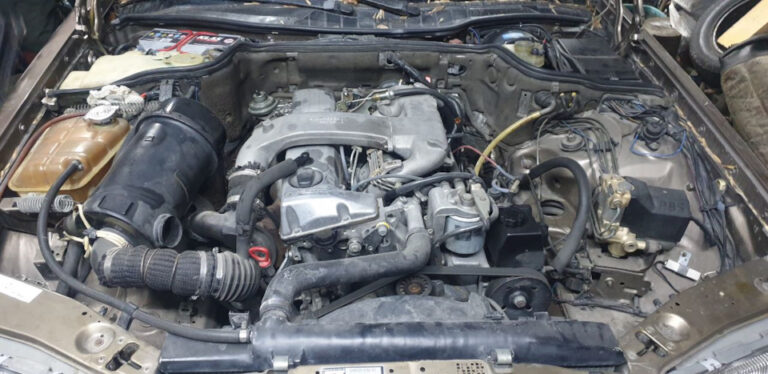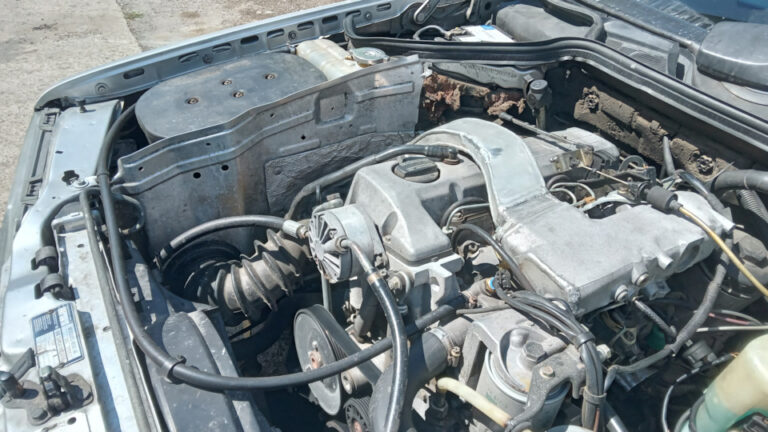
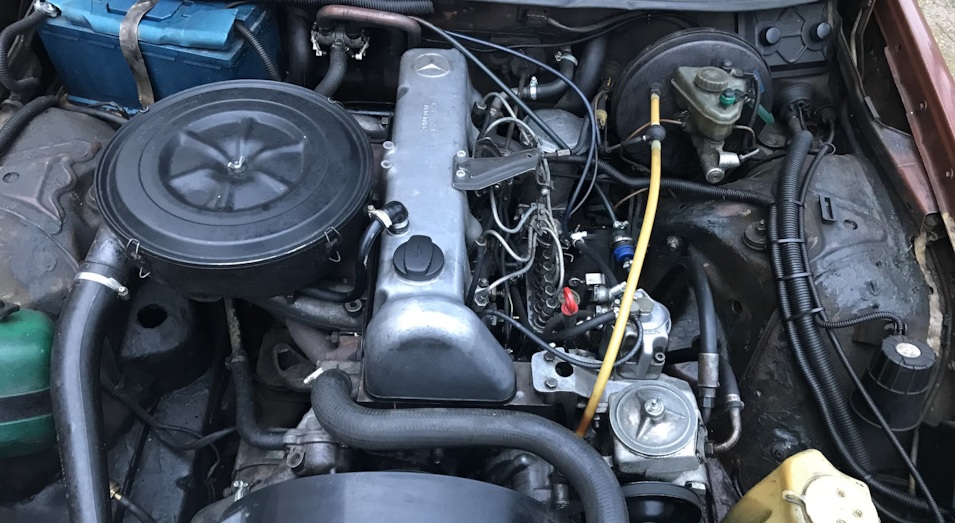
Mercedes OM617 Engine: Variants, Reliability & Failure Analysis
The Mercedes-Benz OM617 is a five-cylinder prechamber diesel engine family that appeared in passenger-car applications in the 1970s and evolved through both naturally aspirated and turbocharged versions. Verified application evidence begins with the W115 240 D 3.0 and extends through W123 and W126 models into the mid-1980s.
OM617 should not be treated as one fixed engine specification. Early versions used 3,005 cc displacement and a 91.0 mm bore, while later passenger-car versions moved to 2,998 cc and a 90.9 mm bore. Output also changed with model, market, production date and naturally aspirated versus turbocharged configuration. The principal passenger-car variants covered here are 617.910, 617.912, 617.950, 617.951 and 617.952.
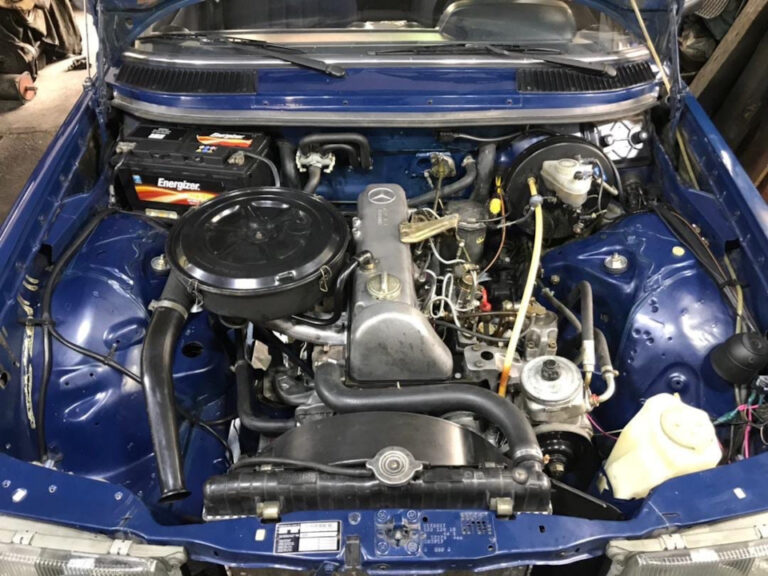
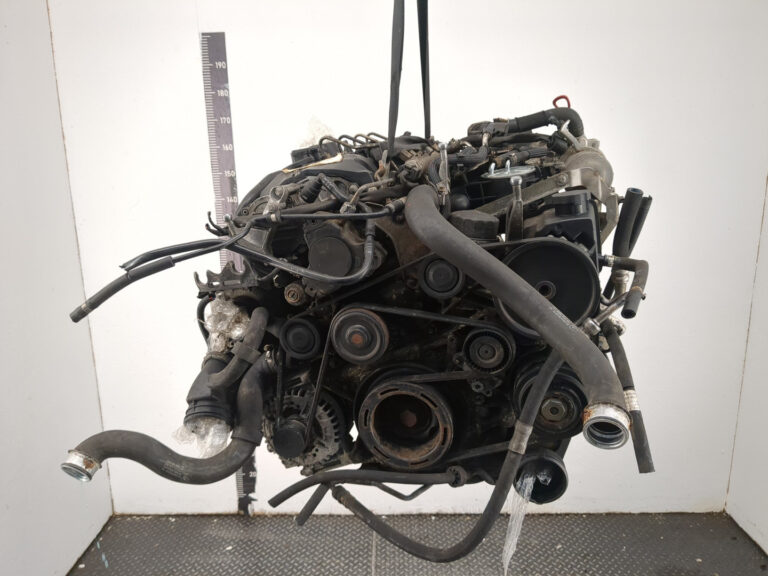
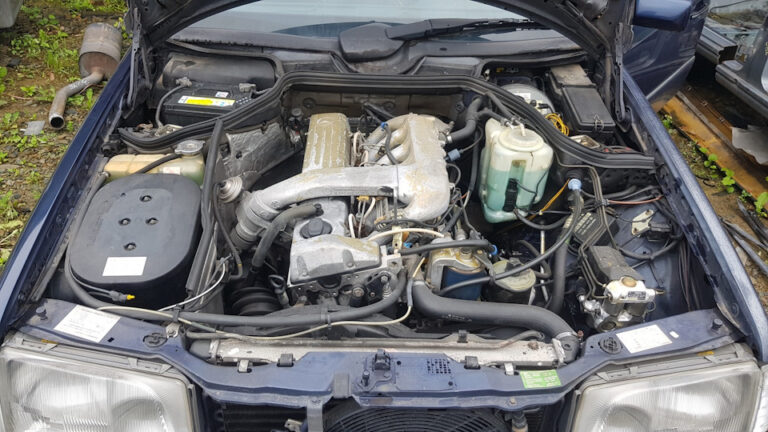
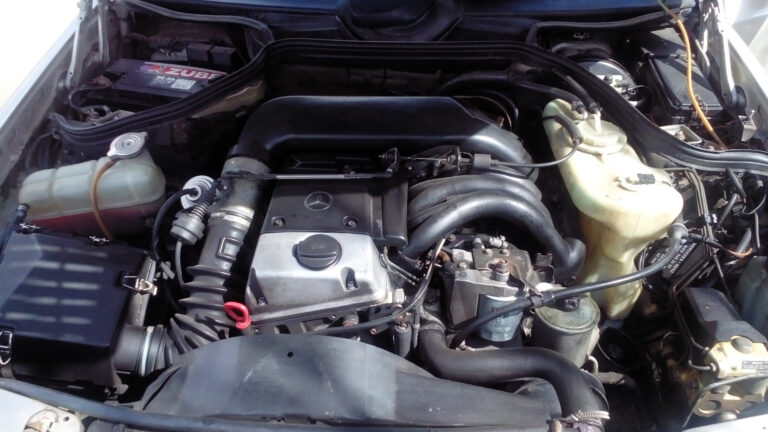
Mercedes-Benz OM617
Inline-five diesel
Prechamber indirect injection
Mechanically governed Bosch inline injection pump
SOHC, two valves per cylinder
Duplex roller chain
Naturally aspirated or turbocharged, depending on variant
OM617 Specifications and Variant Differences
The engine family changed during production. In particular, bore, displacement and output figures must remain attached to the relevant engine variant and vehicle application rather than being converted into a single OM617-wide range.
| Engine variant | Verified application | Displacement | Bore × stroke | Compression ratio | Verified output |
|---|---|---|---|---|---|
| 617.910 | W115 240 D 3.0 | 3,005 cc | 91.0 × 92.4 mm | 21.0:1 | 59 kW / 80 PS at 4,000 rpm |
| 617.912 | Early W123 300 D / 300 TD | 3,005 cc | 91.0 × 92.4 mm | 21.5:1 | 59 kW / 80 PS at 4,000 rpm in the documented European application |
| 617.912 | Later W123 300 D / 300 TD | 2,998 cc from August 1978 | 90.9 × 92.4 mm | 21.5:1 | 65 kW / 88 PS from September 1979 in the documented European application |
| 617.912 | C123 300 CD, North America | 3,005 cc early; 2,998 cc from August 1978 | 91.0 × 92.4 mm early; 90.9 × 92.4 mm later | 21.5:1 | 58 kW / 78 PS; later 64 kW / 84 PS in this market-specific application |
| 617.950 | W116 300 SD | 3,005 cc early; 2,998 cc from October 1978 | 91.0 × 92.4 mm early; 90.9 × 92.4 mm later | 21.5:1 | 82 kW / 111 PS; later 89 kW / 121 PS |
| 617.951 | W126 300 SD | 2,998 cc | 90.9 × 92.4 mm | 21.5:1 | 89 kW / 121 PS; 92 kW / 125 PS from October 1982 |
| 617.952 | W123 300 D Turbodiesel and related turbo applications | 2,998 cc | 90.9 × 92.4 mm | 21.5:1 | 89 kW / 121 PS; 92 kW / 125 PS from October 1982 |
These figures are application- and production-specific. They should not be rewritten as one universal OM617 displacement or power range.
Verified Passenger-Car Applications
| Model | Chassis | Engine | Documented production/application period | Important distinction |
|---|---|---|---|---|
| 240 D 3.0 | W115 / 115.114 | 617.910 | 1974–1976 | Early 3,005 cc naturally aspirated OM617 application |
| 300 D | W123 / 123.130 | 617.912 | Standard production from 1976 through 1985 | 3,005 cc early, 2,998 cc later; output changed during production |
| 300 TD | S123 / 123.190 | 617.912 | 1978–early 1986 | Naturally aspirated estate application |
| 300 CD | C123 / 123.150 | 617.912 | 1977–1981 | North-American naturally aspirated coupe with market-specific output |
| 300 SD | W116 / 116.120 | 617.950 | 1978–1980 standard-production period | Early turbocharged passenger-car version |
| 300 SD | W126 / 126.120 | 617.951 | 1980–1985 | Later W126 turbo version |
| 300 D Turbodiesel | W123 / 123.133 | 617.952 | 1981–1985 | Export model documented for North America and Japan |
| 300 CD Turbodiesel | C123 / 123.153 | 617.952 | Turbo-era C123 application | North-American application |
| 300 TD Turbodiesel | S123 / 123.193 | 617.952 | Turbo-era S123 application | Turbo estate version |
Commercial-vehicle and G-Class OM617 suffixes are also documented in secondary parts and rebuilding material, but the exact model-year, market and suffix relationships were not established strongly enough in the verified evidence set to place them in the same application table.
Mechanical Architecture and the Turbocharged OM617A Development
The naturally aspirated OM617 uses a single overhead camshaft operating two valves per cylinder, a duplex roller chain, prechamber combustion and a mechanically governed Bosch five-plunger inline injection pump. Six main bearings are specified in the principal passenger-car variants reviewed.
The turbocharged engine was not simply the naturally aspirated OM617 with a turbocharger added. Daimler-Benz engineers described the development in SAE paper 780633 and documented extensive changes required to accommodate the increased mechanical and thermal loading.
Turbo-engine development included a strengthened and surface-treated crankshaft, revised thrust-bearing arrangement, strengthened connecting-rod bearing construction, a larger piston pin and substantial piston thermal-management changes. The production design used oil-cooled pistons and piston cooling jets. The cylinder head and valve area also received changes appropriate to the higher thermal load, including sodium-cooled exhaust valves in the turbo configuration.
The lubrication system was similarly expanded. Daimler’s engineering paper describes the additional oil demand created by piston cooling and turbocharger lubrication, leading to a higher-capacity oil pump, piston jets, turbo oil supply, a larger oil reservoir and an oil-cooler circuit.
Daimler’s engineering paper records piston, ring and thrust-bearing problems encountered during development testing and the design changes made in response. Those development failures are evidence for why the production turbo engine was redesigned; they are not evidence that production OM617A engines routinely suffered the same failures.
Documented Problems, Service Conditions and Revisions
Valvetrain
- Early U.S. 617.950 engines received a revised chilled-cast camshaft with matching carbide-faced rocker arms.
Cooling
- Mercedes revised the fan drive and water-pump drive on 617.951 and 617.952 engines in 1983.
Turbo Performance
- Mercedes documented poor performance on 617.95 engines when soot restricted the boost-pressure signal reaching the injection-pump boost compensator.
Oil Leakage
- Factory repair information for 617.952 identifies front crankcase-cover sealing deterioration and a revised front crankshaft radial seal.
617.912 Knocking Noise at Idle
Mercedes factory troubleshooting material describes a specific knocking condition on 617.912. The complaint is a knock at idle, and the documented mechanism is axial contact between a connecting rod and a crankshaft cheek around the specified cylinder positions.
The factory procedure is useful because it prevents the noise from automatically being interpreted as catastrophic bottom-end damage. Mercedes states that continued operation itself does not create a problem from this condition. The diagnosis includes changing vehicle inclination and observing whether the noise changes, followed by an axial-clearance measurement if necessary. The workshop information uses 0.9 mm as the decision point for possible crankshaft and connecting-rod replacement.
This should not be generalized into a claim that OM617 engines have a recurring connecting-rod bearing failure. The factory document describes a specific mechanical noise condition on the 617.912.
Early 617.950 Camshaft and Rocker Revision
A particularly clear production revision concerns the early U.S. 617.950. Mercedes workshop documentation states that the malleable-cast camshaft identified by code 00 on model-year 1979 engines without increased output was replaced by a chilled-cast camshaft identified by code 08 in June 1979 because the chilled-cast design had better wear characteristics.
617.950 Camshaft
The compatibility restriction matters during repair. Mercedes specifies that the chilled-cast camshafts are used with carbide-faced rocker arms and warns against mixing the incompatible early camshaft and later rocker configurations. A replacement camshaft therefore should not be selected solely by visual similarity or generic OM617 fitment.
1983 Cooling-System Revision on 617.951 and 617.952
Mercedes Technical Bulletin REF. NO. 20/24 documents a 1983 production change to the cooling system of the turbocharged 617.951 and 617.952.
The revised system used a higher-viscosity viscous fan clutch, a nine-blade plastic fan and, on the applicable configuration, a smaller water-pump pulley with shorter V-belts. The pulley change increased fan speed. The revised arrangement began on the 617.951 in February 1983, while the modified fan clutch and nine-blade fan were scheduled for the 617.952 around July 1983.
Mercedes also issued symptom-based material addressing high coolant temperature and allowing the revised components to be installed on earlier engines. This is stronger evidence than general owner claims of OM617 overheating because it identifies an exact engine scope and a documented production revision.
It does not establish that every pre-revision engine overheats. For a vehicle that repeatedly runs hot, however, identifying whether the early or revised fan-drive configuration is fitted is technically relevant before assuming that the cylinder head or head gasket has failed.
Poor Performance from Restricted Boost-Pressure Signal
For 617.95 turbo engines, Mercedes Technical Service Information 07.1-85011 documents a specific low-performance mechanism. Soot can restrict the switchover valve, boost-pressure lines or hollow screws carrying intake-manifold pressure to the injection pump’s boost-pressure compensator.
The result is low boost pressure at the compensator and therefore incorrect fuel enrichment under boost. Mercedes instructs technicians to check the pressure directly at the compensator or immediately downstream of the switchover valve and, where necessary, bypass the valve during diagnosis.
This creates an important diagnostic distinction: weak acceleration does not by itself prove that the turbocharger is worn out. The boost-pressure signal path to the injection pump should be verified before replacing major turbocharger components.
Turbocharger Noise and Wastegate Service
Mercedes service information for OM617A applications also warns against treating every turbo-area noise as a failed rotating assembly. One bulletin distinguishes noise associated with the air-recirculation arrangement from actual turbocharger bearing or rotor damage and documents a modified compressor-housing configuration.
A separate 1986 service bulletin covers wastegate repair. The applicable repair depended on turbocharger manufacturer: the Garrett TA0301 configuration had a wastegate repair kit, while the documented KKK configuration used complete wastegate replacement.
The practical implication is that the turbocharger manufacturer and exact hardware configuration should be identified before ordering repair parts.
Front Engine Oil Leaks on 617.952
Mercedes symptom-based repair information for the 617.952 identifies two specific front-engine leak mechanisms.
- The front crankcase cover can leak when the previous sealing compound hardens.
- The front crankshaft radial seal can leak and Mercedes documents a modified replacement seal, part number 011 997 22 47.
The factory procedure calls for cleaning and locating the actual leak before resealing the cover or replacing the radial seal. This is preferable to assuming that visible oil at the front of an OM617 automatically comes from one specific gasket.
Timing Chain: What Is Verified and What Is Not
The OM617 passenger-car variants reviewed use a duplex roller chain to drive the camshaft. Mercedes workshop material provides procedures for checking camshaft timing and servicing the chain, but no universal scheduled OM617 chain-replacement interval was verified.
Field Report Owner communities contain repeated reports of chain elongation and isolated chain breakage on older OM617 engines, including an exact 617.912 report. These reports establish useful inspection vocabulary and show that timing wear can occur in real vehicles, but they do not establish a population failure rate or an expected failure mileage.
No verified universal mileage threshold for OM617 timing-chain replacement or failure was located. Mileage quoted in owner reports remains anecdotal.
For diagnosis and used-vehicle inspection, actual camshaft timing, chain condition and service history are therefore more defensible indicators than a fixed mileage rule.
Oil-Cooler Lines and Other Owner-Reported Patterns
Field Report Multiple independent OM617 owner discussions describe oil leakage at oil-cooler hoses, fittings or crimped sections. Reports include lines found wet at the ferrule and leakage appearing after aged hoses were disturbed during service.
The field signal is useful because a major oil loss can have obvious lubrication consequences, but the available evidence does not establish how often these failures occur across the OM617 population. It should be treated as an inspection point rather than a statistically demonstrated OM617 defect.
Owner discussions also show several diagnostic traps. Visual bubbling around a prechamber or injector area after fuel-system work is sometimes interpreted as combustion leakage, while field reports describe trapped fuel, heating and injection pulsation producing similar observations. Such visual evidence should not replace a proper mechanical diagnosis.
1985 California Trap-Oxidizer System
The most substantial regulatory issue found in the OM617 evidence is not an internal engine defect but an emissions-system problem affecting specific 1985 U.S. vehicles.
For the 1985 model year, Mercedes used particulate trap oxidizers on specified diesel vehicles sold through the western-state/California distribution system. EPA report AA-SDSB-88-02 examined ten in-use Mercedes-Benz diesel vehicles from engine family FMB3.0D9KC20 with approximately 30,000 to 50,000 miles.
Seven of the ten vehicles were below the study’s 0.35 g/mi particulate cutoff on their first test, while three were above it. EPA also reported indications of mechanical failure in a portion of the traps. The sample was small and was designed to investigate emissions-system durability, so it cannot be converted into an OM617 failure percentage.
Mercedes subsequently issued trap-oxidizer replacement work for affected 1985 California applications. Later Service Campaign 96-1121 replaced the trap oxidizer with an oxidation catalyst on specified vehicles, including chassis using 617.951 and 617.952.
This campaign is application- and emissions-version-specific. It should not be presented as a defect affecting every OM617 or every U.S. turbocharged OM617.
Maintenance and Service Data
OM617 maintenance data varies by vehicle, market and production period. The safest approach is to use the service information for the exact chassis and engine suffix rather than one generalized OM617 schedule.
Valve Clearance
The OM617 uses mechanical valve-clearance adjustment. Mercedes maintenance documentation distinguishes naturally aspirated 617.91 engines from turbocharged 617.95 engines on the exhaust side.
| 616 / 617 intake, cold | 0.10 mm |
|---|---|
| 616 / 617 intake, warm | 0.15 mm |
| 617.91 exhaust, cold | 0.30 mm |
| 617.91 exhaust, warm | 0.35 mm |
| 617.95 exhaust, cold | 0.35 mm |
| 617.95 exhaust, warm | 0.40 mm |
The same maintenance documentation specifies an additional 0.05 mm adjustment under extended ambient temperatures below −20°C for the applicable intake specification.
Oil Capacity Is Application-Specific
Factory and factory-derived documents show that oil quantity differs between naturally aspirated and turbocharged installations and can also change within the turbo production period.
| Application / engine | Documented oil quantity | Context |
|---|---|---|
| W123 300 D / 617.912 | 5.0 L in the historical vehicle specification | Application-specific vehicle data |
| 616 / 617.91 maintenance entry | 6.5 L | Oil-and-filter service quantity in the cited maintenance documentation |
| 617.95 maintenance entry | 7.5 L | Oil-and-filter service quantity |
| 617.95, later maintenance state | 8.0 L from April 1984 | Oil-and-filter service quantity |
| 1984 300 D / 617.952 | 8.0 L | Refill with filter; additional oil required if the cooler is drained |
These values are not a valid basis for stating “OM617 oil capacity: 5–8 L.” Use the specification for the exact vehicle, sump, oil-cooler arrangement and service procedure.
Oil-Change and Timing-Chain Intervals
A 1978 U.S. 300 SD maintenance schedule specifies an approximately 4,000-mile / 7,000-km oil-and-filter interval for that vehicle under its historical normal-service schedule, with additional severe-use provisions. That is a model-year and market-specific historical requirement, not a universal OM617 interval.
No universal Mercedes timing-chain replacement interval was verified for the OM617 family.
What to Check Before Buying an OM617-Powered Car
The strongest inspection points are those tied either to a documented engine revision or to a useful field signal.
- Confirm the exact engine suffix rather than relying only on the OM617 family name.
- On a 617.912, distinguish the documented idle-knock condition from true bearing or combustion-related knock before assuming major bottom-end damage.
- On an early 617.950, identify the camshaft and rocker configuration and check that compatible components were used if valvetrain work has been performed.
- On 617.951 and 617.952 engines, identify whether the revised 1983 cooling-fan hardware is fitted when investigating persistent high coolant temperature.
- On a turbo engine with low power, inspect the boost-pressure signal plumbing and switchover valve before assuming the turbocharger itself is defective.
- Inspect the front crankcase cover and crankshaft-seal area for active oil leakage rather than judging the engine solely by accumulated oily residue.
- Check cam timing and chain condition instead of relying on an assumed mileage-based replacement rule.
- Inspect oil-cooler hoses and fittings for wetness, damaged crimps or aged rubber; this is a repeated field-report inspection point rather than a verified population-wide defect.
- For a 1985 California-specification turbo diesel, verify the history and current configuration of the trap-oxidizer/catalyst system.
- Review valve-adjustment and oil-service history because the OM617 uses mechanical valve-clearance adjustment and application-specific service quantities.
Reliability: What the Evidence Actually Shows
The evidence does not support a numerical OM617 reliability score, a universal failure mileage or a defensible family-wide failure rate.
What can be established is more specific. Mercedes documented a valvetrain material revision on the early 617.950, a particular idle-knock mechanism on the 617.912, cooling-system revisions on the 617.951 and 617.952, boost-signal restrictions that can reduce turbo-engine performance, and several exact-scope oil-leak and turbocharger service conditions. The 1985 California particulate-trap system also generated documented regulatory and campaign action.
By contrast, claims that the OM617 universally suffers from rod-bearing failure, cylinder scoring, head-gasket failure or timing-chain failure at a particular mileage were not supported by comparable evidence. Owner communities contain examples of those types of faults, but anecdotal cases cannot establish prevalence across several OM617 variants produced over many years.
The most useful way to evaluate an OM617 is therefore by exact suffix, production configuration, maintenance history and observed condition. The difference between an early 617.950 and a later 617.952 can matter more for diagnosis and parts compatibility than the broad OM617 family name alone.
Sources & Technical References
- SAE International — The Turbocharged Five-Cylinder Diesel Engine for the Mercedes-Benz 300 SD, SAE 780633, Daimler-Benz engineering paper covering OM617A development and the changes required for turbocharging.
- Mercedes-Benz Clubs historical archive — 240 D 3.0, W115, 617.910 application and specifications.
- Mercedes-Benz Clubs historical archive — W123 300 D, 617.912 specifications, bore/displacement change and output revision.
- Mercedes-Benz Clubs historical archive — W116 300 SD, 617.950 application, displacement and output changes.
- Mercedes-Benz Clubs historical archive — W126 300 SD Turbodiesel, 617.951 application and output changes.
- Mercedes-Benz Clubs historical archive — W123 300 D Turbodiesel, 617.952 specifications and application data.
- Mercedes-Benz Maintenance Manual — Adjusting Valve Clearance, Engine 616/617, factory-derived valve-clearance specifications for 617.91 and 617.95.
- Mercedes-Benz Technical Bulletin REF. NO. 20/24 — Cooling System, Engines 617.951/952, 1983 fan, viscous-coupling and water-pump-drive revision.
- Mercedes-Benz Technical Service Information 07.1-85011 — Poor Engine Performance, soot restriction in the boost-pressure signal system on 617.95.
- Mercedes-Benz workshop documentation — Camshaft Production Change, early 617.950 camshaft material revision and rocker-arm compatibility.
- U.S. EPA — In-Use Performance of Daimler-Benz Light-Duty Diesel Particulate Trap Oxidizers, AA-SDSB-88-02, 1985 particulate-trap in-use testing and durability findings.
Field Sources
- PeachParts Mercedes forum — 617.912 timing-chain failure report, anecdotal exact-engine field evidence; not a verified mileage threshold or failure rate.
- PeachParts Mercedes forum — OM617 oil-cooler line discussion, representative owner report concerning hose/crimp leakage.
- PeachParts Mercedes forum — OM617 prechamber-area bubbling discussion, field-reported diagnostic confusion after fuel-system work.