Mercedes OM601 Diesel Engine: Variants, Specs & Failure Analysis
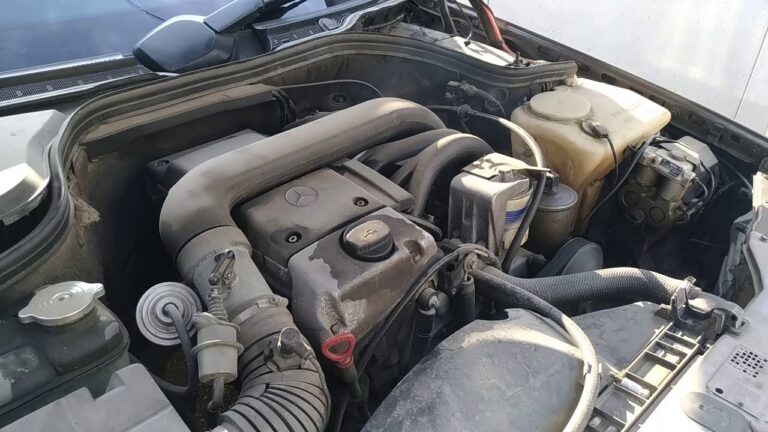
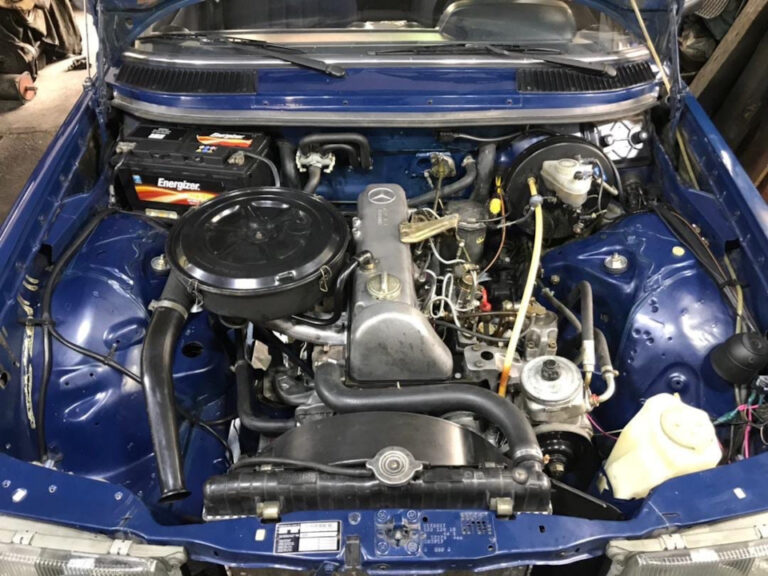
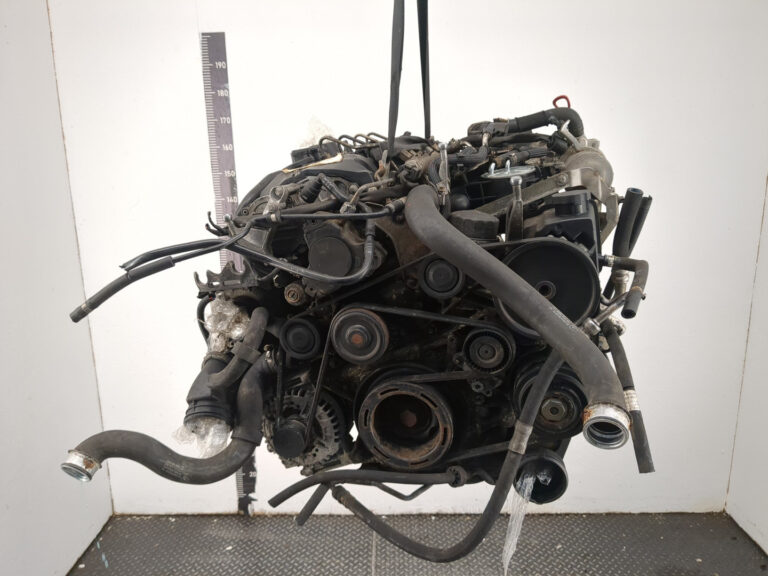
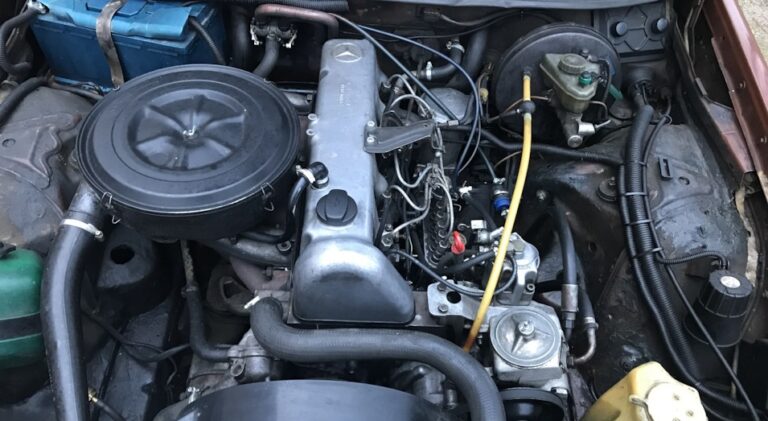
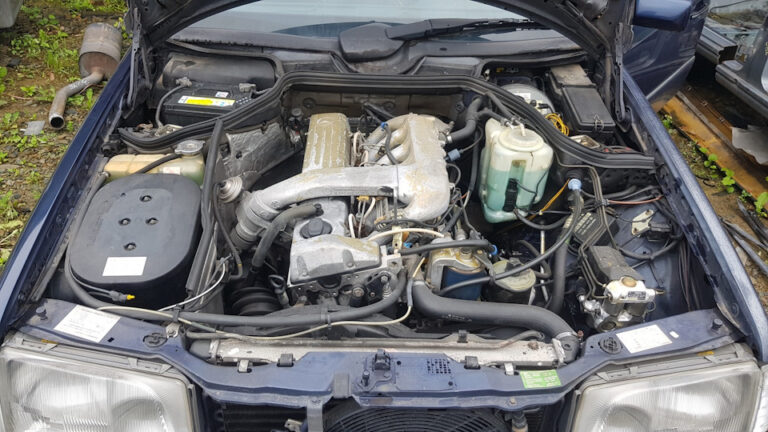
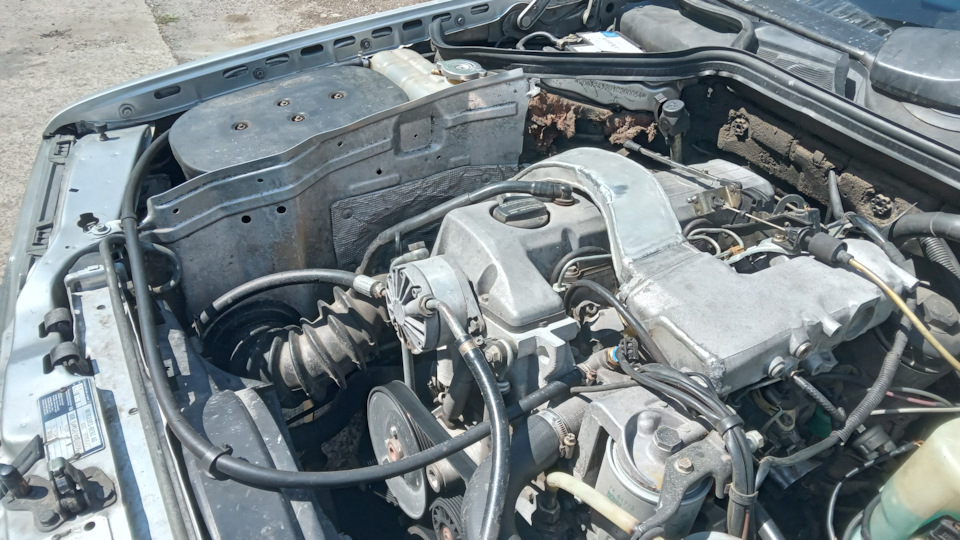
The Mercedes-Benz OM601 is a family of four-cylinder, indirect-injection diesel engines used in passenger cars and light commercial vehicles. The family includes naturally aspirated 2.0-, 2.2- and 2.3-liter versions, plus the turbocharged 2.3-liter OM601.970. Applications include the W201 190 D, W124 200 D, W202 C 200 Diesel, T1 and T2 vans, first-generation Sprinter and W638 Vito.
An OM601 engine code does not describe one universal specification. The North American 601.921 differs in displacement from the European 601.911, while the later commercial engines have different outputs and installation requirements. Mercedes-Benz service documentation also identifies production changes and specific repair conditions. Their applicability depends on the engine version, production date and sometimes the installed replacement part.
Mercedes-Benz OM601
OM601 Engine Codes and Vehicle Applications
Mercedes-Benz uses the three-digit number 601 for the engine family and a further three digits for the version. A vehicle’s model name or body code is not always enough: the W201 designation 201.122 is found in records for both the European 190 D 2.0 and the North American 190 D 2.2. The complete engine identification is important for selecting internal parts and applying service bulletins.
| Engine code | Displacement | Documented applications | Configuration |
|---|---|---|---|
| 601.911 | 1,997 cc | 190 D (W201) | 2.0 L, naturally aspirated |
| 601.912 | 1,997 cc | 200 D and later E 200 Diesel (W124); 200 TD estate (S124) | 2.0 L, naturally aspirated |
| 601.913 | 1,997 cc | C 200 Diesel (W202) | 2.0 L, naturally aspirated |
| 601.921 | 2,197 cc | 190 D 2.2 (W201), North American market | 2.2 L, naturally aspirated |
| 601.940 | 2,299 cc | T1/TN commercial-vehicle applications | 2.3 L, naturally aspirated |
| 601.941 | 2,299 cc | 508 D (T2/LN1, 667.361/667.362) | 2.3 L, naturally aspirated |
| 601.942 | 2,299 cc | Vito 108 D (W638) | 2.3 L, naturally aspirated |
| 601.943 | 2,299 cc | Sprinter 208 D, 308 D and 408 D | 2.3 L, naturally aspirated |
| 601.970 | 2,299 cc | Vito 110 D/110 TD and V 230 TD (W638) | 2.3 L, turbocharged |
The original North American 190 D 2.2 application was comparatively short-lived; its documented vehicle-production period is not the production span of the entire OM601 family. Likewise, a parts catalogue listing a Vito or Sprinter through a particular date is not necessarily proof that every new vehicle of that model continued to receive the listed engine until that date. The individual engine suffix, vehicle type and market remain decisive.
“200 TD” in the S124 application denotes the diesel estate model and does not by itself mean the engine is turbocharged. By contrast, the Vito’s 601.970 is a separate turbocharged engine version.
Power, Torque and Variant Differences
The 2.0-liter versions use an 87 × 84 mm bore and stroke. The 2.2-liter 601.921 uses 87 × 92.4 mm, while the 2.3-liter versions use 89 × 92.4 mm. The outputs below remain attached to the named application or catalogue listing; they should not be combined into a universal OM601 power or torque range.
| Engine and application | Power | Torque | Source scope |
|---|---|---|---|
| 601.911 — 190 D, earlier specification | 53 kW at 4,600 rpm | 123 Nm at 2,800 rpm | Mercedes-Benz historical archive |
| 601.911 — 190 D, from March 1989 | 55 kW at 4,600 rpm | 126 Nm at 2,700–3,550 rpm | Mercedes-Benz historical archive |
| 601.912 — 200 D, earlier specification | 53 kW at 4,600 rpm | 123 Nm at 2,800 rpm | Mercedes-Benz historical archive |
| 601.912 — 200 D, from February 1989 | 55 kW at 4,600 rpm | 126 Nm at 2,700–3,550 rpm | Mercedes-Benz historical archive |
| 601.913 — C 200 Diesel (W202, 202.120) | 55 kW (75 PS) | 130 Nm at 2,000–3,600 rpm | Mercedes-Benz Historical Archive, 1993–1995 application |
| 601.921 — 190 D 2.2, North America | 54 kW at 4,200 rpm (72 SAE hp) | 130 Nm at 2,800 rpm | Mercedes-Benz factory engine manual |
| 601.940 — T1 2.3, identified 58 kW application | 58 kW at 3,800 rpm | 157 Nm at 2,000–2,800 rpm in secondary specifications | Historical secondary data; exact installation matters |
| 601.941 — 508 D | 58 kW | 157 Nm at 2,000 rpm | Engine-rebuilder catalogue |
| 601.942 — Vito 108 D | 58 kW | 152 Nm at 2,300–3,000 rpm in secondary specifications | Component / vehicle catalogues |
| 601.943 — Sprinter 208 D / 308 D | 58 kW and 60 kW in distinct catalogued applications | Not established for each output version | Meyer Motoren engine-rebuilder catalogue; application-specific |
| 601.970 — Vito 110 D / V 230 TD | 72 kW at 3,800 rpm | Conflicting secondary figures; no single OEM figure verified | Turbocharger / engine catalogues |
Mercedes-Benz’s archive dates the 190 D 2.0 change to March 1989 and the W124 200 D change to February 1989. Thus two versions with the same 601.911 or 601.912 suffix can have different factory output specifications. A suffix alone may not resolve a later production calibration.
For the 601.943, the Meyer Motoren engine catalogue identifies the OM601.943 in a Sprinter 208 D installation and lists 58 and 60 kW output versions. These are distinct fitment specifications, not a continuous power range. Mercedes-Benz’s own historical archive identifies the 601.913 specifically in the W202 C 200 Diesel (202.120) and confirms 55 kW and 130 Nm. The 2.3-liter turbo 601.970 is identified as a 72 kW version; published torque figures conflict, so none is treated here as an established OEM value. Its turbocharger and related equipment must not be inferred from the naturally aspirated 2.3-liter engines.
OM601.921 Technical Specifications
The most complete directly identified original workshop information concerns the North American Mercedes-Benz 190 D 2.2, engine 601.921. The following measurements and systems are specific to that documented engine/application rather than universal service limits for every OM601.
| Specification | 601.921 / 190 D 2.2 |
|---|---|
| Configuration | Four-cylinder diesel, inclined 15° |
| Displacement | 2,197 cc |
| Bore × stroke | 87 × 92.4 mm |
| Compression ratio | 22:1 |
| Power / torque | 54 kW at 4,200 rpm / 130 Nm at 2,800 rpm |
| Valvetrain | Single overhead camshaft, two valves per cylinder |
| Camshaft drive | Double-row roller chain |
| Fuel delivery | Mechanically controlled Bosch prechamber injection |
| Aspiration | Naturally aspirated |
| Main crankshaft bearings | Five |
| Firing order | 1-3-4-2 |
| Maximum no-load speed | 4,900–5,100 rpm |
| Lubrication | Gear-type oil pump and combined full-flow/bypass filtration |
| Cooling | Liquid circulation with bypass thermostat |
Mercedes-Benz expresses the rated power as 54 kW; approximately 73 metric horsepower (PS) and 72 mechanical horsepower (SAE hp) describe equivalent power in different units. The specified maximum no-load speed is not a recommended continuous operating speed or a universal redline for the engine family.
Mechanical Architecture
Cylinder Block, Crankshaft and Oil Pump
The 601.921 has a crankshaft supported by five main bearings. The Mercedes-Benz service manual provides measurement and repair procedures for its crankshaft, cylinder bores and liners. These procedures establish how an engine can be assessed or rebuilt; they are not evidence that those parts have a recurring manufacturing defect.
The oil pump has a separate chain drive, distinct from the double-row camshaft timing chain. The lubrication system uses a gear-type pump and combined full-flow/bypass filtration. This separation matters during diagnosis: a loss of oil pressure and an abnormal timing-drive sound are different complaints even though both systems include chains.
The factory cylinder-wall assessment procedure distinguishes superficial visual streaks from seizure damage. Marks should be interpreted in conjunction with actual surface condition and measurements, rather than automatically prompting boring or replacement of the block.
Valvetrain and Hydraulic Compensation
The single overhead camshaft operates two valves per cylinder. Hydraulic valve-clearance compensating elements were revised during production, initially with a larger oil reservoir and subsequently with an improved venting design. Their condition cannot be established from a short episode of cold-start tapping alone.
Injection, Intake and Emissions Equipment
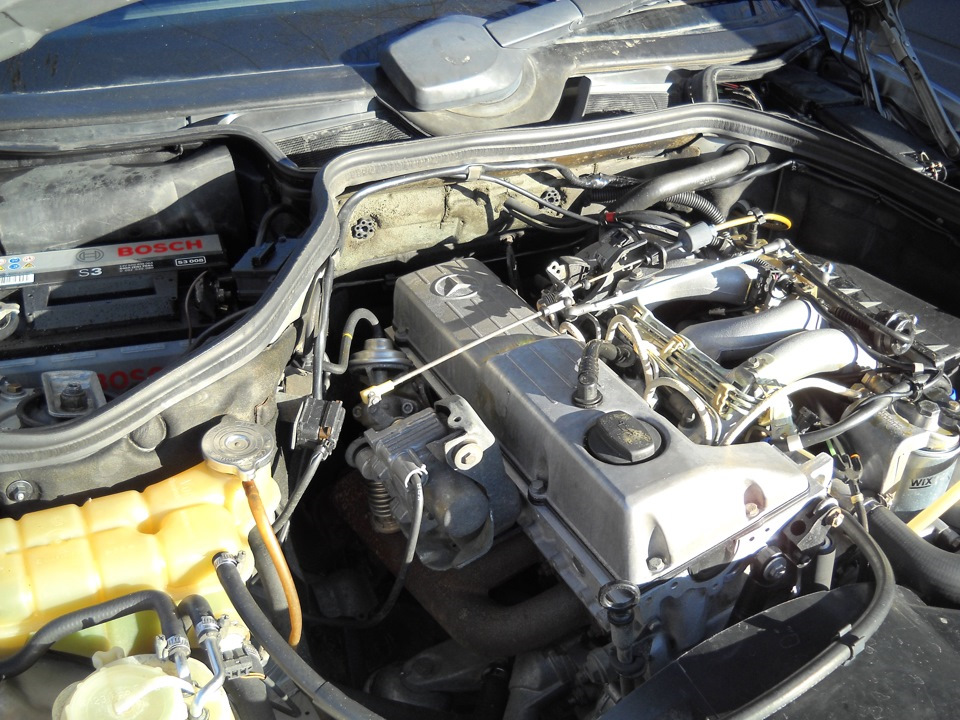
The OM601 employs mechanically controlled diesel injection into prechambers, rather than modern common-rail direct injection. Its factory service procedures include setting the beginning of fuel delivery, which is relevant following cylinder-head, timing-chain or injection-pump work.
The original 601.921 manual describes a closed crankcase-ventilation system with an oil separator in the cylinder-head cover. California-market equipment includes additional vacuum regulation using a diaphragm. Consequently, a California emissions or vacuum schematic should not be applied automatically to a European or other North American specification.
Emissions and turbocharging equipment vary between applications. The OM601.970 is turbocharged; the factory specification of the atmospheric 601.921 must not be extended to its charge-air or boost-control system. The available technical material does not establish a complete turbocharger fault history or a universal emissions-system configuration across these versions.
Documented Problems and Design Revisions
The following conditions come from Mercedes-Benz service communications. A bulletin describing a repair does not establish the frequency of that condition across the engine population. Some bulletins cover the 601/602/603 diesel families and were issued after the early North American 601.921 was no longer in production; those documents may be relevant to later engines or service replacements without proving that the revised part was factory-installed on every early 601.
Hydraulic Tappet Noise and Two Generations of Revised Components
Mercedes-Benz bulletin 05/55, dated January 1985, describes hydraulic valve-clearance compensating elements with enlarged oil chambers, introduced from August 1984. The stated service complaint was valve-gear noise, especially with a cold engine at idle. Earlier vehicles could receive the modified complete tappet assemblies when the complaint warranted it.
Hydraulic Tappets — August 1984
A second redesign is documented by 05/65: from September 1987 production, hydraulic tappets gained a vent opening for faster release of air from the pressure-compensating element. These later tappets could also be installed as service replacements on earlier engines. The vented design is not the same production change as the 1984 larger-oil-chamber version.
In February 1990, bulletin 05/78 addressed unnecessary replacement of hydraulic tappets. Mercedes-Benz states that brief ticking after a long shutdown or repeated starts may be normal. For tappets with a vent hole, its test uses approximately 80°C oil temperature, a correctly filled oil level and measurement between the camshaft base circle and tappet under light pressure. The replacement criterion is a clearance exceeding 0.4 mm under that procedure.
The bulletin treats earlier tappets without the vent hole differently. Consequently, the installed revision affects diagnosis and repair decisions. A transient startup sound is not sufficient to condemn a complete set of later tappets; persistent noise still requires investigation rather than dismissal as normal.
External Oil Leakage at the Cylinder-Head Gasket
Bulletin 01-85101, originally issued in October 1985 and later revised, identifies an external oil leak at the right rear corner of the cylinder head. The relevant path is around the oil-return bore at the head-gasket joint, not necessarily the combustion seal.
For engines 601 and 602, Mercedes specified a replacement head gasket with a crimped metal ring around that oil-return opening; the corresponding 603 solution used a different seal arrangement. The stated production introduction was April 1987. Because that date falls after the original North American 601.921 application, the modified gasket should be considered a later design or repair part for a compatible engine, not assumed original equipment on every 1984–1985 example.
Repair implication: establish the leak source before removing the head. This external joint leak is different from combustion leakage or oil entering the coolant and should not be combined with them under one diagnosis.
Cylinder-Head Porosity and Oil Contamination of Coolant
Another bulletin, 01-87101, describes oil entering the cooling system through porosity in the cylinder head around the front oil gallery serving the first camshaft bearing and hydraulic tappets. It is identified for engines 601, 602 and 603.
For the specified condition, Mercedes prescribed cylinder-head replacement and cleaning the cooling system. The document cautions that ordinary pressure testing may not detect this particular porosity. A negative conventional pressure test is therefore not conclusive when investigating the exact condition described in the bulletin.
External head-gasket oil seepage and internal oil-to-coolant leakage are separate fault paths with different repair implications. Neither bulletin supplies a population failure percentage, universal affected serial-number range or verified failure-mileage threshold for all OM601 variants.
Single-Belt Tensioner: Loose Bolt Versus Worn Lever Bearing
Two different Mercedes-Benz bulletins concern the accessory-belt tensioning mechanism. The distinction matters because owners may describe both as a front-engine rattle, and neither is automatically a camshaft timing-chain defect.
| Document | Root mechanism | Possible observations | Mercedes service direction |
|---|---|---|---|
| 13/1 (November 1984) | Bearing bolt can partially unscrew and contact the water-pump pulley | Accessory-drive noise; damaged or torn belt; damage to pulley, lever or fan | Inspect bolt and adjacent components; replace damaged parts and reinstall fastener with the specified locking procedure |
| 13-88071 (1986, revised 1988) | Bushing wear in the tensioning-pulley lever after prolonged operation | Wear in the lever bearing arrangement | Use the applicable revised lever with angular-contact ball bearing |
For the specific bearing bolt covered by 13/1, Mercedes gives a tightening torque of 100 Nm and requires the locking compound to cure for approximately one to two hours before the engine is run. Those values belong to that repair procedure and must not be generalized to other accessory-drive fasteners.
The later bulletin identifies the revised lever assembly 601 200 17 73, introduced from September 1985 and permitted for suitable service installations. Checking which mechanism is present can prevent unnecessary timing-chain work when the noise originates in the external belt drive.
Engine Continues Running After Ignition Is Switched Off
Bulletin 07.1/7 (May 1984) addresses an especially specific early 601.921 problem: a vacuum hose connected to the vacuum pump may slip off. With the vacuum-operated shut-off circuit interrupted, the engine may continue running after the driver turns the key off.
The production correction dates to February 1984, at chassis breakpoint 1A 070063. Mercedes directed inspection of the hose attachment and hose replacement where appropriate on earlier vehicles. A continuing-to-run complaint therefore should not be attributed immediately to an internal injection-pump failure without considering this documented external connection.
High-Pressure Injection-Line Leaks Caused by Vibration
Service bulletin 07.1-89011, dated January 1989, addresses leakage from the high-pressure lines for cylinders 1–4 on engines 601, 602 and 603. Mercedes associated the condition with line vibration and specified double-cone replacement lines together with proper installation of the plastic retaining clips.
| Injection line | Part number listed in bulletin |
|---|---|
| Cylinder 1 | 601 070 23 33 |
| Cylinder 2 | 601 070 24 33 |
| Cylinder 3 | 601 070 38 33 |
| Cylinder 4 | 601 070 26 33 |
These are the bulletin’s listed components, not universal replacement numbers for all versions and production periods of OM601. The clips and routing are part of the remedy: replacing a leaking pipe alone does not necessarily correct the vibration environment that produced the complaint.
Stalling After Highway Driving: Fuel Restriction or Pump Governor
Bulletin 07.1-88101, first issued in October 1988 and revised in April 1989, covers diesel engines cutting out when the clutch is depressed or failing to maintain idle after extended highway driving, described as approximately 120–200 miles. It separates two possible causes rather than treating every occurrence as an injection-pump failure.
The first is a restricted orifice in the upper fuel-filter housing caused by rubber particles, a clogged main fuel filter or a frayed filter-center seal. The specified response is to clean the housing orifice and replace the main filter. The second is a binding centrifugal governor within the injection pump; pump replacement in that case was subject to the bulletin’s approval process and exact pump-identification requirements.
Mercedes identifies production code 849 (September 1988) as an acceptable updated pump, along with code 848 (August 1988) when accompanied by a green paint identification dot. A pump’s actual identification plate matters more than a general assertion that a vehicle has a revised pump.
Diagnostic implication: check the fuel-filter path before assigning an internal governor fault. The bulletin’s post-highway operating condition should not be conflated with unrelated poor cold-start reports.
Vacuum-Pump Drive Damage
Service bulletin 43/9 (February 1991) addresses inspection during repair of the specified piston-type vacuum pump. When the pump’s roller or bearing is damaged, Mercedes directs examination of its associated drive cam. If that cam is damaged, replacing the pump alone is insufficient.
This is a verified inspection relationship between mechanically connected components, not evidence that vacuum pumps fail at a predictable mileage. Exact pump design and application should be confirmed before applying the bulletin.
Diagnostic Measurements and Misdiagnosis Risks
The strongest diagnosis-specific figures available for the early 601.921 are the factory mechanical compression and cylinder-leakage measurements. They are not applicable automatically to other displacements or installations simply because those engines also carry the OM601 name.
Compression and Cylinder-Leakage Testing
| 601.921 factory test | Specified value |
|---|---|
| Normal compression pressure | 24–30 bar |
| Minimum compression pressure | Approximately 15 bar |
| Maximum difference between cylinders | 3 bar |
| Coolant temperature during compression testing | 80°C |
| Maximum overall cylinder leakage | 25% |
| Maximum leakage through valves/head gasket | 10% |
| Maximum leakage through piston/ring path | 20% |
Mercedes-Benz procedures 01-010 and 01-015 prescribe their own test conditions and equipment. Compression is measured through the prechamber after removing the injection nozzle, with injection prevented while the engine is cranked. If compression falls below the specified minimum, the manual directs further cylinder-leakage testing rather than immediately attributing the result to worn rings, damaged valves or a failed head gasket.
During the leakage test, the technician can listen for escaping air through the intake, exhaust, oil-filler opening, adjacent cylinder opening or cooling-system opening. The workshop manual also warns that temporarily aligned piston-ring gaps can distort an individual leakage result; where the finding is doubtful, it calls for further operation and rechecking.
These percentages are test-specific permissible losses, not estimates of the percentage of OM601 engines suffering wear. Their interpretation requires the relevant calibrated test equipment and factory procedure.
Symptom-to-System Reference
| Observed symptom | What the documentation supports checking | Important distinction |
|---|---|---|
| Brief tapping after a long stand | Hydraulic tappet generation and prescribed noise test | A short-lived sound can be normal; persistent noise is different |
| Front-engine noise or belt damage | Accessory tensioner bolt, lever and nearby pulley damage | Accessory drive is not the timing chain |
| Engine will not stop with the key | Early vacuum shut-off hose attachment, if within affected scope | External connection versus internal injection-pump fault |
| Stalls when clutch is depressed after highway use | Fuel-filter orifice, filter condition and pump governor as applicable | Supply restriction versus pump internals |
| Fuel at injection pipes | High-pressure line condition, routing and plastic retaining clips | High-pressure line leak versus low-pressure return connection |
| External oil near rear of cylinder head | Oil-return gasket joint | External seepage versus combustion/coolant sealing |
| Oil appearing in coolant | Investigate the actual oil-to-coolant path, including documented head porosity | A routine negative pressure test may not exclude that porosity condition |
| Low compression | Repeat under correct test conditions; proceed to leakage testing | Pressure result does not prove one internal root cause |
The documentation reviewed for the mechanically injected early 601.921 does not establish a modern engine-specific P-code diagnostic strategy. Generic OBD-II lists are therefore not a substitute for these mechanical procedures.
Maintenance and Repair Considerations
OM601.921 Oil and Coolant Quantities
| Service operation | 190 D 2.2 / OM601.921 |
|---|---|
| Engine oil and filter change | 6.5 liters |
| Complete initial engine-oil fill | Approximately 7.3 liters |
| Cooling system with heater | Approximately 8.5 liters |
| Oil-level check after replacement | Warm engine, shut down, wait five minutes and check against the dipstick |
Mercedes-Benz bulletin 18/29 explicitly corrected the regular oil-and-filter change amount for the identified engine to 6.5 liters, or approximately seven US quarts. Earlier documents that gave six US quarts for that same operation were superseded. The larger 7.3-liter figure is the complete initial fill and must not be substituted for routine service.
Bulletin 01/3 records a May 1984 OM601 dipstick revision using plastic minimum and maximum markers. Mercedes specifically states that the dipstick change did not alter the oil capacity. This differs from an oil-capacity revision for another Mercedes diesel engine described in the same bulletin.
The verified values above are tied to 601.921 in the 190 D 2.2 installation. Other sumps, coolers and chassis may have different capacities. The original period oil recommendations likewise do not establish one modern MB-Approval grade or one oil-change interval valid for every OM601 passenger-car and commercial application. Use the correct vehicle and model-year maintenance documentation rather than a synthetic family-wide figure.
Cylinder-Head Bolts and Prechamber Repairs
The Mercedes-Benz manual includes head-bolt tightening procedures and dimensional criteria; the later bulletin 01/22b further updates relevant bolt information. Only the sections that actually apply to the OM601 should be used: changes described for different Mercedes diesel engines cannot automatically be imported.
Bulletin 01/13, 58/66 describes gas leakage around a prechamber after it has been removed and refitted. Its first response is to dry the area with compressed air to distinguish leakage bubbles from evaporating fuel, then run the engine for at least 15 minutes at 2,500–3,000 rpm to allow minor seating irregularities to seal.
If the condition persists, the document describes refinishing the seating surface with the specified tool. With the cylinder head installed, this operation may be performed only once. The prescribed prechamber projection is 7.6–8.1 mm, a critical installation dimension for clearance to the piston crown at top dead center. A further refinishing operation requires additional conditions, including removal of the head for precise measurement.
These are corrective procedures for a confirmed leak after prechamber service, not evidence that intact OM601 prechambers routinely require machining. Unnecessary machining may compromise an installation dimension that the factory procedure explicitly protects.
Rebuild Scope and Component Compatibility
A rebuild assessment should be based on measured compression and leakage, actual cylinder-wall condition, visible component damage and the history of previous repairs. The factory manual provides detailed procedures for internal measurements and cylinder work, but it does not establish a universal expected overhaul mileage.
Component changes can also alter repair choices. The early hydraulic tappet and the later vented tappet are not identical. The accessory tensioner can have a later bearing-style lever. The cylinder-head gasket has a revised oil-return seal. Where a service component was introduced after the engine’s initial production, correct fitment must be established rather than treating every later part number as proof of a defect on every earlier unit.
What OM601 Owners Report
Owner-community material provides useful descriptions of symptoms and operating conditions, but it remains a separate evidence layer from Mercedes-Benz workshop procedures and bulletins.
Field Report In a MOTOR-TALK discussion, an owner described an OM601 losing oil pressure, developing noise and subsequently showing damage involving the oil-pump chain drive during inspection. The case offers a possible inspection direction when these symptoms occur together. It does not establish a recurring defect rate or a universal root cause for oil-pressure loss.
Field Report An archived Mercedes owner discussion describes a 1984 190 D 2.2 running poorly after cylinder-head-gasket and timing-chain work. Participants considered camshaft/injection timing. No independently confirmed final adjustment or successful repair outcome was documented, so the report supports checking earlier work rather than assigning a proven failure mechanism.
Other isolated discussions describe poor cold starts after cylinder-head repairs, smoke and heavy blow-by, leakage near diesel injectors and abnormal coolant-temperature readings. These are not interchangeable symptoms. In particular, an external return-fuel connection is different from the high-pressure injection-line vibration problem in bulletin 07.1-89011; reported blow-by does not on its own establish damaged piston rings.
What to Check Before Buying an OM601
- Identify the exact engine. Check the full 601.xxx suffix, engine number and vehicle/market configuration before applying specifications or ordering major components.
- Listen to a true cold start. Separate brief hydraulic-tappet ticking from persistent valve-train or other mechanical noise.
- Inspect the external belt drive. Look for tensioner-lever play, loose fastening, belt damage and signs of contact at the water-pump pulley.
- Locate external oil leaks. Check the rear head-gasket joint where appropriate, but establish the actual leak path rather than assuming every oil leak is a head-gasket failure.
- Investigate coolant contamination. Oil appearing in coolant requires assessment of the leakage path, including the manufacturer-described head-porosity condition.
- Inspect injection lines and clips. Check for leakage and ensure the lines are properly supported rather than able to vibrate freely.
- Verify shut-off behavior. On early 601.921 installations, the specified vacuum-hose issue is relevant if the engine keeps running with the key off.
- Review prior engine work. Cylinder-head, prechamber, timing-chain or injection-pump repairs may make accurate adjustment and installed revision particularly important.
- Use measurements when symptoms justify them. Compression and leakage findings can distinguish mechanical condition more effectively than mileage or reputation alone.
Recalls and Reliability Assessment
U.S. safety-recall records for Mercedes-Benz 190-series vehicles include vehicle-equipment matters such as wheels, brake-light/cruise-control electrical circuits and parking-brake components. Those are not OM601-specific mechanical engine defects. No engine-specific NHTSA safety recall was identified in the reviewed material; this is not a comprehensive negative finding for every OM601 vehicle in every country.
Technical service bulletins must also be distinguished from official safety recalls. They document service conditions, corrections and procedures, not necessarily a population-wide defect or a legally mandated recall campaign.
The most directly identified early 601.921 issues are the hydraulic-tappet revision and vacuum shut-off hose condition. The family-level bulletins add useful evidence concerning oil sealing at the head, head porosity, the accessory-belt tensioner, vibration of injection pipes, certain mechanical fuel-control conditions and subsequent timing-tensioner design changes. Their scope must be read individually.
None of the available technical sources establishes a defensible OM601-wide average lifespan, fixed timing-chain failure mileage or population rate of major internal damage. For an individual engine, full variant identification, correct service procedures, previous repair quality and measured mechanical condition provide more useful information than an unsupported reliability score.
Sources & Technical References
- Mercedes-Benz — Engine 601 Service Manual (1985). Factory engine identification, 601.921 specifications, compression, cylinder leakage, lubrication and repair procedures; OEM document in a third-party mirror.
- Mercedes-Benz Historical Archive — 190 D. 601.911 dimensions and the March 1989 output revision.
- Mercedes-Benz Historical Archive — 200 D. 601.912 identification and the February 1989 output revision.
- Mercedes-Benz Historical Archive — C 200 Diesel (W202, 202.120). Original Mercedes-Benz record confirming engine 601.913, 1,997 cc, 55 kW and 130 Nm, and the 1993–1995 production application.
- Meyer Motoren — Mercedes-Benz 508 D / OM601.941. Professional rebuilder identification, 2.3-liter measurements and application-specific output.
- Meyer Motoren — Sprinter 208 D / OM601.943. Specialist engine-rebuilder record identifying 601.943, 2,299 cc, the 208 D application and separate listed 58/60 kW versions.
- Mercedes-Benz MBNA 05/55 — Modified Hydraulic Compensators. 1984 design change, part numbers and chassis breakpoints.
- Mercedes-Benz MBNA 05/78 — Hydraulic Valve Tappet Inspection. Normal short-duration tapping and the later vented-tappet clearance test; multi-engine document.
- Mercedes-Benz MBNA 13/1 — Loose Accessory-Belt Tensioner. Bolt contact with water-pump pulley, repair procedure and torque.
- Mercedes-Benz 13-88071 — Worn Tensioner Lever Bearing. Bushing wear and later angular-contact bearing revision.
- Mercedes-Benz 01-85101 — Oil Leak Between Head and Gasket. External oil-return sealing issue and revised gasket for 601/602.
- Mercedes-Benz 01-87101 — Engine Oil in Cooling System. Cylinder-head porosity and factory repair direction; document covers 601/602/603.
- Mercedes-Benz 07.1-88101 — Stalling After Highway Driving. Filter restriction versus injection-pump governor sticking and specified driving conditions.
- Mercedes-Benz 07.1-89011 — Fuel Line Vibration Leakage. Revised injection lines and retaining clips; document covers 601/602/603.
- Mercedes-Benz MBNA 18/29 — Oil Change Quantity. Correction to 6.5-liter oil-and-filter change fill.
- Mercedes-Benz 01/13, 58/66 — Prechamber Seating Surfaces. First checks, one-pass installed-head limit and 7.6–8.1 mm projection.
- Mercedes-Benz MBNA 07.1/7 — Early OM601.921 Vacuum Shut-Off Hose (1984). Direct service bulletin with the February 1984 production correction and chassis breakpoint 1A 070063.
Manufacturer bulletins above are Mercedes-Benz documents reproduced by third-party service-manual hosts. Their presence in a vehicle-level catalogue does not by itself prove applicability of every multi-engine bulletin to every individual engine.
Field Sources
- MOTOR-TALK — OM601 Oil-Pump Drive Discussion. Owner narrative of oil-pressure loss, chain-guide damage and subsequent repair complications; anecdotal.
- Mercedes Owner Mailing List — OM601 Injection Timing. Owner discussion following head-gasket and timing-system work on a 190 D 2.2; final cause not independently established.