Mercedes OM615 Diesel Engine: Specs, Applications & Failure Analysis
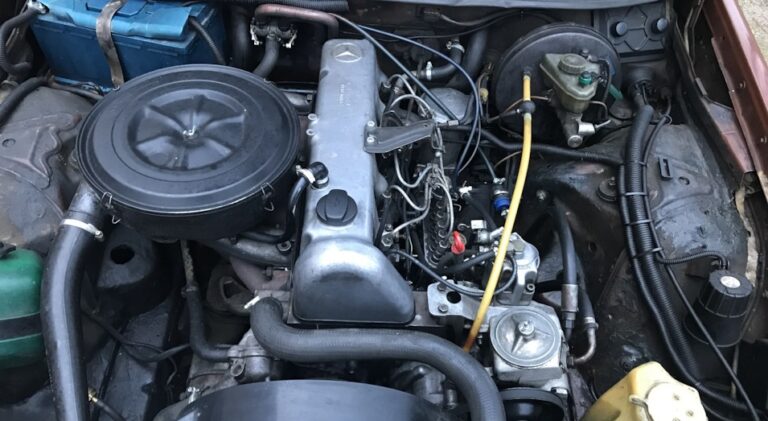
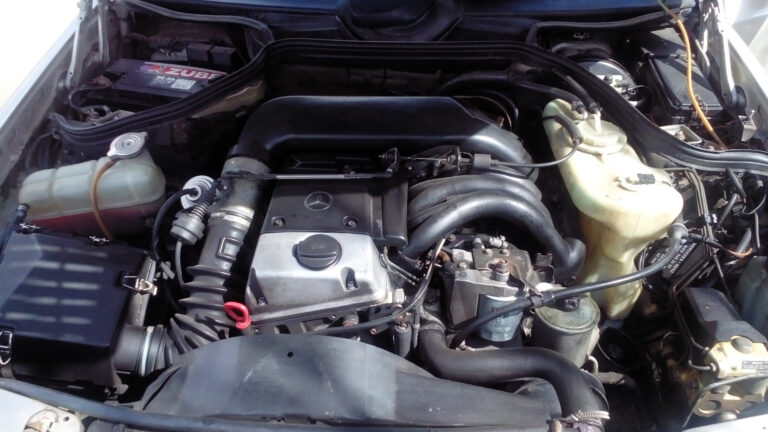
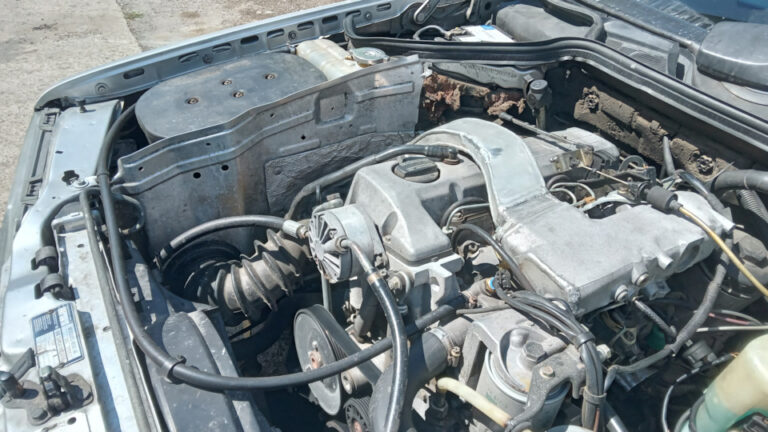
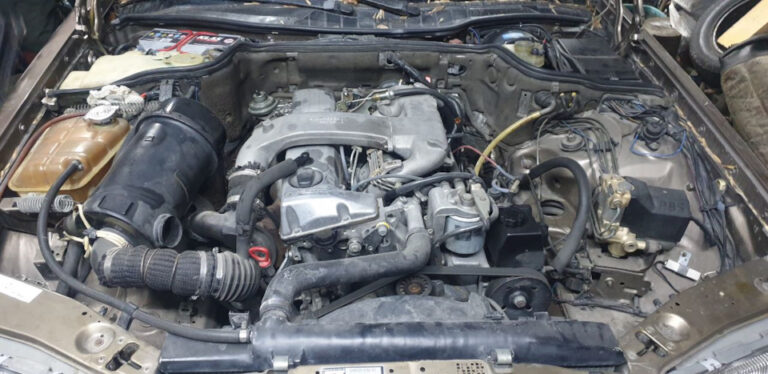
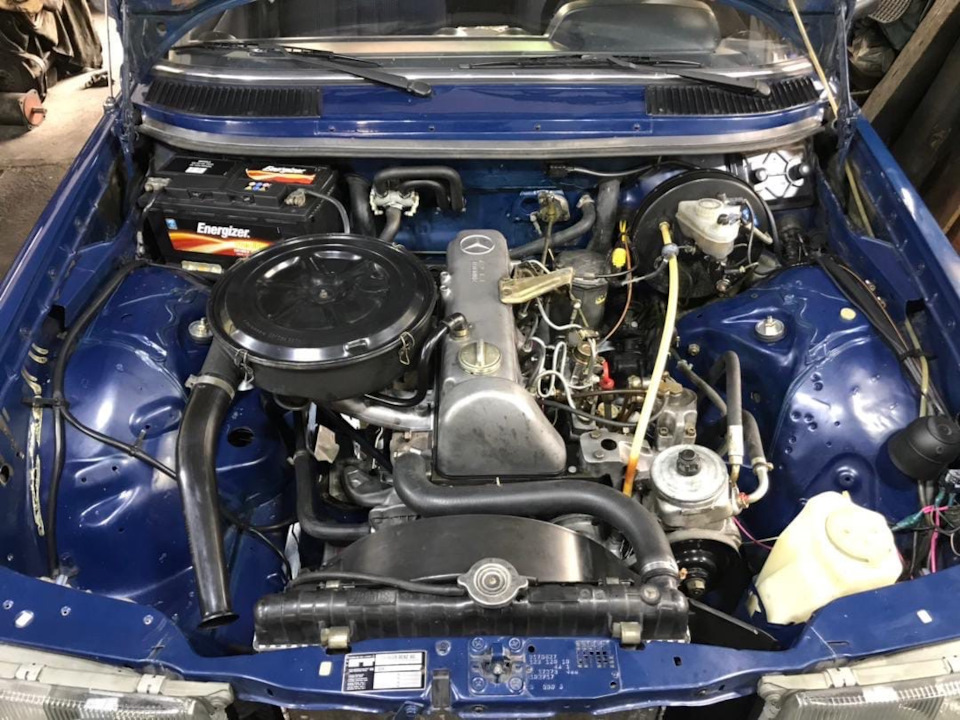
The Mercedes-Benz OM615 is a naturally aspirated, four-cylinder prechamber diesel engine found in several W115 and W123 passenger-car applications. The important distinction is the suffix: 615.912, 615.913, 615.940 and 615.941 do not all share the same displacement, output, compression ratio or service configuration.
The verified passenger-car versions divide into 1,988 cc and 2,197 cc engines. All use mechanical diesel injection, a single overhead camshaft and duplex-chain camshaft drive, but Mercedes introduced meaningful production changes, including a revised 44 kW version of the 615.940, changes to the W123 oil-filter arrangement and revisions to cooling and lubrication components.
Mercedes-Benz OM615
615.912, 615.913, 615.940, 615.941
1,988 cc or 2,197 cc, depending on suffix
Inline four-cylinder diesel
Naturally aspirated in the verified passenger applications
Mechanical Bosch inline injection pump, prechamber injection
OM615 Specifications and Engine Codes
The 2.0-liter versions use an 87.0 mm bore and 83.6 mm stroke, while the 2.2-liter engines retain the 87.0 mm bore and increase stroke to 92.4 mm. Output and compression ratio must be tied to the exact suffix rather than treated as one universal OM615 specification.
| Engine code | Displacement | Bore × stroke | Compression ratio | Verified output | Verified torque |
|---|---|---|---|---|---|
| 615.913 | 1,988 cc | 87.0 × 83.6 mm | 21:1 | 40 kW / 55 PS at 4,200 rpm | Approx. 113 Nm at 2,400 rpm |
| 615.912 | 2,197 cc | 87.0 × 92.4 mm | 21:1 | 44 kW / 60 PS at 4,200 rpm | Approx. 126 Nm at 2,400 rpm |
| 615.940 | 1,988 cc | 87.0 × 83.6 mm | 21.5:1 | 40 kW / 55 PS at 4,200 rpm; 44 kW / 60 PS at 4,400 rpm from the documented 02/1979 revision | 113 Nm at 2,400 rpm |
| 615.941 | 2,197 cc | 87.0 × 92.4 mm | 21.5:1 | 44 kW / 60 PS at 4,200 rpm | 126 Nm at 2,400 rpm |
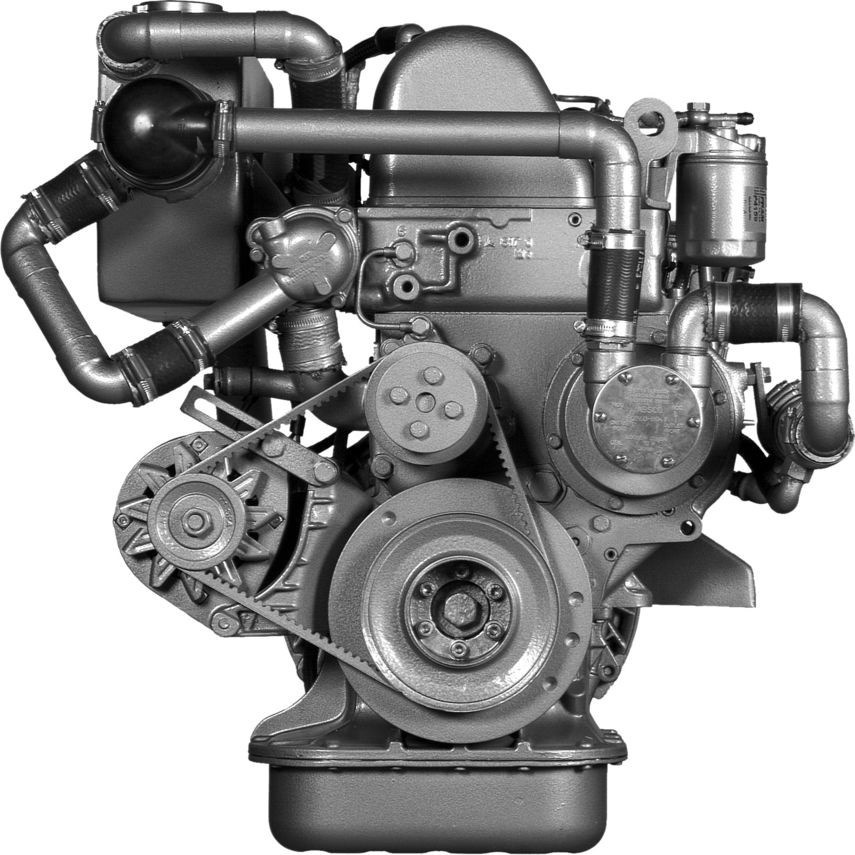
The verified architecture includes five crankshaft main bearings, a single overhead camshaft, two valves per cylinder and duplex-chain camshaft drive. The passenger-car applications covered here are naturally aspirated. No block-material, cylinder-head-material or factory liner-construction value is included because those details were not established strongly enough for the exact variants covered here.
Verified Mercedes Applications
The table below shows applications and periods directly established in the technical sources used here. For the W115 entries, the dates shown are specifically the verified Series 2 period rather than the complete historical use of the corresponding OM615 variants.
| Model | Chassis | Verified period shown here | Engine | Output |
|---|---|---|---|---|
| Mercedes-Benz 200 D | W115 / 115.115 | Series 2: 08/1973–12/1976 | 615.913 | 40 kW / 55 PS |
| Mercedes-Benz 220 D | W115 / 115.110 | Series 2: 08/1973–12/1976 | 615.912 | 44 kW / 60 PS |
| Mercedes-Benz 200 D | W123 / 123.120 | 02/1976–04/1985 in the verified technical listing | 615.940 | 40 kW initially; 44 kW from 02/1979 |
| Mercedes-Benz 220 D | W123 / 123.126 | 02/1976–03/1979 | 615.941 | 44 kW / 60 PS |
Earlier W115 applications of the 615.912 and 615.913 are documented separately; the W115 dates above therefore should not be read as the complete application period of either engine variant.
Mercedes production-code documentation also associates 615.912 with W115 chassis 115.100, 115.102, 115.103 and 115.112, including special-body and extended-wheelbase configurations. These applications should be treated separately from the standard 220 D sedan rather than inferred from chassis 115.110.
Mechanical Design
Prechamber Diesel Injection
The verified passenger engines use indirect diesel injection through precombustion chambers and a mechanically controlled Bosch four-plunger inline injection pump. Fuel metering is therefore fundamentally different from later electronically controlled Mercedes diesels. The factory diagnostic procedures for these passenger-car configurations rely on mechanical and electrical testing rather than an engine-management DTC system.
Injection-pump governor design is application dependent. Mercedes documentation identifies a pneumatic governor on specified OM615 configurations and provides a 70–90 mbar leak-test specification for the applicable OM615/OM616 system. This architecture must not be assumed for every 615.940, 615.941 or other OM615 installation.
Cylinder Head, Valvetrain and Timing
The OM615 uses one overhead camshaft operating two valves per cylinder. Camshaft drive is by duplex roller chain. There is no verified variable valve timing or variable valve lift system.
Mercedes specifies mechanical valve-clearance adjustment. At approximately 20°C, the documented clearances are 0.10 mm intake and 0.30 mm exhaust. At an engine temperature of 60 ±15°C, the values are 0.15 mm intake and 0.35 mm exhaust. For prolonged operation below −20°C, Mercedes specifies increasing intake clearance by 0.05 mm.
615.940 44 kW Revision
The 44 kW 615.940 should therefore not be treated simply as an unchanged early engine with a different quoted power figure. The factory valve-timing documentation distinguishes it mechanically from the earlier 40 kW configuration.
Lubrication System and Oil Pressure
Mercedes workshop documentation describes a pressure-circulation lubrication system using a gear-type oil pump and full-flow/bypass filtration. The pressure-relief-valve arrangement differs by engine version: on 615.912 and 615.913 the valve is located in the front main oil gallery, while the documented 615.940/615.941 arrangement places the valve on the oil pump.
For the applicable W123 lubrication system, oil pressure may fall to approximately 0.5 bar at hot idle. It should increase immediately when engine speed rises and reach at least 3 bar at 3,000 rpm.
Oil-Pressure Loss After Filter Service
One of the most useful factory-documented OM615 diagnostic conditions concerns the oil-filter assembly. Mercedes explains that incorrect assembly can displace the sealing ring ahead of the filter header pipe. Oil can then pass through the overflow valve, reducing indicated oil pressure, particularly at idle.
This is a service-induced condition, not evidence of recurring oil-pump failure. If oil-pressure behavior changes immediately after filter work, filter assembly should be checked before internal bearing damage or oil-pump replacement is assumed.
Pressure-Relief Valve as a Diagnostic Possibility
Mercedes also instructs technicians to check whether the oil-pump pressure-relief valve has become loose or dislodged when oil pressure is absent or inadequate. The mechanism is factory documented, but no OM615 population failure rate or mileage threshold is established.
Low Oil Pressure After Service
- Incorrect oil-filter assembly can displace an internal sealing ring and reduce oil pressure.
- A loose or displaced pressure-relief valve is another factory-listed diagnostic possibility.
Delayed Pressure After Standing
- Early W123 filter arrangements can allow oil to drain from the filter housing during extended parking.
- This can delay oil-pressure indication after startup and make the sump level appear unusually high.
- Mercedes specifically states that feared bearing damage from this particular drainback condition is not justified.
W123 Oil-Filter Revision
The early W123 oil-filter housing used a centrally bolted cover and a return pipe without a check valve. From November 1976, Mercedes introduced a cover retained by two nuts and a return pipe incorporating a check valve.
This revision materially affects diagnosis. A delayed pressure indication after a long period of standing on an early configuration can be related to filter-housing drainback rather than immediately indicating worn crankshaft bearings or a failed oil pump. Mercedes did not treat the drainback behavior alone as justification for replacing the filter assembly.
Cooling System
The OM615 cooling system uses a mechanical water pump, thermostat, radiator and bypass circuit. Factory documentation describes the thermostat as keeping the main radiator route closed at lower temperature while allowing bypass circulation. Between approximately 80°C and 94°C, flow is progressively redistributed. Above roughly 94°C, the bypass path should close and coolant flow is directed through the radiator.
Mercedes specifically warns against removing the thermostat in an attempt to improve cooling. Without correct thermostat control, coolant can continue to use the bypass circuit rather than following the intended radiator path.
A second W123 thermostat-housing arrangement is documented from February 1979 and incorporates automatic venting. This production change should be considered when comparing cooling-system parts or procedures between early and later cars.
Known Fault Mechanisms and Diagnostic Conditions
The available technical evidence does not support describing the OM615 as having a long list of statistically established recurring defects. It does identify several physical or diagnostic mechanisms that matter in service.
| Condition | Possible Symptoms | Supported Mechanism | Affected Scope |
|---|---|---|---|
| Low oil pressure | Low or absent gauge pressure | Loose or displaced oil-pump pressure-relief valve | OEM Diagnostic Possibility |
| Oil-pressure drop after filter service | Reduced pressure, particularly at idle | Incorrectly positioned filter sealing ring allowing oil to bypass | OEM Documented |
| Delayed oil-pressure indication after extended parking | Pressure gauge responds slowly after startup; sump level may appear high | Drainback behavior in the early W123 filter arrangement | OEM Documented |
| Damaged precombustion chamber | Damage identified during inspection; possible secondary internal damage if material detaches | Cracked chamber bottom or burned/scaly ball-pin surface requires replacement | OEM Documented |
| Governor leakage on applicable versions | Incorrect or unstable engine-speed regulation | Leakage in the pneumatic injection-pump governor circuit | OEM Documented |
| Glow-system fault | Difficult cold starting or failed glow operation | Factory diagnostic material includes electrical faults, carbon contamination, injector-related conditions and combustion-chamber contamination among possible causes | OEM Diagnostic Possibility |
| Cylinder and piston-ring wear | Reduced compression, blow-by, oil consumption and harder starting | Wear of cylinder surfaces and rings on aged/high-use 615/616/617 engines | Service Bay Benchmark |
Precombustion Chamber Damage
Mercedes instructs replacement when a precombustion chamber is found with a cracked lower section or a burned, scaled ball-pin surface. Detached material can cause additional internal engine damage.
The observed chamber damage should not automatically be treated as the original root cause. The upstream cause must be established for the exact engine configuration rather than inferred from a related OM61x version or from a different vacuum-pump arrangement.
Cylinder and Ring Wear
A Mercedes diesel specialist describes cylinder-wall and piston-ring wear during overhaul of the 615/616/617 engine family. The practical consequences are reduced compression, increased blow-by, increased oil consumption and harder starting.
This is useful repair-level evidence for the physical wear mechanism, but it does not establish how often an OM615 requires rebuilding or at what mileage. High-mileage examples cannot be converted into an expected service life.
For diagnosis, the factory compression and cylinder-leakage tests are more useful than assuming ring wear from symptoms alone. Excessive leakage through the piston/ring path supports a different repair direction from excessive leakage through valves or the cylinder-head-gasket path.
Timing Chain
The OM615 uses a duplex timing chain, and Mercedes provides different valve-timing check values for new chains and chains that have accumulated service. The factory tables also distinguish the 44 kW 615.940 from earlier versions. This supports checking actual cam timing when chain condition is in question rather than treating every OM615 timing system as identical.
The service documentation refers to a used-chain condition from about 20,000 km for measurement purposes. That is not a replacement interval. No universal OM615 timing-chain replacement mileage is established by the verified material.
Compression, Leak-Down and Mechanical Diagnosis
The OM615 has useful factory mechanical diagnostic limits, allowing poor starting, blow-by or weak performance to be investigated without relying on guesswork.
| Normal compression | 22–24 bar with the engine at approximately 80°C |
|---|---|
| Minimum compression | Approximately 15 bar |
| Maximum cylinder-to-cylinder difference | 3 bar |
| Maximum total cylinder leakage | 25% |
| Leakage through valves / cylinder-head-gasket path | Maximum 10% |
| Leakage through piston / ring path | Maximum 20% |
| Hot-idle oil pressure | May fall to approximately 0.5 bar in the documented W123 configuration |
| Oil pressure at 3,000 rpm | At least 3 bar |
| Pneumatic-governor vacuum test | 70–90 mbar on applicable OM615/616 pneumatic-governor configurations |
A low compression result should be interpreted together with cylinder leakage rather than immediately attributed to piston rings. Leakage through the valve or head-gasket path and leakage through the piston/ring path have separate factory limits and imply different repair directions.
Oil Capacity and Service Data
Oil capacity is one area where a single OM615 number is misleading. Mercedes distinguishes between oil in the sump, the quantity used during an oil-and-filter service and the total quantity required when refilling an engine after more extensive work.
W115 OM615.912 / 615.913 Oil Service Quantities
| Configuration | Documented chassis breakpoint | Oil + filter service | Oil pan quantity |
|---|---|---|---|
| 1st version | To 120829 / 056238 | 5.0 L | 4.0 L |
| 2nd version | From 120830 / 056239 | 5.5 L | 4.5 L |
| 3rd version | From 400001 / 200001 | 6.0 L | 5.0 L |
The paired chassis breakpoints above are reproduced as documented and should be matched to the exact W115 application before using the quantity. Earlier Mercedes maintenance documentation also adds approximately 0.5 L to the applicable service-fill quantity where the specified air-oil cooler is fitted.
Total Refill After Engine Work
The Mercedes engine-removal/refill procedure lists approximately 6.5 L for 615.912/615.913 and 7.0 L for 615.940/615.941 as complete refill quantities. An additional 0.5 L applies where the documented air-cooled oil cooler is fitted. In the W123 workshop material, the air-oil-cooler configuration is associated with air-conditioned vehicles.
Those figures are not routine oil-change capacities. Using a complete refill figure for an ordinary service can lead to overfilling.
Oil and Filter Interval
Period Mercedes maintenance documentation for the covered W115/W123 diesel filter arrangements specifies filter replacement with the engine-oil service at 5,000 km. That is a period, application-specific schedule and should not be presented as a universal interval for every OM615 installation or operating environment.
Coolant Capacity
The verified vehicle data lists 10.5 L for the W115 200 D/220 D applications and 10 L for the W123 200 D/220 D applications. These are chassis-specific capacities rather than an OM615-wide 10–10.5 L specification.
No universal timing-chain replacement interval, coolant-replacement interval or universal approved engine-oil specification was established strongly enough to publish as an engine-wide OM615 value.
Starting and Fuel-System Diagnosis
Hard starting on an OM615 should not automatically be attributed to one component. The verified diagnostic information supports checking mechanical compression, valve adjustment, glow-system condition and the fuel/injection system according to the symptoms and exact pump configuration.
For versions equipped with the pneumatic injection-pump governor, Mercedes provides a 70–90 mbar vacuum test. Leakage in that circuit can affect governor operation. Because later or otherwise different pump configurations do not necessarily use the same governor, this test should only be applied after the injection-pump type has been identified.
The glow system also changed across applications. Mercedes documentation covers both older resistance/filament arrangements and later quick-start pencil-element systems. For the documented quick-start system, current is approximately 30 A per plug initially and falls to about 14 A, with the plug reaching approximately 900°C after nine seconds. These figures apply to the quick-start configuration, not automatically to every OM615 glow system.
Carbon in the glow-plug bore is another factory-described diagnostic condition. Deposits can provide an unwanted current path, and Mercedes specifies cleaning the plug channels with the appropriate reamer when this condition is present.
Owner and Specialist Reports
Field Report One detailed W123 200 D owner case at a reported 393,000 km described difficult cold starting, rough initial running and fuel-delivery problems under load. Suggested checks included glow operation, measured compression, valve adjustment, fuel filters and the tank strainer. The mileage is anecdotal and does not establish an OM615 failure threshold.
Within the same owner discussion, a separate report attributed fuel-flow restriction to a contaminated tank strainer and reported improvement after the restriction was corrected. This is useful as a diagnostic example when an engine loses fuel delivery under load, but it does not establish a recurring OM615 design defect.
Field Report A separate OM615 discussion describes engine-speed oscillation that appeared after roughly two to three hours of operation. Troubleshooting focused on fuel-system air ingress and the pneumatic governor diaphragm where that pump configuration is fitted. Factory documentation independently confirms that pneumatic-governor leakage can be tested on applicable OM615 installations, but the forum report does not establish how frequently the condition occurs.
These cases are most useful as symptom and diagnostic-context evidence. They do not support claims that hard starting, governor problems or fuel starvation are statistically common OM615 defects.
What to Check Before Buying an OM615-Powered Car
- Confirm the exact engine suffix rather than relying only on the OM615 family designation.
- Check cold starting from a genuinely cold engine. Difficult starting justifies checking glow operation, valve adjustment and measured compression rather than guessing from sound alone.
- Observe hot oil pressure. In the documented W123 configuration, approximately 0.5 bar at hot idle can be permissible, but pressure should rise immediately with engine speed and reach at least 3 bar by 3,000 rpm.
- If oil-pressure behavior changed after a filter service, verify filter assembly before assuming internal bearing or oil-pump damage.
- Identify whether an early or revised W123 oil-filter housing is installed, particularly when investigating delayed pressure indication after prolonged parking.
- Review valve-clearance service history. The engine uses mechanically specified clearances rather than maintenance-free hydraulic adjustment.
- On a weak or difficult-starting engine, use compression and leak-down results to distinguish valve/head-gasket leakage from piston/ring leakage.
- Check the exact injection-pump and governor configuration before applying troubleshooting advice from another OM615 or OM61x version.
- Do not assume a timing chain requires replacement solely because of an internet mileage threshold; no universal factory replacement mileage was established.
What the Evidence Shows
The OM615 is best evaluated by exact engine suffix and mechanical condition rather than by a single family-wide reputation. Mercedes documentation provides specific diagnostic information for compression, cylinder leakage, valve clearance, lubrication and cooling, making many complaints measurable rather than subjective.
The strongest verified problem-related evidence concerns identifiable service and diagnostic mechanisms: incorrect oil-filter assembly can reduce oil pressure, an oil-pump pressure-relief valve can become loose or displaced, early W123 filter architecture can delay pressure indication after standing, pneumatic-governor leakage can affect applicable injection systems, and damaged precombustion chambers require replacement.
Specialist evidence also supports age- and use-related cylinder/ring wear as a potential source of poor compression, blow-by and oil consumption. What the available material does not establish is a defensible OM615 failure percentage, universal rebuild mileage, universal timing-chain replacement interval or fixed expected engine lifespan.
Sources & Technical References
- vdh Mercedes-Benz technical archive — W115 200 D Series 2, 615.913 identification, dimensions, output and vehicle technical data.
- vdh Mercedes-Benz technical archive — W115 220 D Series 2, 615.912 identification, dimensions, output and vehicle technical data.
- vdh Mercedes-Benz technical archive — W123 200 D, 615.940 identification, specifications and February 1979 output revision.
- vdh Mercedes-Benz technical archive — W123 220 D, 615.941 identification and specifications.
- Mercedes-Benz Clubs — Passenger Car Models Production Codes, additional W115 chassis associated with 615.912.
- Mercedes-Benz diesel-engine workshop manual reproduction — OM615/616/617, compression, cylinder-leakage, glow-system, precombustion-chamber, lubrication and injection-system procedures.
- Mercedes-Benz Workshop Manual — Job 05-215, valve clearance, camshaft identification and valve-timing differences including the 44 kW 615.940.
- Mercedes-Benz Workshop Manual — Job 18-005, lubrication architecture, oil-pressure values, filter revisions and oil-pressure diagnostic conditions.
- Mercedes-Benz Workshop Manual — Job 18-215, pressure-relief-valve versions and conflicting pressure references requiring configuration-specific interpretation.
- Mercedes-Benz Workshop Manual — Job 20-005, thermostat operation, coolant routing and revised W123 cooling arrangement.
- Mercedes-Benz Workshop Manual — Job 00-110, total engine refill quantities after engine work.
- Mercedes-Benz Maintenance Manual — Engine Oil Change and Filter Service, version-specific W115 OM615 oil-service and oil-pan quantities.
- MercedesSource — The Challenge of Overhauling a 615, 616, or 617 Diesel Engine, specialist observations on cylinder and piston-ring wear and rebuild implications.
Field Sources
- MOTOR-TALK — W123 200 D / OM615 owner discussion, cold-start, compression, tank-strainer and fuel-delivery symptom context.
- Boote-Forum — OM615 speed-regulation discussion, field observations concerning hot-running speed oscillation, fuel-system air ingress and pneumatic-governor diagnosis.