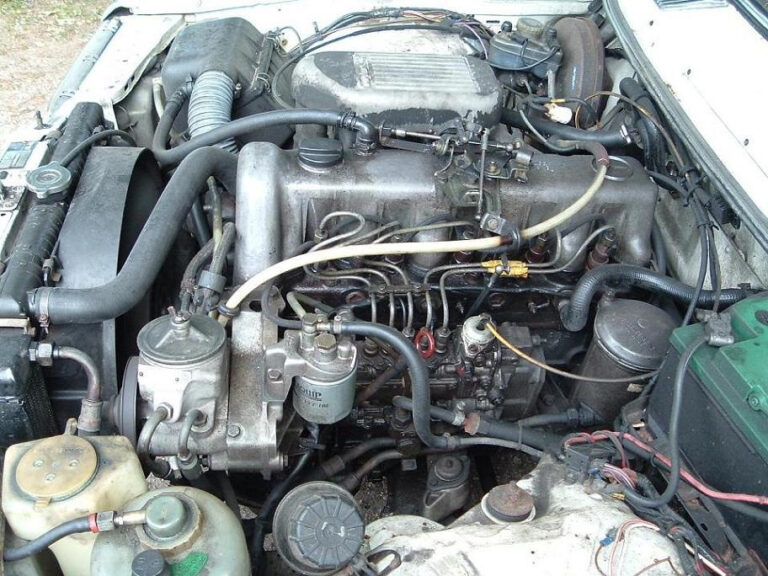
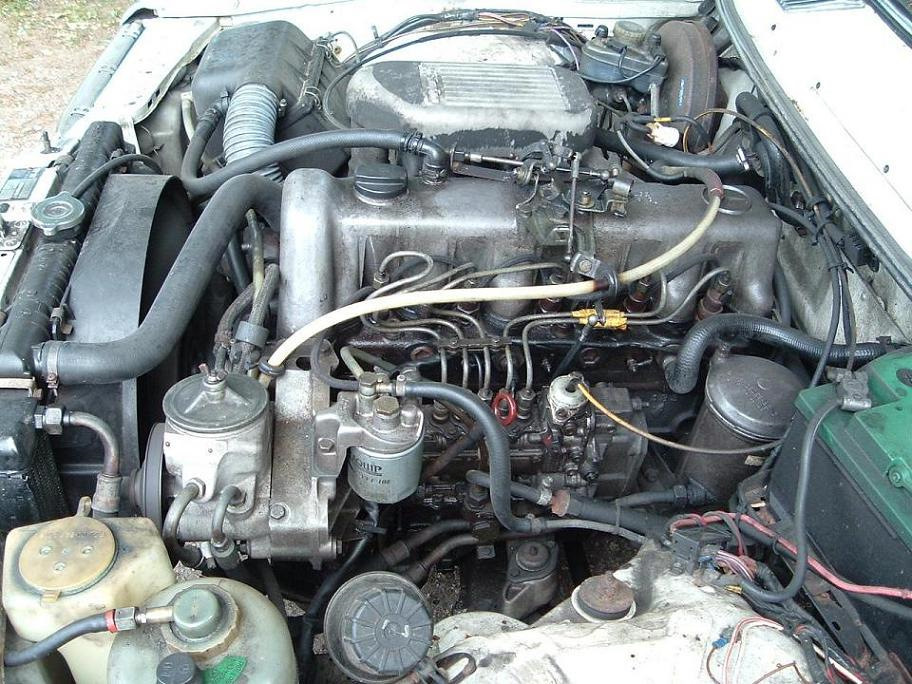
Mercedes OM616 Diesel Engine: Specs, Timing Chain & Reliability
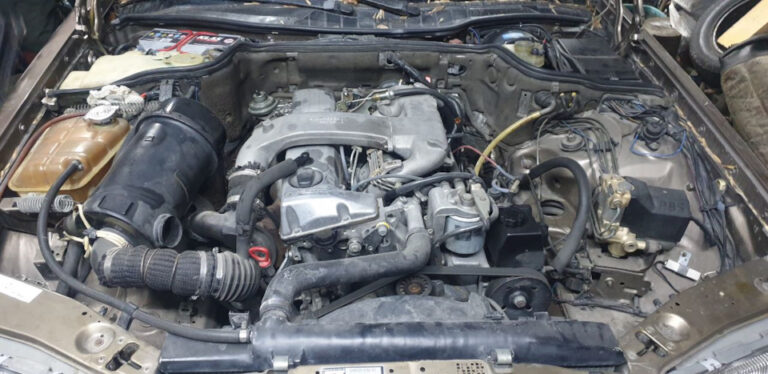
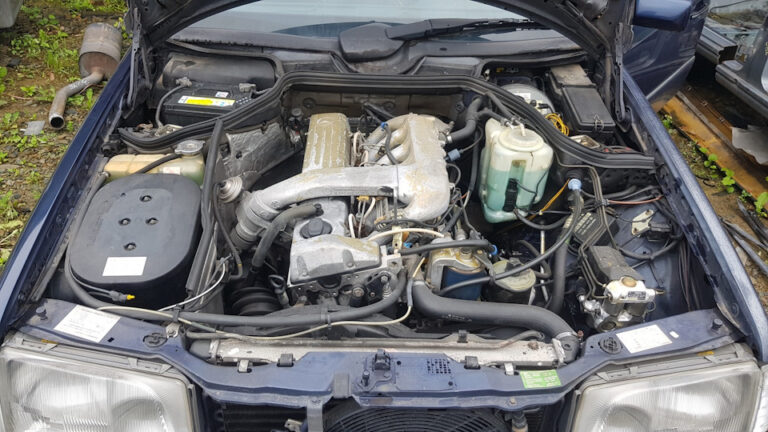
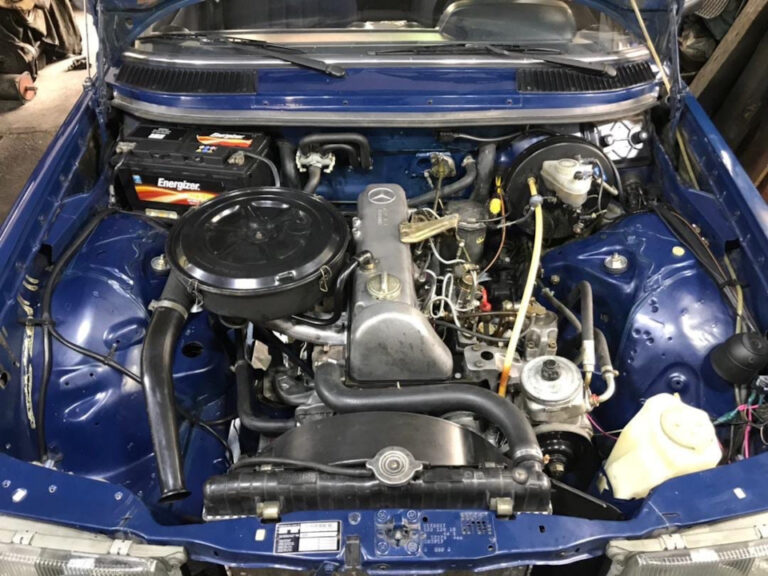
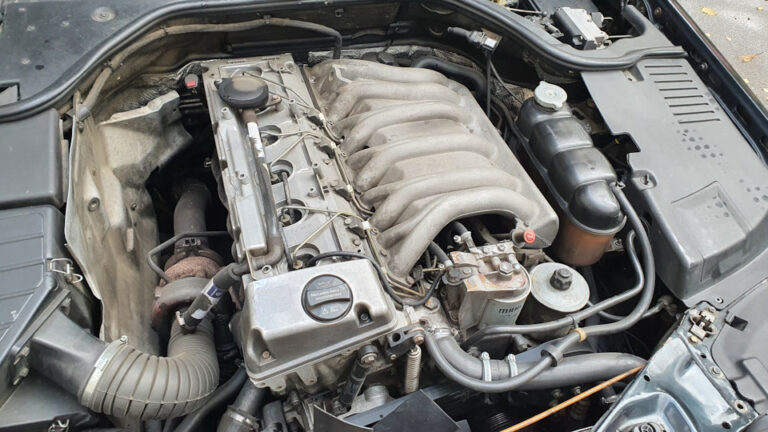
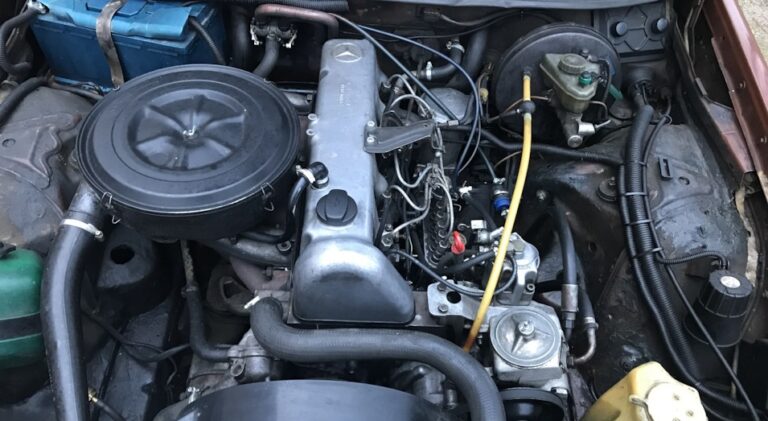
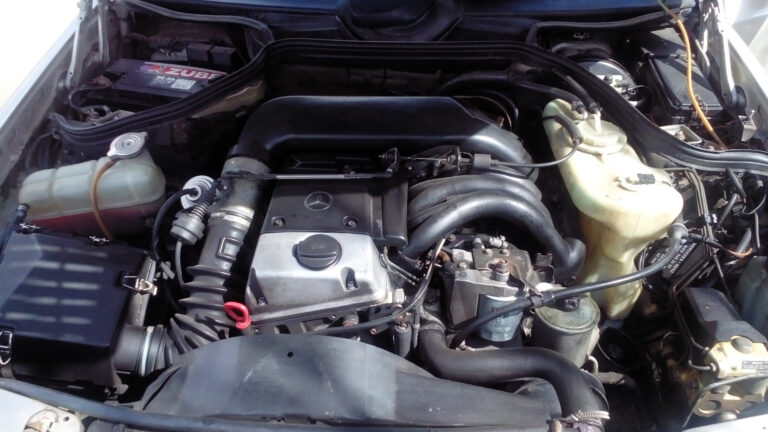
The Mercedes-Benz OM616 is a naturally aspirated four-cylinder indirect-injection diesel family used in Mercedes passenger cars, G-Class models and commercial vehicles. It should be treated as an engine family rather than as one fixed specification: individual variants such as 616.916, 616.912, 616.936 and later commercial versions differ in displacement details, output, compression ratio, installation and production revisions.
The distinction is particularly important with the W123 240 D. The W123 remained a 616.912 application, but the engine specification changed during production. Early engines retained a 2,404 cc configuration, while a revised 2,399 cc version with higher rated output followed from August 1978. A W115 616.916 specification should therefore not be transferred to an early W123 simply because both were sold as 240 D models.
Mercedes-Benz OM616
OM616
Inline four-cylinder
Diesel
Naturally aspirated in the verified Mercedes applications
Mechanical indirect prechamber injection
SOHC, two valves per cylinder
OM616 Engine Codes and Specifications
The most useful way to identify an OM616 is by the complete engine suffix rather than by the OM616 family name alone. Mercedes used several OM616 derivatives across passenger-car, off-road and commercial-vehicle installations.
| Application | Engine code | Displacement | Bore × stroke | Compression ratio | Rated output | Torque |
|---|---|---|---|---|---|---|
| W115 240 D | 616.916 | 2,404 cc | 91.0 × 92.4 mm | 21.0:1 | 48 kW / 65 PS at 4,200 rpm | 137 Nm at 2,400 rpm |
| Early W123 240 D | 616.912 | 2,404 cc | 91.0 × 92.4 mm | 21.5:1 | 48 kW / 65 PS at 4,200 rpm | 137 Nm at 2,400 rpm |
| Revised W123 240 D, from August 1978 | 616.912 | 2,399 cc | 90.9 × 92.4 mm | 21.5:1 | 53 kW / 72 PS at 4,400 rpm | 137 Nm at 2,400 rpm |
| S123 240 TD, later documented specification | 616.912 | 2,399 cc | 90.9 × 92.4 mm | 21.5:1 | 53 kW / 72 PS at 4,400 rpm | 137 Nm at 2,400 rpm |
| W460 240 GD | 616.936 | 2,399 cc | 90.9 × 92.4 mm | 21.0:1 | 53 kW / 72 DIN hp at 4,400 rpm | 137 Nm at 2,400 rpm |
Applications and Model Coverage
| Model | Chassis | Engine variant | Documented application period | Notes |
|---|---|---|---|---|
| Mercedes-Benz 240 D | W115 / 115.117 | 616.916 | 02/1973–12/1976 | 2,404 cc passenger-car version |
| Mercedes-Benz 240 D | W123 / 123.123 | 616.912 | 02/1976–11/1985 | Specification revised during production |
| Mercedes-Benz 240 TD | S123 / 123.183 | 616.912 | 1978–1986 | Early 1978 cars require build-date distinction; the later 2,399 cc / 53 kW specification is documented |
| Mercedes-Benz 240 GD | W460 / 460.310, 460.341 | 616.936, 616.938 | 03/1979–08/1989 | Both engine suffixes are listed for the W460 240 GD in Motorservice application data |
| Mercedes commercial models including 207 D and 307 D | Commercial chassis | Multiple OM616 suffixes | Application-specific | Industry catalogues document additional OM616 variants beyond the passenger-car engine codes |
| Mercedes-Benz 100 D | 631 | 616.963 | 02/1988–02/1996 | Victor Reinz catalogue fitment; 53–55 kW / 72–75 PS is listed for this commercial application |
Application dates should not be treated as a universal OM616 production span. They describe vehicles in which particular OM616 variants were installed. Component-manufacturer documentation shows that OM616-family use continued in Mercedes commercial applications after passenger-car production had ended.
Mechanical Architecture
The verified passenger-car and G-Class OM616 engines use a naturally aspirated diesel layout with an inline-four bottom end, single overhead camshaft, two valves per cylinder, mechanically adjustable valve clearance and indirect injection through precombustion chambers.
The camshaft is driven by a duplex roller chain. Fuel delivery uses a mechanically governed inline injection pump and individual mechanical injectors rather than electronically controlled common-rail injection. Original OM616 applications therefore do not use the modern electronic fuel-pressure, injector-coding and OBD-II architecture found on later Mercedes diesels.
Cylinder Liners and Bottom End
Factory service information for the 616.912 includes service dimensions for replaceable dry cylinder liners. This is important for rebuilding because actual liner damage can be assessed and repaired as a serviceable cylinder component rather than treated automatically as a non-repairable parent-bore problem.
Mercedes service material also contains procedures for crankshaft, connecting rods, main and rod bearings, pistons and crankshaft seals. Their presence in workshop documentation is service information, not evidence that these components represent recurring OM616 failures.
Cylinder Head and Valvetrain
The OM616 uses a single overhead camshaft operating two valves per cylinder through rocker arms. Valve clearance is mechanically adjustable rather than hydraulically self-compensating.
This area has some of the strongest engine-specific wear evidence in the available factory material. Mercedes service information instructs technicians to inspect affected malleable-cast camshafts for pronounced flat formation on the lobes. Severe lobe wear can affect the locking of the valve-adjustment hardware, creating a condition that cannot be addressed reliably by simply resetting valve clearance.
Fuel Injection
Fuel delivery is entirely mechanical in the verified passenger applications. The injection pump is timed mechanically to the engine, and the injectors use replaceable nozzle assemblies. For the documented U.S.-market 240 D / 616.912 service procedure, Mercedes gives 24° BTDC as the adjustment value for the high/low-pressure flow method, with 24 ±1° BTDC specified for checking.
The same factory service data gives 15° ATDC for adjustment using the reference-impulse method, with 15 ±1° ATDC specified for checking. These figures are application-specific and should not automatically be transferred to every commercial or G-Class OM616.
Production Changes That Matter
The OM616 was not mechanically static throughout its service life. Several factory changes affect identification, parts compatibility, diagnosis and rebuild work.
| Production change | Date / breakpoint | Previous configuration | Revised configuration | Technical significance |
|---|---|---|---|---|
| Intermediate-shaft lubrication | August 1976 | Splash-lubricated bearing arrangement | Pressurized lubrication with corresponding shaft/bushing changes | Important when identifying or rebuilding early versus later engines |
| W123 616.912 specification | August 1978 | 91.0 mm bore, 2,404 cc, 48 kW | 90.9 mm bore, 2,399 cc, 53 kW | Same engine suffix, materially different specification |
| Crankshaft pulley | March 1980 | Earlier pulley configuration | Reinforced pulley with sheet-metal ring | Factory documentation associates the revised part with knocking-noise complaints from idle to approximately 2,500 rpm |
| OM616 camshaft | Production from June 1982; W123 123.123 breakpoint 351926 | Camshaft code 10 | Camshaft code 19 with fast-rise exhaust lobe | Valve timing remained unchanged |
| Valve-adjustment hardware | Progressive revisions; later counter-nuts from October 1983 | Earlier rocker/cam and phosphated counter-nut configuration | Chilled-cast camshaft system, hard-backed rockers and nitrided counter-nuts | Installed hardware should be checked against the applicable factory configuration during repair |
| Cylinder-head gasket | October 1983 | Earlier relief-hole layout | Gasket with larger relief holes | Factory design revision; not evidence by itself of a defective earlier gasket |
| Cooling-system vent line | October 1984 | Vent line between coolant pump and cylinder head | Vent line deleted in production | Factory information permits retrofit for specific overheating or coolant-pump cavitation complaints |
June 1982 OM616 Camshaft Change
Known Wear Conditions and Failure Mechanisms
Timing System
- Timing-chain use changes the specified camshaft timing position and is addressed by factory measurement and service procedures.
- No universal OM616 chain-replacement mileage is established by the verified material.
Camshaft and Valvetrain
- Factory documentation identifies pronounced wear on specific early camshaft configurations.
- Severe wear can allow valve-adjustment hardware to lose secure locking.
- Later camshafts, rockers and adjustment components were revised.
Injection Nozzles
- Mercedes revised nozzle design and the diagnostic procedure for knocking and rough-running complaints.
- Factory investigation found that many previously replaced nozzle assemblies showed no identifiable defect.
Timing-Chain Wear and Cam Timing
Mercedes provides specific valve-timing values for both new and used timing chains on the 616.912. The factory specification identifies the used-chain condition from approximately 20,000 km and gives different intake and exhaust timing positions for both the 48 kW and 53 kW versions.
This means that cam timing should be measured rather than judging chain condition from mileage alone. Factory service procedures also provide for timing-chain replacement and require cam timing and injection-pump delivery timing to be checked when the timing marks do not agree after installation.
Field Report Independent OM616 owner discussions describe measured cam-timing deviations of several degrees. These reports are consistent with the factory-recognized timing-wear mechanism, but their mileages remain anecdotal and should not be used to predict when another engine will require timing-system service.
Camshaft Lobe and Valve-Adjustment Hardware Wear
Mercedes service documentation gives stronger evidence for a specific valvetrain problem. On affected malleable-cast camshafts, technicians are instructed to inspect the lobes for pronounced flat formation. Severe wear matters because it can allow valve-adjustment counter-nuts to lose secure locking.
Mercedes specifies that when pronounced flat areas are found, the camshaft, rocker arms, valve springs, cap nuts and counter-nuts are to be replaced, with the valves also checked and replaced if necessary. The factory material distinguishes this from minor flat formation on chilled-cast camshafts, which it describes as harmless.
Later hardware includes chilled-cast camshafts, hard-backed rocker arms, strengthened hard-chrome-plated cap nuts and salt-bath-nitrided counter-nuts. The installed camshaft, rocker arms and valve-adjustment hardware should therefore be checked against the applicable factory configuration when an engine has undergone previous cylinder-head or valvetrain work.
Injector Knock and Rough Running
Mercedes bulletin 07.1/27a is particularly useful because it demonstrates how an OM616 fuel-system complaint can be misdiagnosed. The bulletin covers updated short-pintle nozzles with a 0.20 mm chip hole and revised testing instructions.
Earlier instructions had required replacement of all nozzle assemblies for complaints including knocking, hot partial-load knock and extremely rough idle. Mercedes subsequently withdrew that approach after testing returned nozzle assemblies and finding no identifiable defect in most cases.
The revised procedure calls for complaint verification and individual nozzle testing. Obstruction of the 0.20 mm chip hole is specifically checked before the nozzle is condemned. The bulletin also states that injection-pump timing should be checked if repeated nozzle failures occur or the performance complaint remains unresolved.
For diagnosis, abnormal combustion noise should therefore be separated from actual nozzle failure. The factory evidence itself shows why symptom-based injector replacement can produce a false diagnosis.
Cylinder-Bore Damage, Blow-By and Oil Consumption
Mercedes factory procedures distinguish superficial optical streaks in a cylinder from actual seizing marks and bore damage. This confirms that liner scoring and seizure damage can be physically evaluated and repaired, but the existence of an inspection procedure does not establish cylinder scoring as a recurring OM616 defect.
Blow-by is similarly a symptom rather than a root cause. Factory leak-down and cylinder-inspection procedures can be used to investigate leakage through the cylinder, piston and ring area. Neither an oil-cap observation nor visible crankcase vapor alone establishes that the short block requires rebuilding.
Field Report Owners have reported blow-by, oil consumption and smoke on used OM616 engines. One detailed 240 D report described exceptionally high oil consumption together with blue-grey smoke on cold operation, while another described oil loss and blow-by with little visible exhaust smoke. The diagnoses proposed by owners included rings, cylinder wear, valve seals and external leakage, but the reports did not establish one universal OM616 oil-consumption mechanism.
The practical distinction is important: external oil loss, valve-related oil entry and piston/ring or liner wear can produce overlapping ownership complaints but imply very different repair scopes.
Oil Pressure and Lubrication Diagnosis
For a 1983 U.S.-market 240 D with 616.912, factory service information specifies minimum warm-engine oil pressure of 0.3 bar at idle and 3 bar at 3,000 rpm, with the engine at approximately 90°C operating temperature.
Mercedes troubleshooting information lists several diagnostic branches for low pressure, including engine-oil level, pressure indication, the oil-filter riser pipe and filter seal, the pressure-relief valve, oil pump and main/connecting-rod bearing clearances. These are diagnostic possibilities rather than evidence that the OM616 has a recurring oil-pump or bearing defect.
The August 1976 intermediate-shaft change is relevant to rebuild work. Mercedes changed bearing bushings in this system from splash lubrication to pressurized lubrication. The modified bushings are connected to the engine oil circuit through drillings in the intermediate gear shaft, and the relevant internal bushing diameters were also changed from 24 mm to 23 mm to prevent confusion during repair.
Cooling System
Later OM616 service documentation specifies a thermostat opening temperature of 80°C. The factory documentation also records a production change in October 1984 when the vent line between the coolant pump and cylinder head was deleted on engines including the OM616.
The same service information states that the vent line may be installed in response to complaints involving overheating phenomena and/or coolant-pump cavitation. The production configuration is therefore relevant to diagnosis, but absence of the line alone does not prove the cause of an overheating complaint.
Technical Service Information
| Bulletin / service information | Issue | Factory action | OM616 relevance |
|---|---|---|---|
| 07.1/27a, February 1983 | Injection-nozzle knocking / rough-running diagnosis | Updated nozzle design and individual testing rather than indiscriminate replacement | Applies to diesel engines and specifically revises 240 D coverage |
| 05/49, April 1983 | Modified camshafts | Code 19 replaces code 10 in OM616 production from June 1982 | W123 123.123 breakpoint 351926 documented |
| 03/40, September 1986 | Connecting-rod bolt pretightening revision | 50–60 Nm initial tightening for specified hammer-installed bolts; final rotation remains 90–100° | Bulletin explicitly includes engine 616 |
The connecting-rod bulletin is a tightening-procedure revision rather than evidence of a recurring OM616 connecting-rod failure. The previous pretightening value for the affected hammer-installed bolts was 60–70 Nm; Mercedes revised it to 50–60 Nm while retaining the 90–100° angle-of-rotation step. Bolts that had not been removed retained a 40–50 Nm pretightening value.
Repair and Rebuild Considerations
The OM616’s production changes matter most when an engine has already been rebuilt or when parts from different production periods are being combined.
- Cylinder liners: the 616.912 uses serviceable dry liners. Actual seizing marks or liner damage therefore require physical bore assessment rather than an assumption based only on smoke or blow-by.
- Intermediate shaft: the August 1976 change from splash to pressurized bearing lubrication also changed relevant shaft and bushing dimensions. Early and later parts should be identified by the applicable factory configuration.
- Camshaft and rocker system: Mercedes used several camshaft and rocker configurations, including later chilled-cast camshafts and hard-backed rockers. A cylinder-head repair should account for the installed combination rather than treating every OM616 valvetrain as identical.
- Valve-adjustment hardware: later cap nuts and counter-nuts differ from earlier hardware. Mercedes introduced salt-bath-nitrided counter-nuts from October 1983 to improve functional reliability.
- Cylinder-head gasket: from October 1983 Mercedes used gaskets with larger relief holes. The service information also identifies improved-impregnation gasket part number 616 016 14 20 for the applicable cylinder-head-bolt configuration. These changes should not be interpreted as proof that every earlier gasket was defective.
- Cylinder-head replacement details: factory service documentation records M12 and M8 fuel-filter mounting configurations and states that replacement heads were supplied with M8 threads. This matters when adapting surrounding hardware during cylinder-head replacement.
- Connecting-rod bolts: bulletin 03/40 revised the pretightening value for specified hammer-installed bolts. Engine assembly should follow the procedure appropriate to the actual bolt installation.
A replacement cylinder head, revised camshaft or previous bottom-end rebuild can therefore leave an older vehicle with later engine hardware. Chassis year alone does not necessarily identify every component currently installed.
Maintenance and Service Data
| Service item | Verified value | Application / limitation |
|---|---|---|
| Cold valve clearance | Intake 0.10 mm; exhaust 0.30 mm | Factory data for engines 615/616 |
| Warm valve clearance | Intake 0.15 mm; exhaust 0.35 mm | Factory data for engines 615/616; warm-engine specification |
| Injection-pump timing, flow method | Check 24 ±1° BTDC; adjust 24° BTDC | Documented 240 D / 616.912 service procedure |
| Injection-pump timing, reference-impulse method | Check 15 ±1° ATDC; adjust 15° ATDC | Documented 240 D / 616.912 service procedure |
| Warm oil pressure | Minimum 0.3 bar at idle; minimum 3 bar at 3,000 rpm | 1983 U.S. 240 D / 616.912, approximately 90°C |
| Coolant replacement | 3 years | Specified in the verified later factory cooling-system documentation |
| Oil change with filter | 6.5 L | 240 GD / 616.936; do not generalize to all OM616 installations |
| Cooling-system capacity with heater | 10.7 L | 240 GD / 616.936 |
No universal OM616 timing-chain replacement interval was established. Likewise, oil capacity, oil specification and service intervals should remain tied to the specific vehicle, year, market and engine installation rather than converted into one family-wide value.
Diagnosis: Symptoms That Need Separation
Because the original OM616 fuel system and basic engine controls are predominantly mechanical, diagnosis depends much more heavily on physical measurements and inspection than on stored fault codes. No conventional engine-management DTC set comparable with later OBD systems was verified for the original applications, so a generic list of modern diesel trouble codes is not appropriate for this engine.
Diesel Knock or Rough Idle
Do not assume injector replacement is required. Mercedes’ own nozzle bulletin demonstrates that components were previously replaced without an identifiable nozzle defect in many returned assemblies. The complaint should be separated by operating condition, including whether knock occurs at operating temperature and under partial load.
Individual nozzle condition should be tested before replacement. If the complaint remains unresolved, the factory bulletin also provides for checking injection-pump timing rather than continuing to replace nozzle assemblies.
Blow-By and Oil Consumption
Blow-by is a symptom rather than a diagnosis. Factory leak-down and cylinder-inspection procedures can help distinguish mechanical leakage through the piston/ring area from other problems. Owner observations such as an oil cap moving or visible crankcase vapor are not sufficient to establish a worn-out short block on their own.
Likewise, high oil use should first be separated from visible external leakage. Field reports show that similar ownership complaints can occur with very different amounts of smoke, so smoke alone does not establish whether the oil is leaving through the cylinders, valvetrain or an external leak point.
Hard Starting
Field Report OM616 owners report long cranking and cylinders beginning to fire progressively rather than all at once. One detailed report involved an engine with approximately 355,000 km, but that mileage is anecdotal and is not a failure threshold. The available reports do not establish a single root cause, so compression condition, injection timing and injector performance should not be collapsed into one assumed diagnosis.
Knocking Noise
Noise source matters. Mercedes revised the crankshaft pulley on engines 615 and 616 with a sheet-metal reinforcing ring from March 1980 and states that this pulley can be fitted in response to knocking-noise complaints from idle to approximately 2,500 rpm.
Injection knock, valvetrain noise, pulley-related noise and internal bottom-end noise should therefore not be treated as interchangeable symptoms.
What to Check Before Buying an OM616-Powered Vehicle
- Confirm the full engine suffix rather than relying only on the OM616 family designation.
- For a W123 240 D, establish whether the engine is the early or revised 616.912 specification.
- Check whether previous engine work may have introduced later camshaft, rocker, cylinder-head or other revised components.
- Inspect cold and warm starting behavior without assuming hard starting automatically means low compression.
- Listen for abnormal valvetrain or knocking noises and determine whether they change with engine speed, load or temperature.
- Check valve-adjustment history and inspect the camshaft and adjustment hardware where the earlier valvetrain configuration remains installed.
- Check cam timing if timing-chain wear is suspected rather than replacing the chain solely on mileage.
- Verify hot oil pressure on engines showing low-pressure indications or significant internal-wear symptoms.
- Inspect for external oil loss before attributing oil consumption entirely to piston rings or cylinder wear.
- Evaluate blow-by together with leak-down or cylinder-condition evidence rather than using an oil-cap observation as a stand-alone diagnosis.
- Check cooling-system history and evidence of previous overheating, particularly where cooling-system modifications or repairs are visible.
- On rebuilt engines, confirm that intermediate-shaft, camshaft, rocker and valve-adjustment components correspond to the relevant engine configuration.
OM616 Reliability in Practice
The strongest verified OM616 problem evidence is concentrated in a few specific areas rather than showing a broad pattern of unrelated engine failures.
Timing-chain use produces measurable changes in the factory valve-timing specifications, but no universal replacement mileage or population failure rate is established. Valvetrain evidence is more specific: Mercedes identifies excessive flat formation on particular malleable-cast camshafts and specifies a broader component replacement procedure where this wear is found. Later camshaft, rocker-arm and adjustment-hardware configurations were also introduced.
Injection-nozzle service information shows that knocking and rough running can be misdiagnosed. Mercedes explicitly withdrew earlier blanket nozzle-replacement instructions after returned assemblies often showed no identifiable defect, replacing them with a more selective testing procedure.
Owner communities additionally report blow-by, oil consumption, smoke, hard starting and measured timing deviation on used OM616 engines. These reports are useful for recognizing real-world symptom patterns, but they do not establish how often the conditions occur, which mechanism dominates across the engine population or the mileage at which a failure should be expected.
The practical implication is that engine code, production revision and physical diagnosis matter more than a generic OM616 reputation. A W115 616.916, an early 616.912, a post-August-1978 616.912, a G-Class 616.936/616.938 and a later commercial 616.963 should not be treated as mechanically identical simply because all belong to the OM616 family.
Sources & Technical References
- Mercedes-Benz Clubs — Typ 240 D W115, 616.916 identification, production period, bore and stroke, displacement, compression ratio, output, torque, duplex timing chain and mechanical prechamber injection.
- Mercedes-Benz Clubs — Passenger Car Models / Production Codes, model-to-engine-code mapping including W115 and W123 diesel applications and 123.123 → 616.912.
- W123 Bremen — 240 D technical model data, early and revised 616.912 specifications and the August 1978 specification change.
- Mercedes-Benz Clubs — S123 240 TD, 616.912 estate application and later technical specification.
- Mercedes-Benz historical archive mirror — 240 GD, 616.936 engine specification, output, torque, mechanical architecture and application-specific oil/coolant quantities.
- MS Motorservice / Kolbenschmidt — Mercedes-Benz application catalogue, W460 240 GD fitment for 616.936 and 616.938, 03/1979–08/1989.
- Victor Reinz — Mercedes-Benz commercial-vehicle catalogue, commercial OM616 applications including 616.963 in the 100 D (631), 02/1988–02/1996.
- Mercedes-Benz factory service documentation via Operation CHARM — 1983 240 D / 616.912 Repair and Diagnosis, factory workshop material used for valve adjustment, injection timing, timing-chain service, oil-pressure diagnosis, cooling-system revisions, intermediate-shaft changes, crankshaft-pulley changes and cylinder-head service information.
- Mercedes-Benz Service Information via Operation CHARM — 05/49, Modified Camshafts, June 1982 OM616 code-19 camshaft production change and W123 123.123 chassis breakpoint.
- Mercedes-Benz Service Information via Operation CHARM — 07.1/27a, Fuel Injection Nozzles — Updated, nozzle revision, hot partial-load knock / rough-idle complaints and revised diagnostic procedure.
- Mercedes-Benz Service Information via Operation CHARM — 03/40, Connecting Rod Bolt Pretightening Torque Revision, revised procedure explicitly covering engine 616.
Field Sources
- PeachParts — OM616 timing-chain discussion, owner-measured cam-timing deviation; anecdotal evidence only.
- PeachParts — OM616 oil-consumption discussion, detailed owner-reported oil-use and smoke symptoms; root cause unresolved.
- Bob Is The Oil Guy — 1976 240 D blow-by and oil-loss discussion, owner-reported symptoms and diagnostic uncertainty.
- Busfreaks — OM616 hard-start discussion, owner-reported starting symptoms and mileage; no failure threshold established.